
Home » Karnataka » The quiet village of Lakkundi in Gadag district, Karnataka has suddenly emerged from relative obscurity to the forefront of national attention — not for modern development or urbanization, but for something far deeper and more timeless: its buried history. Recent archaeological initiatives are transforming how India views this once-ancient seat of culture and spirituality, and the story unfolding here is as compelling as any historical mystery. The Heart of the Matter: Excavations Where Homes Stand In the historic lanes of Lakkundi, many old temples — centuries old — were integrated into everyday life so seamlessly that generations have lived in them as houses. One such example involves the Chowkimutt family, who have resided for five generations in what used to be the Mahanteshwara Temple, a sacred structure believed by historians to house an Ardhanarishwara deity rather than the later-named “Mahanteshwara.” Their home — indistinguishable from any typical residence — stands as living proof of how sacred spaces were subsumed into domestic use over time. Now, with the government preparing to initiate excavation work to restore the temple’s original form, that chapter of living history is reaching a crossroad. The family has expressed openness to relocating as long as suitable alternative housing is provided. This unique situation reveals a complex intersection between heritage preservation and contemporary life — and it is becoming the focal point of efforts to clear centuries of accumulated layers so the village’s historical fabric can be rediscovered and showcased. Excavations Propel Lakkundi Into the Spotlight The excavations at Lakkundi are not an isolated event, but part of a broader, sustained heritage initiative. Efforts to uncover and preserve the village’s magnificent past date back months, with official campaigns to identify and salvage remnants of once thriving temples, inscriptions, wells, relics, and more. Prior drives have already gathered over 1,000 antiquities and relics, testing the rich historical potential buried beneath the soil. Archaeologists have been focusing particularly on areas near the Kote Veerabhadreshwara Temple, where the dig has now reached depths of over 1.5 meters. In recent weeks, remarkable finds have included Neolithic-period pottery and parts of a Jain pedestal, artifacts that expand the historical timeline of human settlement in the area and underscore its cultural pluralism. Even more dramatic discoveries include remnants of a 10th-century Eshwara temple uncovered inside the walls of a family home — a remarkable testament to how closely the sacred past and living present intertwine here. Ancient Treasures and Everyday Lives Amidst systematic excavation work, reports of treasure findings have piqued public imagination. Earlier in January 2026, laborers working on a residential foundation unexpectedly unearthed a copper pot filled with gold ornaments, buried several feet underground. This astonishing find generated excitement in the region and contributed to growing interest from historians, collectors, and tourists alike. These discoveries illustrate that Lakkundi’s soil is more than just earth — it is a repository of stories, rituals, and artistic expression that could reshape our understanding of India’s medieval landscape. Heritage and Economy: A Changing Village As excavation work gains momentum, Lakkundi’s profile as a heritage destination is reshaping local economics and land use. Real estate interest has surged, driving land prices to unprecedented heights as investors and heritage tourism proponents speculate on the village’s future prominence. Villagers themselves are hopeful that rediscovered heritage will translate to better infrastructure, housing solutions, and opportunities for growth. This transformation — from a quiet rural settlement to a potential cultural hotspot — poses both opportunities and challenges. Sustainable development must strike a balance between preserving sacred architecture and accommodating contemporary needs. Protecting History: Heritage, Conservation, and Identity Lakkundi’s broader historical significance is already well documented. The village was once home to 101 temples and 101 wells, though many have since been lost to time. The surviving structures reflect styles from influential dynasties like the Kalyani Chalukyas and the Rashtrakutas. Local sculptures even hint at epic mythological connections, including scenes reminiscent of the Ramayana — underscoring the deep mythic and artistic roots of the region. The state government and heritage authorities are now working not only to excavate but also to formally protect many of these sites. Plans include officially designating up to 44 heritage locations within the village as protected monuments, ensuring conservation funding and regulatory support. Discussions are underway to transform Lakkundi into a UNESCO World Heritage Site, a designation that would significantly elevate its global cultural profile and accelerate long-term preservation efforts. A Living Museum: Where Past Meets Present The vision for Lakkundi is profound. Beyond excavation, authorities plan to establish a dedicated open-air museum where recovered artifacts and architectural fragments can be preserved, interpreted, and appreciated by visitors. These spaces seek to celebrate not just the remnants of temples and tools, but also the dynamic cultural history of the village — a history that spans centuries of religious thought, artistic innovation, and community life. This is not merely about dusty ruins. It’s about weaving a narrative that honours multiple layers of human endeavor — from Neolithic pottery makers to medieval temple builders, from Jain artists to present-day villagers. Conclusion: The Renaissance of Lakkundi Lakkundi’s unfolding story is one of rediscovery, restoration, and revelation. What was once an unremarkable village has become a crucial site for understanding India’s architectural brilliance and cultural continuity. The excavation efforts are bringing ancient stones and forgotten relics to light, yet equally significant is how these efforts are transforming the local community — economically, socially, and culturally. In the years ahead, as conservation work progresses and heritage recognition expands, Lakkundi might not just reclaim its lost temples — it may also reshape how future generations connect to India’s vast and unfolding history, celebrating an extraordinary past while cultivating a thriving heritage future.
University Transcript

The quiet village of Lakkundi in Gadag district, Karnataka has suddenly emerged from relative obscurity to the forefront of national attention — not for modern development or urbanization, but for something far deeper and more timeless: its buried history. Recent archaeological initiatives are transforming how India views this once-ancient seat of culture and spirituality, and the story unfolding here is as compelling as any historical mystery. The Heart of the Matter: Excavations Where Homes Stand In the historic lanes of Lakkundi, many old temples — centuries old — were integrated into everyday life so seamlessly that generations have lived in them as houses. One such example involves the Chowkimutt family, who have resided for five generations in what used to be the Mahanteshwara Temple, a sacred structure believed by historians to house an Ardhanarishwara deity rather than the later-named “Mahanteshwara.” Their home — indistinguishable from any typical residence — stands as living proof of how sacred spaces were subsumed into domestic use over time. Now, with the government preparing to initiate excavation work to restore the temple’s original form, that chapter of living history is reaching a crossroad. The family has expressed openness to relocating as long as suitable alternative housing is provided. This unique situation reveals a complex intersection between heritage preservation and contemporary life — and it is becoming the focal point of efforts to clear centuries of accumulated layers so the village’s historical fabric can be rediscovered and showcased. Excavations Propel Lakkundi Into the Spotlight The excavations at Lakkundi are not an isolated event, but part of a broader, sustained heritage initiative. Efforts to uncover and preserve the village’s magnificent past date back months, with official campaigns to identify and salvage remnants of once thriving temples, inscriptions, wells, relics, and more. Prior drives have already gathered over 1,000 antiquities and relics, testing the rich historical potential buried beneath the soil. Archaeologists have been focusing particularly on areas near the Kote Veerabhadreshwara Temple, where the dig has now reached depths of over 1.5 meters. In recent weeks, remarkable finds have included Neolithic-period pottery and parts of a Jain pedestal, artifacts that expand the historical timeline of human settlement in the area and underscore its cultural pluralism. Even more dramatic discoveries include remnants of a 10th-century Eshwara temple uncovered inside the walls of a family home — a remarkable testament to how closely the sacred past and living present intertwine here. Ancient Treasures and Everyday Lives Amidst systematic excavation work, reports of treasure findings have piqued public imagination. Earlier in January 2026, laborers working on a residential foundation unexpectedly unearthed a copper pot filled with gold ornaments, buried several feet underground. This astonishing find generated excitement in the region and contributed to growing interest from historians, collectors, and tourists alike. These discoveries illustrate that Lakkundi’s soil is more than just earth — it is a repository of stories, rituals, and artistic expression that could reshape our understanding of India’s medieval landscape. Heritage and Economy: A Changing Village As excavation work gains momentum, Lakkundi’s profile as a heritage destination is reshaping local economics and land use. Real estate interest has surged, driving land prices to unprecedented heights as investors and heritage tourism proponents speculate on the village’s future prominence. Villagers themselves are hopeful that rediscovered heritage will translate to better infrastructure, housing solutions, and opportunities for growth. This transformation — from a quiet rural settlement to a potential cultural hotspot — poses both opportunities and challenges. Sustainable development must strike a balance between preserving sacred architecture and accommodating contemporary needs. Protecting History: Heritage, Conservation, and Identity Lakkundi’s broader historical significance is already well documented. The village was once home to 101 temples and 101 wells, though many have since been lost to time. The surviving structures reflect styles from influential dynasties like the Kalyani Chalukyas and the Rashtrakutas. Local sculptures even hint at epic mythological connections, including scenes reminiscent of the Ramayana — underscoring the deep mythic and artistic roots of the region. The state government and heritage authorities are now working not only to excavate but also to formally protect many of these sites. Plans include officially designating up to 44 heritage locations within the village as protected monuments, ensuring conservation funding and regulatory support. Discussions are underway to transform Lakkundi into a UNESCO World Heritage Site, a designation that would significantly elevate its global cultural profile and accelerate long-term preservation efforts. A Living Museum: Where Past Meets Present The vision for Lakkundi is profound. Beyond excavation, authorities plan to establish a dedicated open-air museum where recovered artifacts and architectural fragments can be preserved, interpreted, and appreciated by visitors. These spaces seek to celebrate not just the remnants of temples and tools, but also the dynamic cultural history of the village — a history that spans centuries of religious thought, artistic innovation, and community life. This is not merely about dusty ruins. It’s about weaving a narrative that honours multiple layers of human endeavor — from Neolithic pottery makers to medieval temple builders, from Jain artists to present-day villagers. Conclusion: The Renaissance of Lakkundi Lakkundi’s unfolding story is one of rediscovery, restoration, and revelation. What was once an unremarkable village has become a crucial site for understanding India’s architectural brilliance and cultural continuity. The excavation efforts are bringing ancient stones and forgotten relics to light, yet equally significant is how these efforts are transforming the local community — economically, socially, and culturally. In the years ahead, as conservation work progresses and heritage recognition expands, Lakkundi might not just reclaim its lost temples — it may also reshape how future generations connect to India’s vast and unfolding history, celebrating an extraordinary past while cultivating a thriving heritage future.

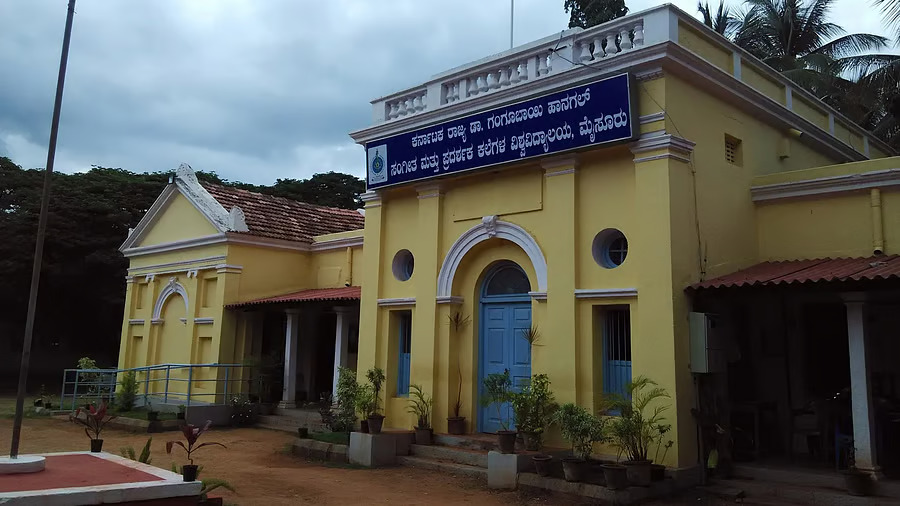
Karnataka govt finally gets candidates for VC’s post in Gangubai Hangal music varsity

For years, one of Karnataka’s most culturally distinctive educational institutions has stood at a crossroads — not between music and silence, but between leadership and uncertainty. The Karnataka State Dr. Gangubai Hangal Music and Performing Arts University, an institution dedicated entirely to the study, preservation and innovation of Indian classical music and performing arts, recently experienced a major administrative breakthrough after a prolonged period without a permanent Vice-Chancellor. After remaining vacant since January 2025, the post finally attracted eligible candidates from among the academic community — a critical development for the university’s future direction and stability.

The Roots of an Institution Built on Melody

The university’s name itself carries profound cultural weight. It honors Gangubai Hangal, one of India’s most revered Hindustani classical vocalists, whose contributions to music transformed the Indian classical landscape. Born in 1913 in Karnataka, Hangal rose from humble beginnings to become one of the foremost exponents of the Kirana gharana, known for her deep and powerful voice and her lifelong dedication to the art form. Her legacy includes national recognition with prestigious awards, including the Padma Vibhushan, and a lasting influence on generations of musicians and music lovers.

In recognition of her lifetime achievements and cultural contribution, the Government of Karnataka established the music and performing arts university in her name, with a vision to cultivate, expand, and promote India’s rich tapestry of musical heritage. The institution offers undergraduate, postgraduate, and doctoral programmes uniquely focused on classical music and performing arts, emphasizing both traditional mastery and contemporary scholarship.

The Struggle for Leadership

Despite its noble purpose, the university has faced leadership challenges. The Vice-Chancellor — the academic and administrative head responsible for setting strategic direction, strengthening research and forging collaborations beyond state borders — has held a vacant status for nearly a year since the previous incumbent’s tenure concluded in early 2025. This administrative vacuum has created uncertainty in key areas such as academic planning, faculty recruitment, curriculum expansion, and long-term cultural engagement.

Unlike many traditional universities that draw multiple applicants for leadership positions, the music varsity struggled to attract qualified candidates even after multiple rounds of advertisement. The Government of Karnataka’s Higher Education Department acknowledged that there were few applicants meeting the rigorous criteria for the VC role, underlining a larger structural issue in specialized arts institutions — attracting scholars and administrators who combine artistic sensitivity with robust academic governance experience.

This situation is not unique to the music university alone; several public universities in Karnataka have faced prolonged vacancies in their top academic position, raising concerns about governance in the state’s higher education ecosystem. Interim or acting Vice-Chancellors can maintain day-to-day functions, but sustained leadership is essential to pursue institutional excellence, research ambitions, and national or international partnerships.

Why a Vice-Chancellor Matters for Artistic and Academic Growth

The Vice-Chancellor’s role goes far beyond ceremonial duties. In a specialised university such as this, the VC is the principal architect of:

Academic Vision and Standards
Crafting a roadmap for academic programmes that reflect both traditional artistry and modern pedagogical practices.

Research and Cultural Scholarship
Encouraging deep scholastic research into Indian musicology, performance practices, indigenous instruments, and cross-cultural musical dialogues.

Institutional Reputation
Building the university’s stature regionally, nationally, and internationally so that it becomes a preferred destination for students and performers alike.

Community and Outreach Initiatives
Extending the university’s reach through community concerts, workshops, partnerships with cultural organisations, and digital platforms that introduce classical arts to new audiences.

Without a stable head, these strategies risk stagnation. Securing candidates for the VC position thus represents a turning point — one that signals renewed attention toward institutional strengthening and cultural leadership.

Implications for Students, Faculty and the Arts Community

For students enrolled in music and performing arts, consistent leadership means clarity in academic timelines, examinations, research guidance, and mentorship opportunities. Faculty members rely on visionary leadership to initiate new programmes, secure funding for repertoire research, and guide creative collaborations with established artists.

Beyond the campus, the arts community — comprising musicians, cultural historians, performers, and patrons of the arts — looks to the music university as a partner in sustaining India’s intangible cultural heritage. A committed Vice-Chancellor can inspire festivals, residencies, archival projects, and collaborations that amplify the voice of Indian classical arts in a world where many traditional forms compete with global popular culture for relevance.

A Forward Path: Renewal, Commitment and Cultural Mission

The emergence of eligible candidates for the Vice-Chancellor post marks not just a bureaucratic milestone but a symbolic affirmation of the university’s mission. It reflects a shared belief that institutions rooted in cultural history deserve robust leadership, support, and strategic vision.

As the selection process progresses, the focus will increasingly shift to how the next Vice-Chancellor can harness the university’s potential — nurturing creativity, strengthening academic rigour, and positioning it as a beacon of performing arts education not only in Karnataka but across India and the world.

In the long arc of cultural preservation, leadership matters immensely. At the Gangubai Hangal Music and Performing Arts University, the appointment of a visionary Vice-Chancellor is poised to be a defining moment — one that echoes the enduring legacy of its namesake, celebrates India’s artistic heritage, and shapes a vibrant future for generations of musicians and scholars.

FACTS Transcripts proudly serves students and professionals across a wide range of regions to support their academic and career goals. Our services are available in:

India
United States
Canada
United Kingdom
New Zealand
Australia
Russia
Middle East
North America
Africa

Our Services – FACTS Transcripts

We at FACTS Transcripts assist in various services, including:

Mark Sheet Transcripts
E-Transcripts
Duplicate Mark Sheets & Degree Certificates
Medium of Instructions Certificates
Attestations
HRD Attestation / Apostille Services
ECA (Educational Credentials Assessment)

Trusted by leading global verification organizations, including WES, IQAS, PEBC, NDEB, NASBA, CAPR, NZQA, ICAS, NCESS, ICES, ECE, eduPASS, ACEI, GCEUS, Comparative Education Services, NNAS, NCA, SAQA, QMAS, FORAC, Australian Pharmacy Council, and more.

FACTS Transcripts – The preferred choice for university document verification worldwide. We ensure a hassle-free process for obtaining your transcripts.


Leave a Comment