

In early 2026, one of India’s most celebrated artists, Oscar-winning composer A. R. Rahman, found himself at the center of a heated discussion about religion, opportunity, and artistic recognition in the Hindi film industry. Speaking to the BBC Asian Network, Rahman opened up about how his experience with film work in Bollywood has changed over the past eight years, suggesting that shifts in industry power dynamics — including the influence of people who are not creative — might have affected how often he is hired. In doing so, he alluded to the possibility that subtle communal factors could play a role in this shift, although he clarified later that he had never faced open discrimination.
Rahman’s interview triggered a complex response across the entertainment world and beyond. Some commentators interpreted his remarks as a critique of broader trends in cinema, where decisions might be driven by commerce, politics, or image management rather than purely creative merit. Others took his comments to imply that religion — specifically his identity as a Muslim — might be influencing opportunities in a predominantly Hindi-film context. This gave rise to varied opinions, sparking debate on whether Bollywood truly embraces inclusivity, or whether latent biases affect access to top-tier projects.
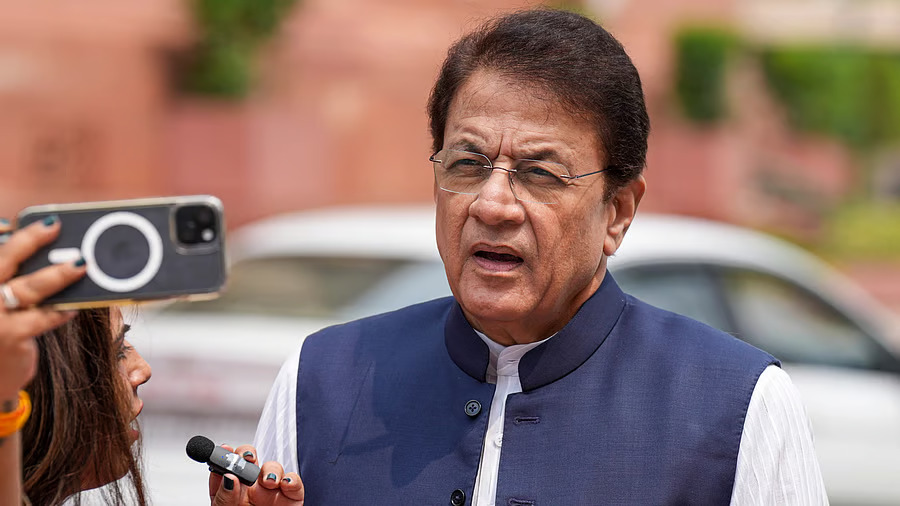
Amid these discussions, veteran actor Arun Govil — widely known for his portrayal of Lord Rama in the 1980s television epic Ramayana — weighed in with a robust counterpoint. Govil rejected the notion of communal bias in the industry, insisting that Indian cinema has historically provided equal opportunities to people of all religions. In an interview on the sidelines of an event organized by leading industry bodies, Govil highlighted major film stars from diverse backgrounds — including Dilip Kumar, Shah Rukh Khan, Salman Khan and Aamir Khan — as examples of artists who achieved iconic status regardless of their faith. Govil stressed that if there were genuine institutional bias, it would be difficult to explain how these artists became some of the most revered figures in Indian cinema.
Govil’s comments were grounded in the belief that Bollywood reflects India’s pluralistic ethos, where talent and audience connection matter far more than religion. His argument is bolstered by the fact that many of Bollywood’s biggest stars have come from a range of cultural and religious backgrounds, and that the industry’s success is tightly linked to its ability to tell universal stories that cross personal identities.
Rahman himself did not double down on any accusation of discrimination. Shortly after the controversy took shape, he released a clarification video in which he emphasized that his comments had been misunderstood. He reframed his position in heartfelt terms: India is his inspiration, his teacher and his home; his music, he said, seeks to connect and celebrate the rich cultural tapestry of the country. He maintained that he never intended to cause pain or division, and hoped his sincerity was understood.
Despite Rahman’s attempt to soften the rhetoric, debates continued on social media and in public forums. Some responses were supportive of Rahman’s legacy and contribution, while others stressed that the Indian film industry remains fundamentally merit-based. Supporters pointed to Rahman’s global achievements — including Academy Awards, Grammys, and other international recognition — as evidence of how his work transcends boundaries and has brought immense pride to India. At the same time, critics of his comments argued that individual career fluctuations are common in creative industries and often linked to market forces rather than communal considerations.
In the middle of the controversy, other industry voices also offered their perspectives. Some figures rejected the idea of communal bias, suggesting that cinema’s “religion” is commerce and creativity rather than religious identity. Their view underscores the belief that Bollywood decisions are driven primarily by box office viability and trends, and not by individual artists’ religious backgrounds. This viewpoint proposes that industry dynamics reflect audience demand, commercial success, and creative alignment rather than any systemic religious exclusion.
The fallout from Rahman’s remarks also illuminates how sensitive discussions about religion and opportunity can be in contemporary India. Even when an artist speaks about his personal experience indirectly and beckons toward nuanced dynamics, interpretations can escalate quickly into broader questions about communal identity. These debates reveal how deeply entwined entertainment, identity, and public sentiment have become, and why discussions about inclusion and fairness must be handled with care, context and clarity.
The episode also highlights Bollywood’s broader cultural role. As one of the largest film industries in the world, it not only entertains millions but also shapes cultural narratives around unity, diversity, and national identity. Stars like Shah Rukh Khan and Salman Khan boast massive followings that transcend religious or regional lines, further supporting the argument that the audience — and by extension the industry — often embraces talent irrespective of religion.
At the same time, Rahman’s remarks have resonated with some who feel that creative industries often mask structural biases under the guise of meritocracy. It is an important reminder that while high-profile success stories demonstrate inclusivity, they cannot alone prove the absence of subtle forms of exclusion or preferential treatment. Genuine inclusivity requires consistent opportunities for all, and a system where merit, collaboration, and respect prevail above all else.
In closing, the recent exchange between Rahman and voices like Arun Govil does more than reflect a fleeting controversy. It sparks an essential conversation about how art, identity, and opportunity intersect in a society as diverse as India’s. It reminds us that the stories we tell about inclusion are as important as the actions we take to achieve it, and that cinema — as both industry and cultural force — must remain open to reflection, reform, and respect for every artist’s journey.
FACTS Transcripts proudly serves students and professionals across a wide range of regions to support their academic and career goals. Our services are available in:
India
United States
Canada
United Kingdom
New Zealand
Australia
Russia
Middle East
North America
Africa
Our Services – FACTS Transcripts
We at FACTS Transcripts assist in various services, including:
Mark Sheet Transcripts
E-Transcripts
Duplicate Mark Sheets & Degree Certificates
Medium of Instructions Certificates
Attestations
HRD Attestation / Apostille Services
ECA (Educational Credentials Assessment)
Trusted by leading global verification organizations, including WES, IQAS, PEBC, NDEB, NASBA, CAPR, NZQA, ICAS, NCESS, ICES, ECE, eduPASS, ACEI, GCEUS, Comparative Education Services, NNAS, NCA, SAQA, QMAS, FORAC, Australian Pharmacy Council, and more.
FACTS Transcripts – The preferred choice for university document verification worldwide. We ensure a hassle-free process for obtaining your transcripts.