

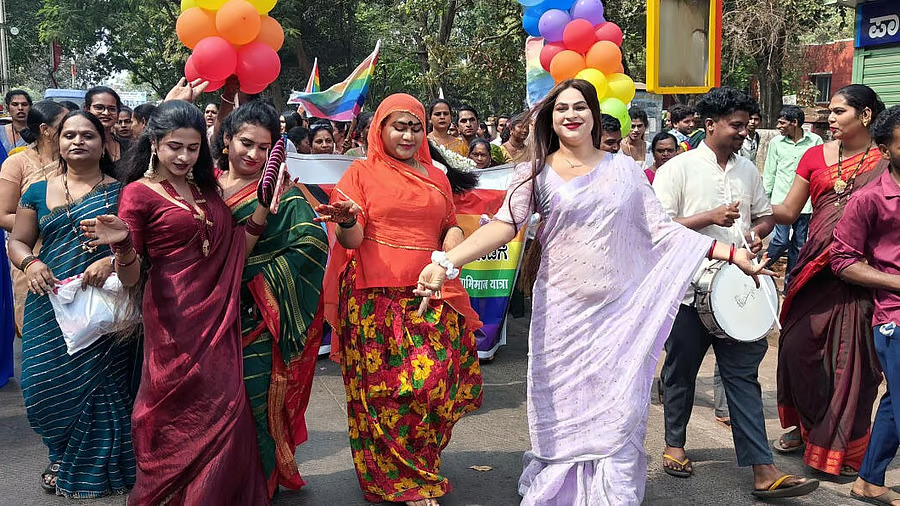
In January 2026, the Government of Karnataka took a significant step toward understanding and uplifting sexual and gender minorities in the state by releasing the results of a comprehensive baseline survey identifying 10,365 individuals from gender minority communities. The survey, conducted across all 31 districts, reveals not only the statistical reality of the transgender and gender-diverse population but also offers critical insights into the socio-economic challenges they face and the policy recommendations needed to address them.
This survey stands as a landmark effort in Indian states to collect meaningful data about a community that has historically lived in the margins of official records — and whose struggles have often gone uncounted. It marks a critical pivot in the dialogue around inclusion, rights, and equitable opportunities for gender minorities in Karnataka.
Understanding the Survey: Scope and Outcomes
The baseline survey was carried out between September 15, 2025 and late 2025, under the joint auspices of the Department of Women and Child Development and the Karnataka State Women’s Development Corporation. It aimed to generate reliable, ground-level data on gender minorities — particularly transgender persons — across urban and rural districts.
Key outcomes of the survey include:
Total Identified Population: 10,365 individuals identified as gender minorities, including 10,250 adults (18 years and above) and 115 children (below 18).
Geographical Spread: Districts such as Vijayapura (1,428), Chikkaballapur (1,252), Bengaluru Urban (757), Kolar (638) and Belagavi (618) recorded the highest numbers, indicating both urban and rural presence and community clusters.
Data Depth: Beyond just headcount, enumerators collected information on education, employment, family support, housing, access to social services, migration patterns, and social inclusion indicators.
This comprehensive approach makes the Karnataka survey one of the most detailed snapshots of gender minority lives in any Indian state to date.
Why This Data Matters
For decades, transgender and gender-diverse persons in India have suffered from social exclusion, discrimination, and invisibility in official records. National census data has historically under-reported or excluded nuanced categories of gender identity, leaving policymakers without the evidence needed to create effective programs.
In contrast, Karnataka’s focused survey creates empirical evidence that can shape targeted policy interventions, including education outreach, healthcare access, legal protections, and economic opportunities.
Stark Realities Unearthed: Barriers Beyond Numbers
While the survey primarily focused on counting and classifying the population, its deeper findings expose severe challenges faced by gender minorities:
Educational Discrimination: A significant portion of survey respondents reported facing violence, ridicule, or discrimination during their education. Nearly a third encountered harassment while studying, which contributed to educational discontinuation for many.
Social Exclusion in Schools: This pattern of exclusion often manifests in schools lacking trained personnel to address diversity, absence of safe sanitation facilities, and classrooms that are not inclusive of non-binary gender identities.
Educational Dropouts: Discrimination frequently forces gender minority youth to quit studies prematurely, further diminishing lifetime earnings and professional opportunities.
Economic Vulnerability: With limited access to formal employment, many gender minorities are pushed into informal or unstable work — often without social security or legal protection.
Healthcare Challenges: Access to gender-affirming care remains inconsistent, with many reporting difficulty in accessing trained health professionals or facing discrimination in healthcare settings.
These systemic issues point to the fact that absence of data is not just a statistical gap — it reflects deep structural exclusion that the survey now begins to dismantle.
Policy Recommendations: From Data to Action
One of the most notable outcomes of the survey was its policy recommendations — concrete steps that could structurally improve the status of sexual and gender minorities in Karnataka. Among these, a recommendation for a 1 percent job quota in the private sector for gender minorities stands out as a potentially transformative proposal.
The Case for a Private Sector Job Quota
The idea of reserving jobs in the private sector for gender minorities is significant for several reasons:
Bridging the Opportunity Gap: Traditional employment statistics show high unemployment or under-employment among transgender and gender diverse persons. A quota could ensure that qualified individuals are actively included in formal job markets.
Economic Independence: Stable formal employment brings not just income, but benefits such as healthcare, social security, and professional dignity — all crucial for sustainable livelihoods.
Social Integration: Inclusion in mainstream jobs can significantly shift public perceptions, breaking stereotypes and reducing stigma associated with gender diversity.
While many Indian states provide reservation in public sector employment and education for members of scheduled castes and tribes, extending this concept into the private sector is relatively new and progressive.
Potential Challenges and Debates
Embedding quotas into private sector hiring is not without debate. Some concerns and complexities include:
Constitutional and Legal Considerations: India’s constitutional framework provides for affirmative action in public sector employment and education but does not explicitly mandate quotas in private companies. Implementing such a policy would require careful legal design to ensure it withstands judicial review.
Employer Compliance: Private sector compliance mechanisms must be transparent and enforceable, with safeguards to prevent tokenism or superficial implementation.
Skill Development Linkages: Quotas must be paired with targeted skill development, education, and training programs to ensure candidates are ready for diverse job roles.
Economic Perceptions: Some business leaders might initially view quotas as regulatory burdens, especially if not framed as part of broader diversity and inclusion strategies.
Despite these concerns, many human rights and social justice advocates argue that without affirmative measures, long-standing exclusion will continue unabated.
More Than Jobs: Comprehensive Welfare Recommendations
The survey’s recommendations go well beyond employment quotas — calling for holistic interventions that support dignity, inclusion, and well-being:
Priority Admission in Hostels and Educational Institutions: To ensure that gender minority students can complete their education in safe, supportive environments.
Scholarship Schemes and Exam Coaching Support: Financial assistance and preparatory support tailored to gender minority students, helping close gaps in access to higher education and competitive exams.
Expanded Healthcare and Mental Health Services: Including gender-affirming care, counseling, and routine health screenings without discrimination.
Creation of a Gender Minority Welfare Board: A formal body empowered to monitor programs, recommend policy, and ensure that initiatives remain aligned with community needs.
These policies together create a blueprint for structural inclusion, recognizing that economic participation is only one part of a broader ecosystem needed for real social integration.
Voices from the Community: Beyond Data Points
Behind every figure in the survey lies a human story — of struggle, resilience, stigma, and aspiration. For many gender minorities, survey recognition itself is a validation of identity and presence. It sends a powerful signal that their experiences matter, and that public policy must acknowledge them not as abstract categories but as citizens with rights and potential.
Looking Ahead: A Model for Inclusive Governance
The Karnataka gender minority survey demonstrates how data-driven governance can illuminate inequalities long hidden from policymaking lenses. By documenting the lived realities of those at the margins and aligning them with meaningful policy actions, the state is charting a path toward inclusion that could serve as a model for other Indian states and policymakers nationally.
Conclusion
The Karnataka survey on gender minorities and the ensuing recommendations represent a watershed moment in the state’s approach to social justice. By identifying over 10,000 gender minority individuals, highlighting systemic barriers, and proposing concrete solutions such as a 1 percent job quota in the private sector, the survey does more than quantify a community — it begins to reframe public policy around equity and dignity.
FACTS Transcripts proudly serves students and professionals across a wide range of regions to support their academic and career goals. Our services are available in:
India
United States
Canada
United Kingdom
New Zealand
Australia
Russia
Middle East
North America
Africa
Our Services – FACTS Transcripts
We at FACTS Transcripts assist in various services, including:
Mark Sheet Transcripts
E-Transcripts
Duplicate Mark Sheets & Degree Certificates
Medium of Instructions Certificates
Attestations
HRD Attestation / Apostille Services
ECA (Educational Credentials Assessment)
Trusted by leading global verification organizations, including WES, IQAS, PEBC, NDEB, NASBA, CAPR, NZQA, ICAS, NCESS, ICES, ECE, eduPASS, ACEI, GCEUS, Comparative Education Services, NNAS, NCA, SAQA, QMAS, FORAC, Australian Pharmacy Council, and more.
FACTS Transcripts – The preferred choice for university document verification worldwide. We ensure a hassle-free process for obtaining your transcripts.