
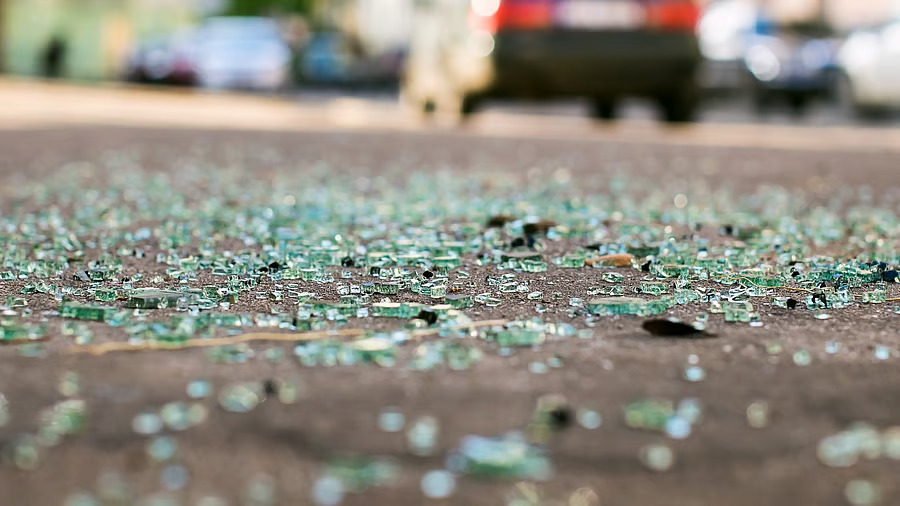
On a calm Monday morning in Bengaluru’s Vivek Nagar neighbourhood, what should have been a routine walk to school and work became an unimaginable tragedy that has left a community reeling. Early in the day, a 37-year-old woman and her eight-year-old son were struck and killed by a college bus while they were crossing a busy road on their way to school. The shocking nature of the incident — and the fact that it unfolded in full view of unsuspecting early-morning commuters — has raised profound questions about road safety, pedestrian protection, driver responsibility, and urban planning in one of India’s fastest growing cities.
The names of the victims bring a human face to the statistics that often dominate news reports. The woman, Sangeetha, lived in the Ejipura area of Bengaluru and worked at a local school. Her young son, Partha, was a second-grade student at the same Army Public School she helped support as a school worker. Every morning, their routine was the same: leave home in the early dawn, walk together along Srinivagilu Main Road and Vivek Nagar Main Road, and make their way toward the school where both lived a part of their lives each day. On this particular morning, between about 6:45 and 7:15, they were attempting to cross the traffic when a private college bus hit them with devastating force.
The impact was so severe that both mother and son died instantly at the scene. There were eyewitnesses who could barely comprehend what they had just seen — a familiar pair out on a walk, suddenly struck by a vehicle so large and fast that nothing could be done to save them. The bus driver did not stop; instead, in a moment that would compound the grief of onlookers, he fled the scene immediately after the accident, leaving the bus abandoned and the victims lying motionless on the asphalt.
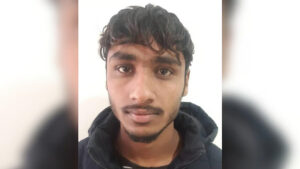
The vehicle was identified as belonging to a private institution, Jain (Deemed-to-be) University’s Global Campus, a college with a fleet of buses that ferry staff and sometimes even students. Police later confirmed the bus registration number and took possession of the bus; they also registered a case of negligent driving resulting in death and of abandonment of the victims at the scene. A manhunt was launched to find the driver, who local police initially said was still absconding, though subsequent reports indicate that a 24-year-old man identified as the driver was taken into custody after being tracked down. An alcohol test reportedly came back negative.
The loss of Sangeetha and Partha has rippled through the community, striking at a core fear that all parents share: the vulnerability of children and the illusion of safety in everyday routines. These two were not far from home; they were not taking risks, but simply crossing a road as part of their daily life. Yet in a matter of seconds, the ordinary became extraordinary in the worst possible way.
How It Happened: Unfolding of a Quiet Morning into Crisis
Traffic in Bengaluru during early morning hours can be deceptively heavy. Roads like Vivek Nagar Main Road and Srinivagilu Main Road witness a mix of commuters — pedestrians, two-wheelers, buses, private vehicles, delivery vans, and rickshaws — all trying to navigate narrow stretches at speed. Despite the early hour, this mix creates a complex environment where split-second decisions by drivers and pedestrians can have catastrophic consequences.
Initial investigations by the Ashok Nagar traffic police suggest that the driver was attempting a turn when he failed to notice the woman and her son crossing. The angle of the bus, its size, and perhaps limited visibility during those dawn hours may have contributed to the collision. The tragic outcome means that mistakes or lapses in attention are no longer hypothetical risks but personal loss.
Police cordoned off the scene soon after the incident and began collecting evidence. The bodies were taken to Bowring and Lady Curzon Hospital for a post-mortem before being handed over to the grieving family. Residents and passersby, many of whom saw the mother and son every day, gathered in shock, paying silent tribute as traffic police worked to clear the road and start the process of investigation and identification.
The Aftermath: Grief, Anger, and Demand for Accountability
The emotional response from the local community was immediate and intense. Grief turned to anger among some residents who witnessed or heard about the incident. The fact that the bus driver chose to flee instead of aiding the victims was seen as both cowardly and irresponsible. In India, hit-and-run incidents, especially those involving pedestrians and vulnerable road users, provoke particular ire because they suggest a prioritisation of self-interest over human life. Community members voiced concerns about reckless driving, especially by large vehicles like buses that carry dozens of passengers and have significant stopping distances.
Families in the neighbourhood have begun to speak about the need for stricter enforcement of traffic rules, speed limits, and better pedestrian infrastructure. Roads where heavy vehicles operate need clear crosswalks, pedestrian signals, and sufficient lighting, especially near schools and residential areas. Many voiced that this tragedy would not have occurred if adequate safety measures, traffic calming features and driver training protocols were in place. Parents also reminded one another of the fragility of life and urged continuous vigilance around traffic.
A Broader Issue: Road Safety in Urban India
While this incident feels like a deeply personal tragedy for the family involved, it also reflects a much larger pattern of road safety challenges in Indian cities — particularly for pedestrians and children. Roads that were once designed for fewer vehicles have not always been upgraded in tandem with urban growth. The pressures of rapid city expansion, rising vehicle ownership, and mixed traffic without sufficient protective infrastructure have contributed to an alarming number of pedestrian fatalities nationwide.
Buses, including private college and school buses, are entrusted with the safety of many people, including students and staff. This places a responsibility on driver training, fitness checks, and strict adherence to safety standards. Ensuring that drivers are alert, well-trained, and evaluated regularly is crucial, especially during peak movement hours when pedestrians are abundant. Some urban planners and safety activists have advocated for lower speed limits close to schools and residential neighbourhoods, better markings and overhead signals, and dedicated crosswalks to protect people who walk as part of their daily life.
The Human Cost: Families Torn Apart in an Instant
Behind every statistic are real people — with hopes, connections, and stories. Sangeetha and her son Partha were part of a family, with relatives in Andhra Pradesh and a life woven into the community of Vivek Nagar. Their routine of walking to school had been a familiar sight to neighbours, and that familiarity now carries the weight of loss and sorrow.
The psychological toll on families who lose loved ones in such unpredictable ways is profound. Grief can turn into long-term trauma, complicating the path forward for those left behind. Siblings, parents, colleagues, friends, and even casual acquaintances all feel waves of shock when a life that seemed ordinary is suddenly gone. It also raises questions about how communities process loss collectively and how civic authorities provide support — both emotional and material — to families who face such sudden bereavement.
Lessons and Reflections: Making Roads Safer for All
The tragedy in Vivek Nagar is not merely an isolated event but a call to reassess how urban roads function and how vulnerable road users are protected. Some critical lessons emerge:
Pedestrian safety infrastructure needs urgent attention. Crosswalks, pedestrian signals, and traffic calming measures are not luxuries but necessities.
Driver training and accountability must be strengthened. Operators of large vehicles should be subject to rigorous fitness and safety assessments.
Enforcement of traffic laws should be consistent and visible in areas with heavy foot traffic, especially near schools and residential zones.
Public awareness campaigns about road safety, speed limits, and caution during school hours can reinforce collective responsibility among drivers and pedestrians alike.
The collective grief that communities feel after accidents like this should motivate constructive action — to prevent similar tragedies from occurring in the future.
Conclusion: A Morning That Changed a Community Forever
The loss of Sangeetha and her young son Partha on a routine walk to school is a painful reminder of how fragile life can be in an urban environment where human movement intersects with motorised traffic. This tragedy is a stark call for greater road safety awareness, stronger protective infrastructure for pedestrians, and accountability for those who operate heavy vehicles. It is also a testament to the deep emotional impact of such sudden loss — on families, communities, and the collective conscience of a city.
FACTS Transcripts proudly serves students and professionals across a wide range of regions to support their academic and career goals. Our services are available in:
India
United States
Canada
United Kingdom
New Zealand
Australia
Russia
Middle East
North America
Africa
Our Services – FACTS Transcripts
We at FACTS Transcripts assist in various services, including:
Mark Sheet Transcripts
E-Transcripts
Duplicate Mark Sheets & Degree Certificates
Medium of Instructions Certificates
Attestations
HRD Attestation / Apostille Services
ECA (Educational Credentials Assessment)
Trusted by leading global verification organizations, including WES, IQAS, PEBC, NDEB, NASBA, CAPR, NZQA, ICAS, NCESS, ICES, ECE, eduPASS, ACEI, GCEUS, Comparative Education Services, NNAS, NCA, SAQA, QMAS, FORAC, Australian Pharmacy Council, and more.
FACTS Transcripts – The preferred choice for university document verification worldwide. We ensure a hassle-free process for obtaining your transcripts.