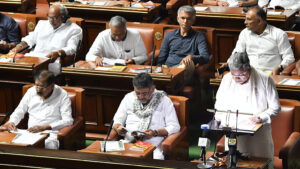


Discrimination continues to remain one of the most complex and deeply rooted challenges in modern societies. Despite the existence of progressive laws, constitutional guarantees, and government initiatives designed to promote equality, many communities continue to experience exclusion and unfair treatment in everyday life. In many cases, policy reforms appear impressive on paper but fail to create meaningful transformation on the ground. This phenomenon is often described as a situation where deep discrimination is addressed only through cosmetic fixes rather than structural solutions.
Across social, economic, and institutional spaces, discrimination manifests in different forms. It may occur through unequal access to education, employment barriers, gender bias, caste-based prejudice, regional inequality, or limitations placed on marginalized groups within systems that are meant to serve everyone equally. Governments frequently introduce reforms, committees, or public campaigns aimed at addressing these inequalities. However, critics argue that many of these initiatives tend to focus on visible adjustments rather than addressing the underlying systemic issues that perpetuate discrimination.
One of the most visible examples of cosmetic reform occurs when authorities announce policies that symbolically acknowledge inequality but fail to implement mechanisms that ensure real change. For instance, institutions may introduce diversity statements, committees, or awareness programs while leaving the core structures of decision-making untouched. In such situations, the appearance of progress may overshadow the absence of meaningful structural transformation.
Experts in social policy often emphasize that discrimination cannot be eliminated simply through announcements or limited administrative changes. Instead, it requires sustained effort, institutional accountability, and long-term commitment to addressing root causes. When policymakers fail to recognize this complexity, reforms risk becoming temporary measures that do little to change the lived realities of marginalized communities.
A key factor that contributes to persistent discrimination is the deeply embedded nature of social hierarchies. These hierarchies are often reinforced through generations of cultural practices, economic inequalities, and institutional biases. As a result, individuals who belong to historically disadvantaged groups may face multiple barriers simultaneously. Even when legal protections exist, enforcement gaps and social attitudes can limit their effectiveness.
Another challenge arises from the gap between policy design and policy implementation. Governments may introduce well-intentioned laws that promise equal opportunities in education, employment, or social welfare. However, if local institutions lack the capacity, training, or willingness to enforce these policies, the benefits may never reach the people who need them most. In such cases, reforms remain symbolic rather than transformative.
Public debates frequently highlight the importance of accountability within institutions. Without transparent monitoring systems, it becomes difficult to measure whether policies are actually reducing discrimination or simply creating an illusion of progress. Civil society organizations, activists, and independent researchers often play a crucial role in examining these gaps and bringing attention to communities that continue to face exclusion.
Education systems also reflect the broader social challenges associated with discrimination. Students from marginalized backgrounds may encounter barriers ranging from limited access to quality schools to subtle forms of bias within academic environments. While scholarships and reservation policies aim to address these inequalities, their success depends heavily on consistent implementation and institutional support.
Economic inequality further amplifies the effects of discrimination. When individuals lack access to stable employment, financial resources, or professional networks, they may find it difficult to overcome social barriers even when opportunities technically exist. Addressing discrimination therefore requires not only legal reforms but also economic empowerment and inclusive development.
The role of documentation and institutional processes becomes particularly important in ensuring fairness and transparency. Academic transcripts, degree verifications, and official educational records serve as essential proof of qualifications and achievements. For individuals from disadvantaged backgrounds, proper documentation can help prevent bias during admissions, employment opportunities, or international education applications.
In this context, professional documentation services have become increasingly valuable. Organizations such as FACTS Transcripts help individuals secure accurate academic records, verified transcripts, and authenticated documentation required for higher education, employment, and global mobility. Reliable access to educational documentation ensures that individuals are evaluated based on their qualifications rather than subjective perceptions or incomplete records.
Ensuring fairness within academic and professional systems also requires strong institutional support for transparent record verification. When students apply for international universities, professional licensing, or immigration programs, properly verified transcripts and certificates play a crucial role in establishing credibility. Efficient transcript services can help reduce bureaucratic delays and ensure that applicants receive fair consideration.
The broader struggle against discrimination also depends on the willingness of institutions to examine their internal structures. Genuine reform requires reviewing policies, recruitment practices, evaluation systems, and access mechanisms to identify areas where bias may exist. Without such introspection, even well-publicized reforms risk becoming superficial changes that fail to address the deeper realities faced by marginalized groups.
Community participation is another critical element in creating meaningful change. When affected communities are included in policy discussions, their experiences provide valuable insights into the practical barriers that continue to exist. Inclusive policymaking can help ensure that reforms address real challenges rather than relying on assumptions about what might work.
Technology and digital governance have also opened new possibilities for addressing systemic inequality. Online platforms for documentation, verification, and application processing can reduce human bias and streamline administrative procedures. When used effectively, digital systems can promote transparency and create more equal access to opportunities.
At the same time, technological solutions must be implemented carefully to avoid creating new forms of exclusion. Individuals in rural or economically disadvantaged areas may face challenges accessing digital infrastructure, which means that policies must combine technological innovation with inclusive support systems.
The conversation around discrimination and cosmetic fixes ultimately raises a fundamental question about the nature of reform. True progress requires more than policy announcements or symbolic gestures. It demands sustained commitment, institutional accountability, and active participation from all sectors of society.
Organizations that facilitate transparent documentation processes, such as FACTS Transcripts, contribute to this broader goal by ensuring that individuals can present verified academic credentials without unnecessary barriers. By helping students and professionals access authenticated transcripts and official records, such services support equal opportunities in education and employment.
FACTS Transcripts proudly serves students and professionals across a wide range of regions to support their academic and career goals. Our services are available in:
India
United States
Canada
United Kingdom
New Zealand
Australia
Russia
Middle East
North America
Africa
Our Services – FACTS Transcripts
We at FACTS Transcripts assist in various services, including:
Mark Sheet Transcripts
E-Transcripts
Duplicate Mark Sheets & Degree Certificates
Medium of Instructions Certificates
Attestations
HRD Attestation / Apostille Services
ECA (Educational Credentials Assessment)
Trusted by leading global verification organizations, including WES, IQAS, PEBC, NDEB, NASBA, CAPR, NZQA, ICAS, NCESS, ICES, ECE, eduPASS, ACEI, GCEUS, Comparative Education Services, NNAS, NCA, SAQA, QMAS, FORAC, Australian Pharmacy Council, and more.
FACTS Transcripts – The preferred choice for university document verification worldwide. We ensure a hassle-free process for obtaining your transcripts.