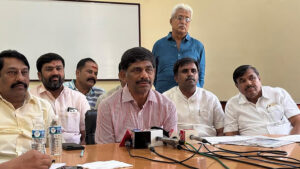

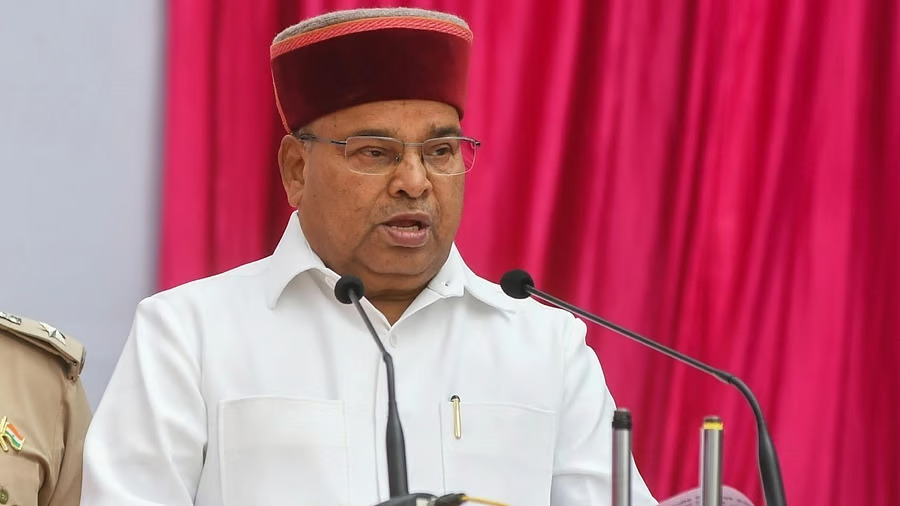
In late January 2026, Karnataka became the center of an intense political storm when the Governor of the state, Thawarchand Gehlot, submitted a formal report to the President of India, Droupadi Murmu, documenting the events of a tumultuous joint session of Karnataka’s legislature. The row has thrown into sharp relief not just a state political tussle, but deeper questions about constitutional roles, federal balance, and democratic traditions.
The Joint Session: Trigger for a Storm
The controversy unfolded during a special joint session of the Karnataka legislature, scheduled from 22 to 31 January 2026, called primarily to debate the repeal of the Mahatma Gandhi National Rural Employment Guarantee Act (MGNREGA) and its replacement with the Viksit Bharat Guarantee for Rozgar and Aajeevika Mission (Gramin) Act (VB-G RAM G). The state government — led by Congress — wanted to officially register its opposition to the Centre’s policy shift and highlight the potential socio-economic impact of replacing a flagship rural employment scheme with a new one.
Under Article 176(1) of the Indian Constitution, the Governor is required to address a joint session on its first day, traditionally reading a speech prepared by the State Cabinet. Instead, Governor Gehlot drastically altered this norm — he began the speech with only a formal greeting, read a few brief lines emphasizing general development commitments, and then walked out of the assembly.
What Really Happened Inside the Assembly
The Governor’s address lasted barely 60 seconds, a dramatic deviation from expectations. He chose not to read the detailed, government-prepared speech that contained strong references — including criticisms — related to the repeal of MGNREGA and introduction of VB-G RAM G. Instead, he stuck to generic assurances about commitments to development.
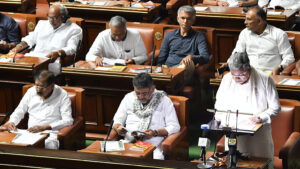
The abrupt exit triggered chaos in the assembly. Congress legislators protested loudly — some even trying to physically block the Governor from leaving until marshals and security intervened. Slogans were raised, tensions soared, and the session was disrupted.
This extraordinary reaction was not merely theatrics of political rhetoric — it reflected deep frustration and anger at what the ruling party saw as a breach of constitutional duty and democratic practice.
The Root of the Conflict: VB-G RAM G vs. MGNREGA
The heart of the dispute lay in the content of the speech that the Governor refused to read. Eleven paragraphs of the draft speech, as prepared by the Congress-led state cabinet, contained pointed references to the Centre’s repeal of the MGNREGA — a landmark employment guarantee law with deep roots in rural India — and its replacement with the VB-G RAM G Act. Governor Gehlot objected to these paragraphs, arguing that parts of them were constitutionally inappropriate because they directly criticized a law passed by the Parliament and supported by the Union government.
The Congress government had planned to use the joint session to formally condemn the repeal and rally support across political lines. Karnataka’s Law and Parliamentary Affairs Minister, H.K. Patil, reportedly traveled to the Raj Bhavan to consult with the Governor on possible modifications to those contentious paragraphs, but the matter couldn’t be resolved in time.
Political Fallout and Rhetoric
In the hours and days following the incident, leaders across the spectrum weighed in — and the rhetoric was sharp.
Chief Minister Siddaramaiah accused the Governor of violating the Constitution, failing in his duty, and acting as a “puppet” for the Central government. He suggested the action was an affront to the dignity of the Legislative House. Some Congress leaders even explored the possibility of moving the matter to the Supreme Court, arguing that constitutional obligations had been breached.
Law Minister H.K. Patil called the Governor’s move a “black day” in the democratic history of the state, framing it as an insult to constitutional conventions. Senior ministers echoed similar sentiments, condemning the refusal to deliver the speech as deeply inappropriate.
On the other hand, leaders closer to the Union government and opposition voices defended the Governor’s decision, arguing that references undermining a Union law in a Governor’s speech were constitutionally sensitive. The opposition BJP also raised concerns about the content and appropriateness of the draft speech. Although reactions in Karnataka were polarized, supporters of the Governor saw this as a matter of upholding constitutional propriety. (This part reflects the broader narrative in occasional news reporting and political reaction.)
Constitutional Questions: Duty, Discretion, or Dispute?
At the core of this controversy is a constitutional dilemma:
Does a Governor have the authority to reject or modify a speech prepared by a duly elected state government?
If yes, under what circumstances?
If not, is this event a breach of constitutional duty?
Article 176(1) of the Constitution mandates that a Governor address a joint session of the legislature at the commencement of the session. But the Constitution doesn’t explicitly detail whether the Governor may alter the content drafted by the state cabinet.
Legal scholars and political analysts have noted that traditionally Governors — as constitutional heads — followed the text prepared by the government provided it did not contain content violating law or constitution. Refusing to deliver it entirely is unprecedented in Karnataka’s political history.
Some argue that the Governor exercised discretion based on concerns about criticizing a Union law in a formal legislative address. Others see this as an overreach into political content and executive functions. The dispute directly engages with the delicate demarcation between constitutional duty and political discretion — a live debate in federal systems everywhere.
Governor’s Report to the President: What’s Next?
Following the uproar and chaotic scenes inside the assembly, Governor Gehlot compiled a report for the President of India detailing what transpired — especially citing the behavior of legislators who protested and attempted to block his exit from the assembly hall. This report, sent to President Droupadi Murmu, essentially shifts the issue from state record into national constitutional arena.
Submitting such a report is not routine. It signals that Raj Bhavan — representing the President — is formally communicating its version of events to the highest constitutional authority. In doing so, it affirms the Governor’s perspective while inviting the President’s office to take note of the political friction.
What happens next could vary:
The President could accept the Governor’s content and reasons.
Or, the matter could fuel further political debates and judicial reviews.
Legal or constitutional petitions might emerge depending on how the state government chooses to respond.
This incident could become a defining moment in how Governors’ roles are interpreted in politically charged situations, especially when state and Union governments are governed by different political parties.
Why This Matters — Beyond Karnataka
While this row is centered in the politics of one Indian state, its implications are wider:
Federal Balance: It underscores the tensions between state autonomy and Union oversight — particularly when Governors are seen as representatives of the central authority.
Constitutional Norms: The debate rekindles discussions on the role of constitutional functionaries and whether discretionary powers extend to political judgments.
Democratic Traditions: For many political observers, the controversy raises questions about respect for conventions established over decades of parliamentary democracy.
Precedent Setting: If Governors begin exercising greater discretion over speeches or actions of state legislatures, it may change the nature of center-state political interactions.
Conclusion
The Karnataka Governor joint session row and the subsequent report to the President represent more than a single political clash. It’s a flashpoint in ongoing debates over constitutional roles, democratic norms, and federal ethos in modern India. While the immediate political heat may cool with time, the constitutional issues this event has brought to the forefront are likely to reverberate in legal interpretations, political strategies, and public conversations for months or even years to come.
FACTS Transcripts proudly serves students and professionals across a wide range of regions to support their academic and career goals. Our services are available in:
India
United States
Canada
United Kingdom
New Zealand
Australia
Russia
Middle East
North America
Africa
Our Services – FACTS Transcripts
We at FACTS Transcripts assist in various services, including:
Mark Sheet Transcripts
E-Transcripts
Duplicate Mark Sheets & Degree Certificates
Medium of Instructions Certificates
Attestations
HRD Attestation / Apostille Services
ECA (Educational Credentials Assessment)
Trusted by leading global verification organizations, including WES, IQAS, PEBC, NDEB, NASBA, CAPR, NZQA, ICAS, NCESS, ICES, ECE, eduPASS, ACEI, GCEUS, Comparative Education Services, NNAS, NCA, SAQA, QMAS, FORAC, Australian Pharmacy Council, and more.
FACTS Transcripts – The preferred choice for university document verification worldwide. We ensure a hassle-free process for obtaining your transcripts.