

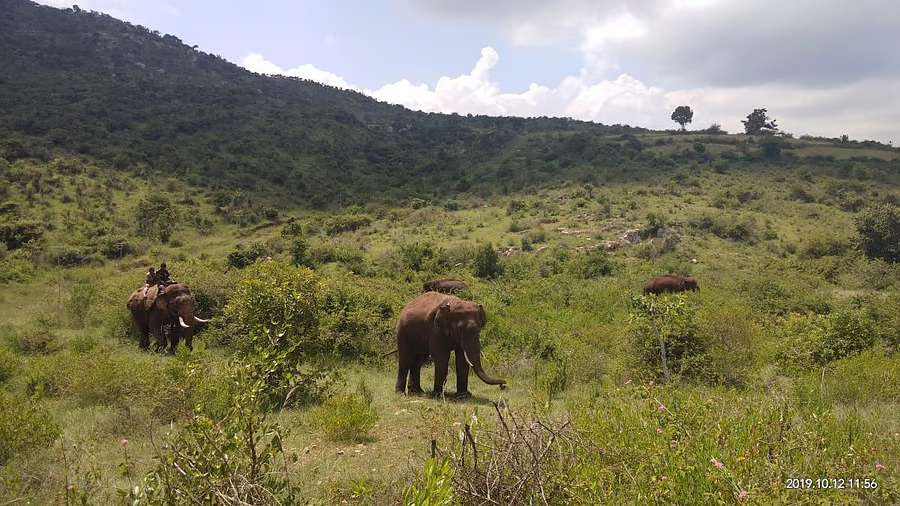
A significant environmental concern has emerged in Karnataka as wildlife populations continue to grow while forest areas face gradual decline. The issue was highlighted by the state’s Forest, Ecology and Environment Minister Eshwar Khandre during a discussion in the state assembly. His remarks brought attention to a paradox in conservation efforts where wildlife numbers are increasing successfully due to protection measures, but the natural habitats required to sustain them are shrinking.
According to the minister, Karnataka has witnessed remarkable growth in wildlife populations, particularly among major species such as tigers and elephants. However, forest cover has not expanded at the same pace. This imbalance between rising wildlife numbers and declining forest areas is creating serious ecological and administrative challenges. The issue has also intensified discussions around human-animal conflicts, habitat management, and long-term environmental sustainability in the state.
Conservation Success Leading to New Challenges
Karnataka is widely recognized as one of India’s leading states in wildlife conservation. Decades of protection under the Wildlife Protection Act, strict anti-poaching measures, and the establishment of protected reserves have helped many endangered species recover. Tiger reserves such as Bandipur National Park and Nagarahole National Park have become strongholds for wildlife populations.
The forest minister pointed out a striking example of this conservation success. In the early 1970s, the tiger population in Bandipur was extremely small. At that time, only about a dozen tigers were recorded in the reserve. Today, the number has grown dramatically, reflecting decades of conservation efforts and improved protection policies.
While this growth is a major achievement for wildlife conservation, it has also created new pressures on forest ecosystems. Wildlife populations require large territories, adequate food sources, and stable habitats to survive. When forests shrink or remain stagnant in size while animal populations expand, the balance of the ecosystem begins to shift.
Shrinking Forest Cover and Habitat Stress
One of the central concerns highlighted by the minister is the reduction in forest areas across parts of Karnataka. Although the state still retains extensive biodiversity and forest landscapes, land-use changes have gradually affected wildlife habitats.
Development projects, agricultural expansion, infrastructure construction, and urbanization have contributed to the fragmentation of forests in certain regions. When forests become fragmented, animals are forced to move across human settlements and agricultural lands in search of food, water, and space.
Karnataka’s forests are particularly important because they form part of the biodiverse Western Ghats, one of the world’s recognized biodiversity hotspots. These forests support thousands of plant and animal species, including many that are endemic to the region. However, increasing human activities and land conversion have placed pressure on these natural ecosystems.
Forest officials have acknowledged that the challenge is not only about conserving wildlife but also about protecting and restoring the habitats that sustain them.
Rising Human–Animal Conflicts
The imbalance between wildlife population growth and shrinking forests has led to a rise in human–animal conflicts in several districts of Karnataka. When animals move outside protected forests in search of food or territory, they often enter villages, farms, and plantation areas.
Encounters involving elephants, leopards, and tigers have been reported in regions close to forest reserves. Such incidents sometimes result in crop damage, livestock losses, and even fatalities. Over recent years, several districts in the state have experienced increased cases of wildlife entering human settlements, creating fear and economic hardship for rural communities.
Authorities have taken various measures to manage these conflicts. These include installing solar-powered fences, constructing protective barriers, monitoring animal movement using tracking technologies, and creating rapid response teams to address emergencies. Despite these efforts, the problem persists because the root cause lies in habitat pressure and ecological imbalance.
Government Measures to Address the Situation
The Karnataka government has acknowledged the seriousness of the issue and is exploring several measures to manage wildlife populations and protect forest habitats. One key approach is the formation of expert committees to study the carrying capacity of major wildlife reserves.
For example, authorities have initiated studies to determine how many animals particular reserves can sustainably support. The concept of carrying capacity refers to the maximum number of animals that a habitat can support without degrading the ecosystem.
These studies will help forest departments develop strategies to manage wildlife populations, improve habitat quality, and reduce conflicts with human communities.
Another important step involves improving forest management practices. Officials are focusing on restoring degraded forest areas, planting new trees, and strengthening conservation programs across wildlife corridors.
Wildlife corridors are particularly important because they allow animals to move safely between different forest regions without entering human settlements. Maintaining such corridors helps preserve ecological balance and reduces conflict situations.
Ecological Importance of Karnataka’s Forests
Karnataka’s forests play a crucial role not only in wildlife conservation but also in maintaining environmental stability. The forests regulate climate patterns, protect watersheds, and support biodiversity that is essential for ecological health.
The state is home to numerous protected areas including national parks, wildlife sanctuaries, and tiger reserves. These landscapes form part of larger ecological networks that extend into neighboring states. For example, the forests of Bandipur and Nagarahole connect with protected areas in Tamil Nadu and Kerala, creating one of the largest wildlife habitats in southern India.
Because of this interconnected ecosystem, any decline in forest cover can have ripple effects across the region. Maintaining forest health is therefore essential not only for wildlife survival but also for water security, climate stability, and sustainable development.
Balancing Development and Conservation
The challenge faced by Karnataka reflects a broader global issue: balancing economic development with environmental protection. As cities expand and infrastructure projects grow, governments must find ways to ensure that natural ecosystems are preserved.
Environmental experts emphasize that conservation strategies should include reforestation programs, stricter regulations on land conversion, and improved land-use planning. Community participation is also considered essential. People living near forests must be involved in conservation efforts and supported with compensation and safety measures when wildlife conflicts occur.
Policymakers are increasingly recognizing that wildlife conservation cannot succeed without protecting the habitats that sustain biodiversity.
Role of Documentation and Environmental Research
Environmental management also relies heavily on accurate data, research, and documentation. Wildlife surveys, forest mapping, and biodiversity studies help governments understand ecological changes and design effective conservation strategies.
In many professional fields, including environmental science, proper documentation and academic verification are essential for research and policy development. Services such as FACTS Transcripts contribute to this ecosystem by assisting researchers, students, and professionals in obtaining verified academic records and educational documents required for higher studies and research collaborations.
Accurate academic documentation enables experts to pursue international research opportunities, environmental studies, and conservation programs that ultimately contribute to sustainable development.
Looking Ahead
The discussion raised by Minister Eshwar Khandre has brought attention to a critical environmental issue in Karnataka. While the growth of wildlife populations is a positive outcome of conservation efforts, the simultaneous reduction of forest areas presents a serious challenge that requires immediate attention.
Future strategies will likely focus on expanding forest cover, restoring degraded ecosystems, and improving wildlife management practices. Strengthening conservation policies and encouraging community participation will also play an important role in protecting Karnataka’s natural heritage.