
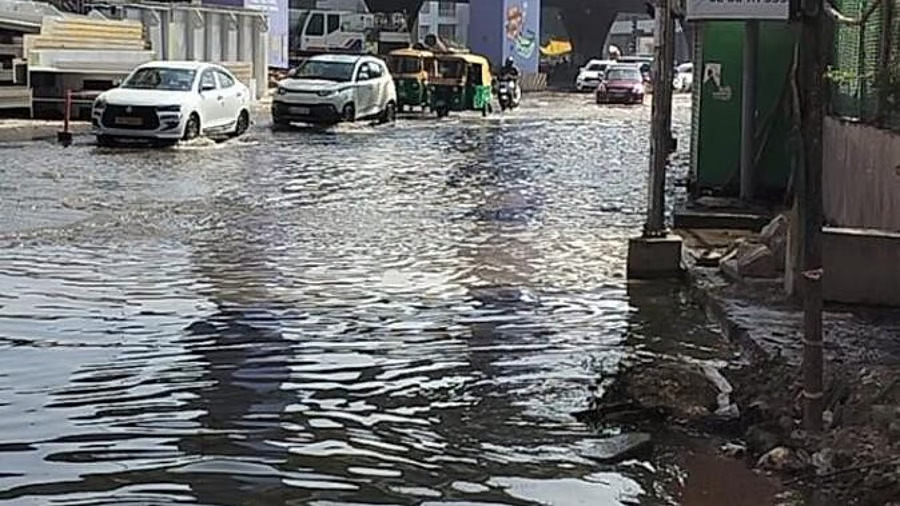
For the residents of BTM Layout in Bengaluru, a neighbourhood once celebrated for its leafy avenues, thriving local businesses, and vibrant community life, recent weeks have brought an unwelcome and distressing crisis. Instead of rising with the morning sun to brew tea, send children off to school, or walk to work with optimism, many families have been confronted with sewage backing up into their homes, an ordeal that has upended daily life, health, and dignity.
What started as occasional odour and minor blockages in the drains gradually escalated into a full-blown sanitation nightmare: wastewater overflowing from manholes, sewage entering living spaces, and the stench of decay hanging over entire streets. Foul water pooled outside homes, in basements and garages, and in narrow lanes where children normally played. For many residents, what should be a private, safe space — the home — has become a place they dare not inhabit without fear of contamination and illness.
This is not just an infrastructure glitch. It is a public health emergency, a civic failure, and a glaring example of how rapid urban expansion without corresponding upgrades to essential services can erode the quality of life in even well-established neighbourhoods.
The Root of the Problem: Infrastructure Strain Meets Rapid Urbanisation
BTM Layout, like many parts of Bengaluru, has seen explosive growth over the past decade. Once a residential suburb on the south-eastern fringes of the city, it has now become a bustling urban hub — with apartment complexes, commercial establishments, IT professionals, students, eateries, and families alike. What was once a network designed for moderate population density is now expected to serve a far larger community than it was ever built for.
The bursting at the seams is most visible in the sewage and drainage system. Underground pipelines meant to carry wastewater away from households and into treatment systems have been overwhelmed. Heavy rains, increased water usage, encroachment on drainage channels, and inadequate capacity have all contributed to the system’s failure to cope. When the drainage network cannot carry the load, wastewater, quite literally, finds the path of least resistance — and that path now leads straight back into people’s homes and streets.
What residents experience is not just dirt water but toxic, disease-bearing sewage containing bacteria, parasites, and pathogens that can cause infections, diarrhoea, skin ailments, respiratory problems, and a host of other health issues. The stench is powerful enough to make even short excursions outdoors unbearable.
Daily Life Disrupted, Health at Risk
When sewage enters the home, the disruption is not just physical; it is psychological and social as well. Imagine waking up to find brown water seeping through your bathroom tiles or pooling at the main door. Imagine children stepping into muck on the way to fetch water, or washing dishes in a kitchen that smells of rot. For many families in BTM Layout, this is now a distressing reality.
Some residents have reported that the water contamination has made it unsafe to even use taps, compounded by fears of mosquitoes and flies spreading disease. Many have had to stop using ground-floor rooms altogether, shifting beds upstairs, and avoiding areas of the house where water stagnates. Seniors, infants, and those with compromised immune systems are particularly at risk.
Women and girls, who still disproportionately shoulder domestic chores in many households, find themselves facing added burden and risk as they try to clean, disinfect, and salvage their living spaces. The crisis also affects students and professionals who rely on stable living conditions to study or work from home.
For families with limited financial means, the cost of repeated cleaning, disinfectants, replacing damaged belongings, and potentially medical expenses, has become an added burden.
Civic Responsibility and Government Response
As residents grapple with the crisis, questions about accountability naturally arise. Bengaluru is governed by the Bruhat Bengaluru Mahanagara Palike (BBMP), the municipal body responsible for civic infrastructure including roads, drainage, sewage, and sanitation services. Residents have repeatedly reached out to local ward offices, elected representatives, and civic hotlines with complaints and pleas for remedial action.
Many expected that repeated reports and mounting distress would prompt swift intervention — clearing of blocked drains, repairs to the sewage network, deployment of vacuum tankers, and temporary containment measures. However, responses have often been slow or fragmented. Some teams have been seen clearing clogging at specific locations, but new blockages reappear, revealing deep-seated systemic issues rather than isolated faults.
A frequent challenge confronts officials: the city’s aging infrastructure blended with piecemeal upgrades and ad-hoc repairs has created a patchwork sewage system that cannot keep pace with demand. As a result, the civic machinery often finds itself reacting to crises rather than preventing them.
Residents have sought detailed explanations for the recurring overflows, demanding clarity on whether the problem stems from inadequate pipelines, blocked mains, overflow from septic tanks connected improperly to the municipal sewer, or structural defects in old lines. They also want assurance that preventive measures — not just quick fixes — will be implemented.
The municipal administration has, at times, indicated that work orders for desilting and capacity expansion are underway, and that teams are being mobilised to address complaints. But for those living with daily contamination, promises of future fixes feel too slow and insufficient.
The Broader Urban Sanitation Challenge
The situation in BTM Layout is not unique to one neighbourhood. It represents a microcosm of wider urban sanitation challenges faced by rapidly growing cities across India and around the world. When urban planning does not keep pace with population growth, basic services like water supply, waste management, road infrastructure, and sewage systems buckle under pressure.
Sanitation must never be an afterthought. Clean sewage disposal is fundamental to public health and human dignity. The failure to prioritise drainage and wastewater management not only leads to visible overflows but also contributes to:
contamination of groundwater resources;
spread of vector-borne diseases;
stress on drinking water networks;
loss of productivity due to illness;
financial stress on households; and
social stress as neighbours compete for limited clean spaces.
When authorities neglect these essential services, the burden falls on residents to cope, adapt, or flee to better-equipped neighbourhoods. In the long run, this undermines a city’s resilience, equity, and livability.
Community Voices: From Resilience to Frustration
In conversations with affected residents, a full spectrum of emotions emerges.
Some express resilience, organising local cleaning drives, pooling resources to hire private water tankers, or collectively purchasing disinfectants. Community WhatsApp groups buzz with updates about blocked drains, newly flooded spots, and shifting schedules for repairs. Neighbours help seniors and children navigate unsafe areas, and volunteer teams attempt to patch small leaks.
But this resilience coexists with frustration and anger. Residents feel that their repeated complaints are met with procedural responses rather than decisive action. They question why decades of urban growth were not matched by investment in essential infrastructure. They ask why neighbourhoods like BTM Layout, which contribute significantly to the city’s economy and culture, are treated as afterthoughts when it comes to sanitation.
Many residents also highlight environmental issues like litter being dumped in open drains, construction debris blocking waterways, and unchecked drain covers that exacerbate flooding. They argue that civic planning must be holistic, addressing both physical infrastructure and community behaviour.
What Needs to Happen Next
Addressing sewage overflow in BTM Layout requires a multi-layered approach:
A comprehensive audit of the sewage network to identify bottlenecks, broken pipelines, and capacity constraints.
Immediate desilting and repair operations in heavily affected zones, with clear timelines and accountability.
Deployment of emergency sanitation teams that can respond to complaints rapidly and efficiently.
Long-term capacity enhancement to align sewerage systems with current and future population needs.
Public engagement campaigns about waste segregation, responsible dumping, and protection of drainage channels.
Financial planning and budgeting to prioritise sanitation infrastructure on par with visible development projects.
In addition to technical measures, consistent communication between civic authorities and residents is crucial. When people feel heard and informed, tensions dissipate and cooperation increases. Trust is built not just through action but through transparent dialogue.
The Human Cost of a Failed Sewage System
At its core, the sewage crisis in BTM Layout is a human story. It is about families who feel unsafe in their own homes. About children who cannot play in the courtyard without stepping in foul water. About elders who struggle with health complications made worse by exposure to contaminated surroundings. About working professionals trying to maintain normal lives amidst stench and unsanitary conditions. It is about dignity compromised and peace disrupted.
Sewage overflow might sound technical when discussed in policy briefs or administrative reports, but for those living it every day, it is painfully personal. It affects every part of life — health, comfort, security, property value, and emotional well-being.
Conclusion: Turning Crisis Into Change
The water that flows through our taps and the wastewater that disappears through our drains are both parts of a single urban ecosystem. When one part fails, the entire system is affected. BTM Layout’s sewage crisis is a warning about the consequences of ignoring infrastructure needs until they reach breaking point.
But there is also hope. This challenge, once recognised and prioritised, can become a turning point — a catalyst for better planning, stronger municipal responsiveness, and empowered communities working in partnership with authorities.
If Bengaluru and other fast-growing cities are to remain places where people can live with health, dignity, and peace of mind, sanitation cannot be relegated to the background. It must stand front and centre in urban agendas.
The residents of BTM Layout are fighting not just for cleaner drains but for a quality of life that every citizen deserves. Their struggle is a reminder that in urban life, no home should be invaded by sewage and no citizen should feel unsafe in their own neighbourhood.
FACTS Transcripts proudly serves students and professionals across a wide range of regions to support their academic and career goals. Our services are available in:
India
United States
Canada
United Kingdom
New Zealand
Australia
Russia
Middle East
North America
Africa
Our Services – FACTS Transcripts
We at FACTS Transcripts assist in various services, including:
Mark Sheet Transcripts
E-Transcripts
Duplicate Mark Sheets & Degree Certificates
Medium of Instructions Certificates
Attestations
HRD Attestation / Apostille Services
ECA (Educational Credentials Assessment)
Trusted by leading global verification organizations, including WES, IQAS, PEBC, NDEB, NASBA, CAPR, NZQA, ICAS, NCESS, ICES, ECE, eduPASS, ACEI, GCEUS, Comparative Education Services, NNAS, NCA, SAQA, QMAS, FORAC, Australian Pharmacy Council, and more.
FACTS Transcripts – The preferred choice for university document verification worldwide. We ensure a hassle-free process for obtaining your transcripts.