

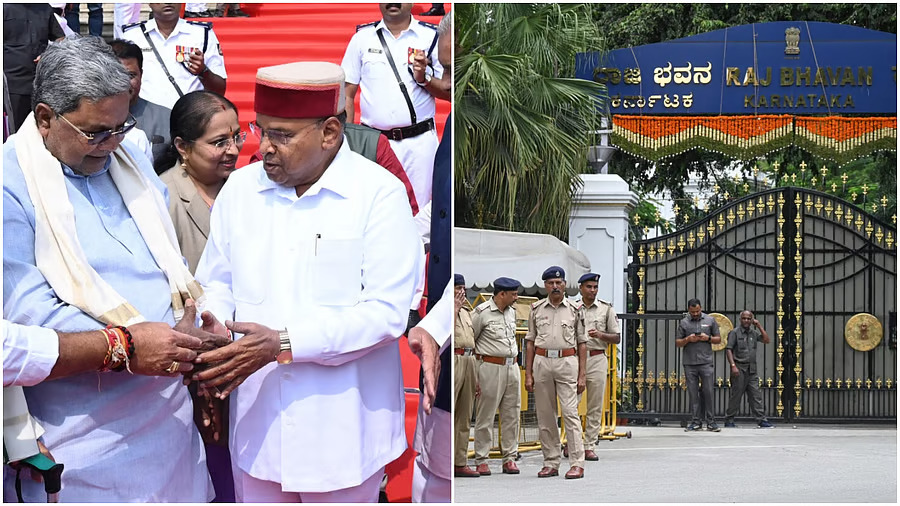
In a move that has sent ripples through Karnataka’s political landscape, Governor Thaawarchand Gehlot declined to deliver the customary address to the joint session of the state legislature scheduled for January 22, 2026. The decision marks a rare and significant departure from established constitutional practice and has triggered urgent consultations between the state government and Raj Bhavan, intensifying political tensions at the start of the legislative year.
Custom and Constitution: The Governor’s Address as a Democratic Ritual
In the Indian constitutional system, the governor’s address to the state legislature’s joint session is a long-standing practice that serves several purposes:
It officially inaugurates the legislative session.
It outlines the government’s legislative and policy agenda.
It offers a platform for setting the tone of governance and framing priority issues for debate.
This speech, while delivered by the governor, is typically drafted by the elected state government and reflects its priorities and legislative goals. Deviating from this tradition is unusual and tends to raise questions about the underlying reasons.
What Happened in Karnataka?
The legislature’s joint session in Karnataka was scheduled to open on January 22, 2026, with Governor Gehlot’s address as the ceremonial beginning. However, a day before, the governor refused to deliver the speech, leading to an immediate political and administrative impasse. A high-level delegation led by Law and Parliamentary Affairs Minister H K Patil was dispatched to Lok Bhavan to discuss the issue with the governor and find a way forward.
Reports suggest that the governor had requested the removal of multiple paragraphs from the speech drafted by the state government. These paragraphs reportedly dealt with contentious issues — including the repeal of the Mahatma Gandhi National Rural Employment Guarantee Act (MGNREGA) by the central government and the replacement scheme called the Viksit Bharat Guarantee for Rozgar and Ajeevika Mission (Gramin) Act (VB-G RAM G). The governor was said to want certain references removed, including criticism of central policies and commentary on Karnataka’s relationship with the Union government.
The state government, however, argued that it could not agree to entirely remove those paragraphs and asserted that the governor should deliver the speech as drafted, given that it reflects the elected government’s agenda.
The Broader Political Context
The governor’s refusal did not occur in isolation. Similar standoffs between governors and elected state governments have recently surfaced in other states such as Tamil Nadu and Kerala, where governors declined to deliver addresses or omitted portions of speeches due to disagreements over content. These incidents signal a broader trend of friction in centre-state relations, especially in states led by parties different from the ruling party at the Union level.
In Karnataka, the state government — led by Chief Minister Siddaramaiah — had convened the joint session with the intention of debating and passing a resolution against the repeal of MGNREGA by the central government. The repeal and replacement of the MGNREGA, a cornerstone of rural employment policy in India since 2005, has drawn strong criticism from opposition parties and state governments alike for potentially weakening employment guarantees for rural workers.
The Karnataka cabinet’s plan to discuss this issue in a joint session — and possibly adopt a formal resolution decrying the new VB-G RAM G Act — sets the stage for anticipated confrontation not just between the governor and the state government, but also between political parties within the legislature itself.
Constitutional and Democratic Implications
The governor’s refusal to address the joint session raises important questions about the balance of power and constitutional conventions:
Executive vs. Ceremonial Role: While the governor’s role is largely ceremonial, it is also constitutional. Refusing to deliver an address challenges the norm that governors act on the advice of the elected government on matters of state business.
Speech Content and Political Neutrality: Governors are expected to maintain impartiality. Their decision to alter or decline to read a politically charged speech may be interpreted as an attempt to disassociate themselves from contentious political positions, especially those critical of Union government policies.
Federal Dynamics: The standoff highlights the ongoing tensions in India’s federal structure, especially when state and Union governments are led by rival political parties. It reflects the pressures and ambiguities inherent in roles that straddle ceremonial dignity and political interpretation.
Scholars and observers will likely scrutinise this episode for its implications on governor-state government relations, particularly how much discretion the governor can legitimately exercise when it comes to speeches drafted by the cabinet. The situation also has the potential to set precedents for future instances where a governor might attempt to alter or withhold consent from the text prepared by the elected executive.
Political Reactions and Next Steps
Reactions from political leaders in Karnataka have ranged from diplomatic engagement to sharp criticism. The state government’s immediate response was to engage in dialogue through a ministerial delegation in hopes of resolving the matter before the joint session begins.
Opposition voices, including leaders from the Bharatiya Janata Party (BJP) and other parties, have weighed in with varying perspectives — some defending the governor’s decision as constitutionally valid, while others see it as an unnecessary disruption to governance and legislative business.
Meanwhile, the state government has emphasised that the joint session must proceed as planned. It has expressed willingness to continue discussions with the governor to find a mutually acceptable solution, even as political debates over the MGNREGA repeal and related welfare concerns rage within and outside the legislature.
What This Means for Karnataka’s Legislative Year
As the joint session unfolds from January 22 to 31, 2026, its initial days may be overshadowed by the unprecedented standoff over the governor’s address. However, the session’s broader agenda — particularly the debate on rural employment guarantees and state rights — remains critically important to both political and public discourse.
The refusal by the governor to deliver the speech serves as a reminder of the competing pulls in India’s democratic system — between tradition and change, ceremonial role and political context, and the autonomy of constitutional offices versus the mandate of elected governments. As the session progresses, all eyes will be on how this constitutional question is resolved and what it means for centre-state relations in the months and years ahead.
FACTS Transcripts proudly serves students and professionals across a wide range of regions to support their academic and career goals. Our services are available in:
India
United States
Canada
United Kingdom
New Zealand
Australia
Russia
Middle East
North America
Africa
Our Services – FACTS Transcripts
We at FACTS Transcripts assist in various services, including:
Mark Sheet Transcripts
E-Transcripts
Duplicate Mark Sheets & Degree Certificates
Medium of Instructions Certificates
Attestations
HRD Attestation / Apostille Services
ECA (Educational Credentials Assessment)
Trusted by leading global verification organizations, including WES, IQAS, PEBC, NDEB, NASBA, CAPR, NZQA, ICAS, NCESS, ICES, ECE, eduPASS, ACEI, GCEUS, Comparative Education Services, NNAS, NCA, SAQA, QMAS, FORAC, Australian Pharmacy Council, and more.
FACTS Transcripts – The preferred choice for university document verification worldwide. We ensure a hassle-free process for obtaining your transcripts.