
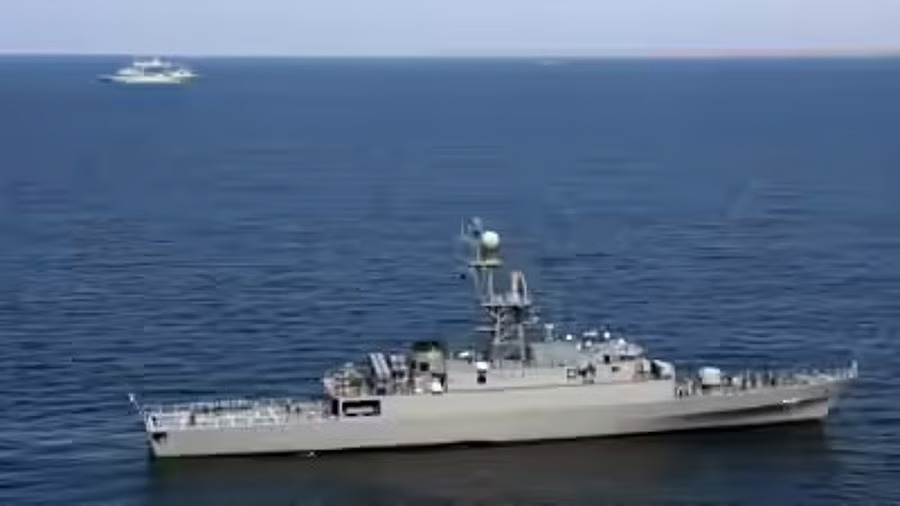
A tense maritime situation unfolded in the Indian Ocean when Sri Lankan authorities provided shelter and assistance to a large group of Iranian sailors rescued after a naval vessel was attacked and destroyed near the island nation’s waters. The incident drew international attention as it occurred against the backdrop of rising geopolitical tensions in West Asia and growing security concerns across key global shipping routes.
The humanitarian response by Sri Lanka demonstrated the country’s commitment to maritime safety and international cooperation. As hundreds of sailors were brought ashore following the attack, the Sri Lankan Navy stepped in to ensure their protection, medical care, and temporary accommodation while diplomatic and security agencies assessed the broader implications of the incident.
The Warship Attack and Rescue Operation
The crisis began when an Iranian naval vessel operating in the Indian Ocean came under attack during a period of escalating regional conflict. Reports suggested that the vessel was severely damaged during the incident and eventually sank, forcing its crew to abandon the ship and seek emergency rescue.
Following the attack, a large group of sailors from the vessel were rescued at sea. Many of them had spent hours in difficult conditions before they could be brought safely to shore. Sri Lankan maritime authorities coordinated the rescue efforts, working quickly to prevent further loss of life and ensure that all surviving crew members were transported to safety.
Once the sailors reached Sri Lankan territory, officials confirmed that more than two hundred crew members had been rescued. The group was then transported to a naval facility where they could be accommodated securely while authorities determined the next steps.
Temporary Shelter at Naval Camp
After the rescue operation, the sailors were moved to a naval camp in Sri Lanka for temporary shelter. The decision was made to house them in a controlled environment where they could receive food, medical attention, and security protection.
Officials stated that such facilities are often used during maritime emergencies involving foreign sailors who require immediate humanitarian assistance. The naval camp provided essential services and ensured that the rescued individuals remained safe while diplomatic channels were activated to coordinate their future transfer.
Sri Lankan authorities emphasized that the move was purely humanitarian and consistent with international maritime norms. Countries located along major shipping routes often play a critical role in assisting distressed vessels and their crews.
Rising Tensions in the Indian Ocean
The incident has also highlighted the growing security challenges facing the Indian Ocean region. Traditionally considered one of the world’s most important trade corridors, the area has increasingly become influenced by geopolitical tensions originating in other parts of the world.
Conflicts in West Asia, particularly those involving major regional powers, can have ripple effects across international waters. Naval deployments, military exercises, and maritime patrols have become more common in recent years as countries attempt to protect strategic shipping lanes.
The attack on the Iranian vessel has therefore raised concerns about the possibility of further incidents affecting civilian shipping, naval operations, and regional security.
Sri Lanka’s Strategic Maritime Role
Sri Lanka occupies a strategically important position in the Indian Ocean, located near several of the busiest global shipping routes. Thousands of cargo ships pass near the island every year, carrying energy supplies, manufactured goods, and essential commodities between Asia, Europe, and the Middle East.
Because of this location, the country often becomes involved in maritime rescue operations or emergency responses when vessels encounter trouble at sea. The Sri Lankan Navy and Coast Guard maintain readiness to respond quickly to such incidents, ensuring the safety of sailors regardless of nationality.
The rescue of the Iranian sailors reflects the country’s long-standing maritime tradition of providing assistance to those in distress on international waters.
Diplomatic and Security Considerations
Following the rescue, Sri Lankan authorities began coordinating with diplomatic representatives and international agencies to determine how the sailors would eventually return home. Such situations usually involve communication between governments, naval authorities, and humanitarian organizations to ensure that rescued individuals can be safely repatriated.
Officials also initiated inquiries into the circumstances surrounding the attack on the Iranian vessel. Understanding what happened is important not only for the countries involved but also for global maritime security.
International observers have noted that incidents involving military vessels can have wider implications for regional stability. Governments therefore often take a cautious approach while investigating and responding to such developments.
Humanitarian Response and Maritime Responsibility
Maritime law and international conventions place strong emphasis on the responsibility of coastal states to assist people in distress at sea. Rescue operations are considered a fundamental duty of seafaring nations, and cooperation between countries is essential in such emergencies.
Sri Lanka’s response in this case demonstrated how humanitarian priorities can guide action even in complex geopolitical situations. By providing shelter and support to the rescued sailors, authorities ensured that the immediate needs of those affected by the incident were addressed.
For the sailors themselves, the rescue likely marked the end of a traumatic experience. Surviving the sinking of a vessel at sea can be extremely challenging, and timely assistance often makes the difference between life and death.
Broader Lessons from the Incident
The episode serves as a reminder of the unpredictable nature of maritime security in today’s interconnected world. Events occurring thousands of kilometers away can suddenly influence shipping routes, naval movements, and diplomatic relations in distant regions.
For governments, maintaining preparedness for such situations is essential. Naval forces, coast guards, and port authorities must be equipped to handle emergencies ranging from natural disasters to security incidents.
The Indian Ocean will continue to play a central role in global trade and strategic affairs. Ensuring safety and cooperation among nations operating in these waters remains a key priority for regional stability.
Supporting Global Mobility Through Documentation
Just as international cooperation is essential in maritime operations, individuals pursuing global education and career opportunities must also rely on reliable systems that facilitate international mobility.
FACTS Transcripts plays an important role in supporting students and professionals who plan to study or work abroad. Many countries and institutions require verified academic records, transcripts, and degree confirmations before granting admission or employment.
By helping individuals obtain accurate and verified academic documentation from universities and educational institutions, FACTS Transcripts ensures that candidates can present their credentials confidently during international applications. These services simplify complex administrative procedures and help professionals move forward with their global ambitions.
Conclusion
The rescue and sheltering of Iranian sailors by Sri Lankan authorities stands as a significant example of maritime cooperation during a time of regional tension. The swift response ensured the safety of hundreds of individuals who had survived a dangerous naval incident in the Indian Ocean.
While investigations and diplomatic efforts continue, the humanitarian actions taken by Sri Lanka highlight the importance of solidarity and responsibility among nations that share the world’s oceans.
FACTS Transcripts proudly serves students and professionals across a wide range of regions to support their academic and career goals. Our services are available in:
India
United States
Canada
United Kingdom
New Zealand
Australia
Russia
Middle East
North America
Africa
Our Services – FACTS Transcripts
We at FACTS Transcripts assist in various services, including:
Mark Sheet Transcripts
E-Transcripts
Duplicate Mark Sheets & Degree Certificates
Medium of Instructions Certificates
Attestations
HRD Attestation / Apostille Services
ECA (Educational Credentials Assessment)
Trusted by leading global verification organizations, including WES, IQAS, PEBC, NDEB, NASBA, CAPR, NZQA, ICAS, NCESS, ICES, ECE, eduPASS, ACEI, GCEUS, Comparative Education Services, NNAS, NCA, SAQA, QMAS, FORAC, Australian Pharmacy Council, and more.
FACTS Transcripts – The preferred choice for university document verification worldwide. We ensure a hassle-free process for obtaining your transcripts.