

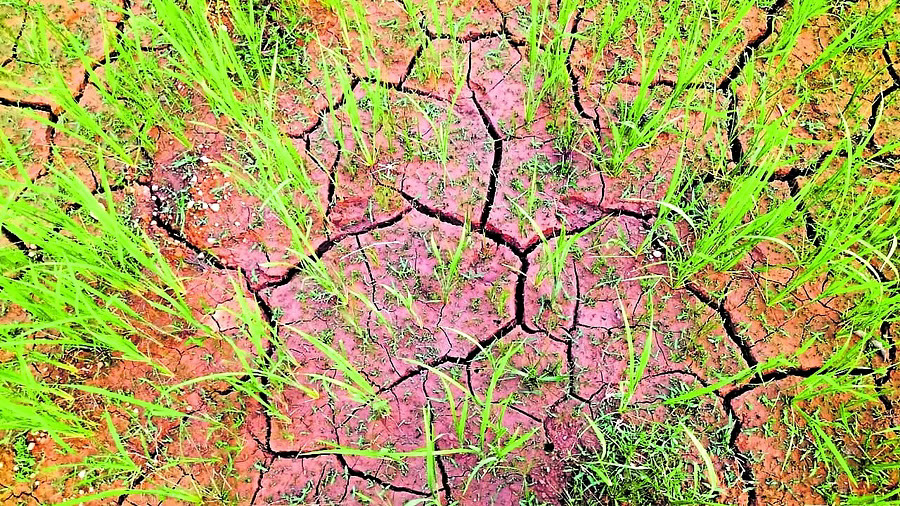
Karnataka, a state known for its agricultural prowess, is facing a distressing agricultural season as a result of insufficient rainfall. The persistent scarcity of rain has dealt a severe blow to farmers cultivating both food and cash crops, raising concerns about crop yields, livelihoods, and the state’s agricultural economy.
The drought-like conditions have gripped several regions in Karnataka, leaving farmers grappling with parched fields and dwindling hopes for a prosperous harvest. The lack of adequate rainfall, particularly during the crucial monsoon season, has resulted in a myriad of challenges for farmers across the state.
Farmers cultivating food crops such as paddy, millets, and pulses are among the hardest hit. With moisture-deprived soil and delayed sowing due to the uncooperative weather, the prospects for these staple crops look grim. The reduced yields of food crops could have a cascading impact on food security and prices in the region.
Cash crop growers, including those cultivating sugarcane and cotton, are also confronting a bleak scenario. These crops, which are essential contributors to the state’s agricultural economy, require significant water resources, making them highly vulnerable to water scarcity. As water reservoirs remain critically low, many farmers are struggling to irrigate their fields adequately.
The state government has initiated measures to alleviate the situation, including the release of water from reservoirs and the provision of relief packages to drought-affected farmers. Additionally, authorities are encouraging the adoption of drought-resistant crop varieties and promoting water conservation practices.
Despite these efforts, farmers in Karnataka continue to grapple with the adverse effects of the scanty rainfall, leading to financial stress and uncertainty about their future. The agrarian crisis has prompted discussions about the need for sustainable agricultural practices, improved water management, and disaster preparedness measures to mitigate the impact of erratic weather patterns.
Agriculture remains a lifeline for a significant portion of Karnataka’s population, and the challenges faced by farmers due to the ongoing water shortage underscore the importance of addressing the vulnerabilities of the agricultural sector. As the state navigates this challenging agricultural season, the resilience of its farmers and the effectiveness of government interventions will be crucial in mitigating the impact of the water crisis and supporting the agricultural community.