

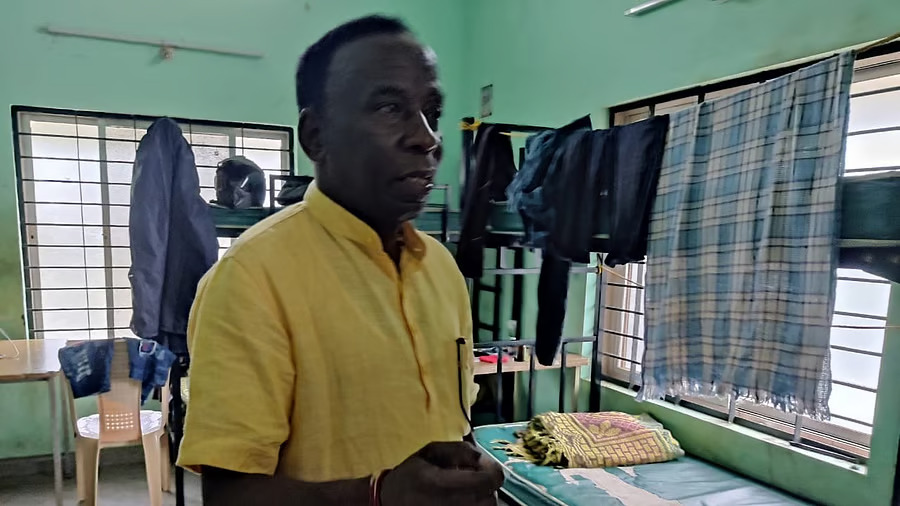
In a significant moment for social justice debates in Karnataka, discussions around caste-based reservation have once again moved into the spotlight. The state’s legislature recently passed a bill to provide internal reservation within the Scheduled Castes category, a historic step aimed at addressing long-standing inequities in how benefits are distributed among sub-groups within Dalit communities. But as one group’s quest for fairness gains legislative backing, another group — the Scheduled Tribes — is urging the government to take a similar leap toward equitable opportunity for tribal communities who feel left behind in official policy.
This unfolding conversation matters profoundly because reservation in India is not just a matter of percentages and quotas; it interacts with centuries of social stratification, access to education and economic opportunities, and the lived reality of traditionally marginalized communities.
What Sparked the Current Debate?
In late 2025 and early 2026, Karnataka’s legislature debated and passed a bill focusing on internal reservation for Scheduled Castes. This move formalised a system of sub-dividing the overall quota for Dalit communities into categories, with the aim of distributing reservation benefits more fairly among groups that had historically unequal access to opportunities. This decision followed detailed analysis and recommendations from commissions and legal opinion, and it culminated in legislation that institutionalised a sub-categorisation model to ensure that benefits reach groups within the SC category in a more balanced way.
While this was seen as historic for Dalit communities, tribal leaders and their representatives soon argued that Scheduled Tribes also need a similar internal reservation mechanism. According to tribal leaders, the overall Scheduled Tribe category contains a wide range of communities, some of which are numerically larger or more socio-economically advanced — and others who are extremely small in number and continue to face deep disadvantage. They argue that the current one-size-fits-all approach to ST reservation does not do enough to address these internal disparities, and that without sub-categorisation, many tribal groups may continue to struggle to benefit meaningfully from existing quotas.
Why Tribal Leaders Are Demanding Internal Reservation
Representatives from Scheduled Tribe associations — including members of organised forums and action committees — have been meeting and discussing these issues at the district level. Their core argument is rooted in demographic inequality and uneven distribution of benefits.
In Karnataka, the Scheduled Tribe population is significant numerically, but it is not uniform across all groups. One tribal community alone constitutes a large majority of the total tribal population, while dozens of other tribes have very small populations, with some having fewer than ten thousand members. Tribal leaders argue that this imbalance means that larger groups tend to capture the majority of reservation benefits, leaving smaller and more vulnerable tribal communities with little real access to jobs, education seats and welfare opportunities.
This is especially acute for so-called Particularly Vulnerable Tribal Groups, whose socio-economic indicators — such as literacy rates, employment, health outcomes and representation in government services — lag far behind. Without internal differentiation, the powerful numerical presence of one community can unintentionally overshadow the needs of smaller groups when it comes to competition for reserved seats.
Based on these ground realities, tribal leaders are asking the Karnataka government to begin a formal process for sub-classifying the Scheduled Tribe category so that the very concept of reservation — meant to uplift the most disadvantaged — works as intended for all constituent communities within the larger ST grouping. Such sub-classification would, in their view, ensure that equity takes precedence over numerical dominance within the reservation framework.
Supreme Court Guidance and Policy Precedent
Legal experts and tribal representatives reference a landmark directive from India’s Supreme Court delivered in 2024. The court, while recognising the need for internal reservation strategies, emphasised that states must collect accurate data and conduct dedicated backwardness studies before implementing sub-quotas. The court called for scientific evidence collection and not grouping unequals together in the absence of proper classification.
This directive provides a judicial backdrop for Karnataka’s legislative experiments with reservation. The Scheduled Castes sub-categorisation bill was developed after detailed surveys and recommendations from specialised commissions that examined the relative socio-economic conditions of various SC sub-groups. Tribal leaders argue that a similar evidence-based approach is necessary for their communities as well: Karnataka should gather accurate data on tribal population, education, employment metrics, and social indicators to make a case for meaningful internal reservation.
The Policy Process: What Tribal Leaders Are Asking For
To advance their cause, representatives from Scheduled Tribes want several key steps:
An independent commission should be established to conduct a detailed socio-economic study of the nearly fifty tribal communities in Karnataka. This would mirror the methodology used for SC sub-classification, ensuring that any internal reservation model is backed by robust data rather than political assumptions.
This commission should consult tribal leaders, local organisations, scholars and social scientists to understand structural barriers faced by marginalised tribal groups.
The government should hold district-level consultations with tribal communities to hear their concerns directly and document lived experiences that may not be fully captured by census data alone.
After gathering accurate and comprehensive data, the commission should recommend a framework for internal reservation within the ST category — designed not to dilute the overall reservation share but to restructure it so that smaller and more disadvantaged tribes receive a fairer share of opportunities in education, employment and welfare schemes.
Tribal leaders have also called for solidarity among tribal communities. They argue that the dominant tribal community should play a leadership role in advocating for the weaker ones, to ensure that all tribes benefit from collective action rather than competition for a limited supply of reserved benefits.
Broader Implications for Karnataka’s Reservation Policy
This emerging demand for internal reservation among Scheduled Tribes comes at a time when Karnataka’s reservation policy is under intense public discussion. Both major parties in the state have grappled with how to balance expanded reservation with legal limits on overall quotas. The state currently provides a substantial share of reservations for historically disadvantaged communities — including SC, ST and Other Backward Classes — in education and government jobs. This has, at times, exceeded traditional constitutional ceilings, prompting legal challenges and policy scrutiny.
The internal reservation movement is part of a larger conversation about how reservation can be tuned to evolving social realities. Advocates see sub-classification as a tool to ensure that reservation does not merely benefit the numerically dominant but truly reaches those who remain most marginalised. This conversation is not restricted to Karnataka; similar debates have arisen in other states where divisions within broad categories (such as Scheduled Castes and Scheduled Tribes) mean that historically disadvantaged subsets may not benefit proportionately from reservation policies.
However, moving from demand to policy is not simple. Internal reservation requires robust empirical data, careful legislative drafting, legal safeguards and broad consensus among communities. It also needs to align with constitutional principles and ensure that the overall goals of affirmative action — to foster social justice and equality — are upheld without engendering new forms of division.
Voices from the Ground: What This Could Mean
For individuals and families within small tribal communities, the promise of internal reservation offers hope of access to government jobs, higher education opportunities and a more predictable path to economic stability. It signals a move away from a one-size-fits-all model that can leave the smallest groups overshadowed and underrepresented.
Educators, researchers and policy advocates argue that this type of targeted intervention has the potential to reduce deep disparities at a micro level. They point out that in its current form, the ST reservation system treats a diverse set of communities — with widely varying social, educational and economic profiles — as if they were homogeneous. A calibrated internal reservation system would, in theory, provide differentiated support based on genuine need and disadvantage, rather than solely on broad category membership.
Critics, however, caution that internal reservation must be designed carefully to prevent fragmentation, political manipulation or dilution of core affirmative action goals. They argue that internal quota models should be introduced only after strong consensus and with transparent data that withstands constitutional scrutiny.
The Path Forward: Policy, Politics and Promise
As Karnataka’s government deliberates how to respond to these demands, it faces a complex policy challenge. The state must balance constitutional principles, judicial guidance, community aspirations and administrative feasibility. The legislature has already shown that it is willing to innovate, as seen in its move to codify internal reservation among Scheduled Castes. Extending similar legislative focus to Scheduled Tribes would mark another significant evolution in how the state approaches social justice.
Success in this endeavor would not only deepen the equity of Karnataka’s reservation framework but also send a message that affirmative action policies can be responsive to nuanced realities — that they can evolve beyond broad categories to address specific vulnerabilities.
If the government accepts the challenge, the next steps will likely involve forming expert committees, launching detailed surveys, holding wide-ranging consultations and eventually bringing thoughtful legislation before the assembly. The result could be a more equitable reservation structure that recognises diversity within diversity, and extends the promise of affirmative action more fairly to all marginalised communities.
FACTS Transcripts proudly serves students and professionals across a wide range of regions to support their academic and career goals. Our services are available in:
India
United States
Canada
United Kingdom
New Zealand
Australia
Russia
Middle East
North America
Africa
Our Services – FACTS Transcripts
We at FACTS Transcripts assist in various services, including:
Mark Sheet Transcripts
E-Transcripts
Duplicate Mark Sheets & Degree Certificates
Medium of Instructions Certificates
Attestations
HRD Attestation / Apostille Services
ECA (Educational Credentials Assessment)
Trusted by leading global verification organizations, including WES, IQAS, PEBC, NDEB, NASBA, CAPR, NZQA, ICAS, NCESS, ICES, ECE, eduPASS, ACEI, GCEUS, Comparative Education Services, NNAS, NCA, SAQA, QMAS, FORAC, Australian Pharmacy Council, and more.
FACTS Transcripts – The preferred choice for university document verification worldwide. We ensure a hassle-free process for obtaining your transcripts.