
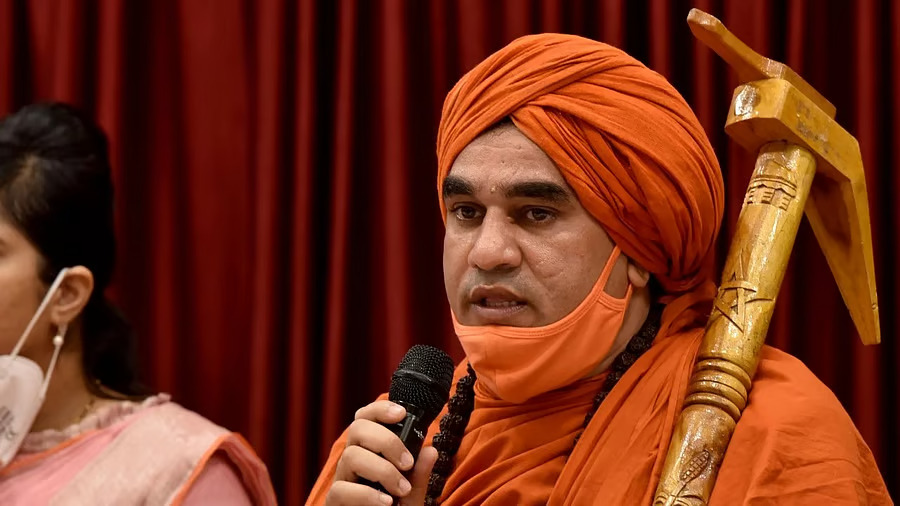
As Karnataka prepares to conduct its caste and community survey, leaders of the Panchamasali sub-sect of the Lingayat community are stepping into the spotlight. A prominent seer from the Panchamasali Peetha has called on community members to mark their religion as Hindu in the “religion” column of the survey form, sparking debate and drawing attention to questions of identity, politics, and social rights.
What’s Going On
A community awareness meeting was recently held in Hubballi, where members of the Panchamasali Lingayat group gathered to decide on how to respond to the upcoming social and educational survey. During that meeting, the seer asked that all members record their religion as Hindu rather than using categories like “Others” or trying to identify as a separate religious group.
This plea comes amid broader discussions and divisions within the Lingayat community over how its members should declare their religion in the survey, and whether or not they should assert a separate religious identity (such as “Veerashaiva-Lingayat”) distinct from mainstream Hindu identity.
Why This Matters
Identity & Political Weight
The Lingayats are one of the largest and most politically influential communities in Karnataka. How they classify themselves — whether under Hindu or a separate religion — may have implications for political representation, social status, and public perception. There is concern among various leaders that categorization could influence electoral politics, community unity, and the access to benefits meant for certain social groups.
Reservation & Social Justice
Part of the discussions also involve questions of backwardness, sub-caste classifications, and eligibility for reservation benefits. Some leaders believe that identifying separately or accurately through sub-castes can help highlight groups within the community that are more socially or economically disadvantaged. On the other hand, being part of the larger “Hindu” umbrella may be seen by others as preserving tradition or maintaining broader unity.
The Debate and Diverging Stances
Some community leaders and seers back the seer’s recommendation, emphasizing continuity with how the community has been identified historically. They argue that identifying as Hindu in the religion column does not diminish their Lingayat identity, which would be preserved under caste/sub-caste fields.
Others, however, feel conflicted or opposed. They argue that the category “Hindu” may obscure the distinct identity of Lingayats or neglect internal inequalities. A different set of voices believe that choosing “Others” along with “Veerashaiva-Lingayat” may better inventory the true demographic and social realities.
There are also concerns about confusion among ordinary community members who are receiving mixed messages: which category to select, how to record sub-castes, what the consequences might be. Some want clarity from religious leaders, community organizations, and the government.
Implications
For the Survey’s Data Quality: How Lingayats respond could affect how well their numbers are captured, disparities noted, and resource allocation determined. If many choose “Hindu,” nuances in identification may be lost; if “Others,” questions about interpretation and policy response may follow.
For Community Cohesion: This issue highlights internal divisions: between those who want to emphasize a distinct identity versus those prioritizing solidarity with a larger group. Long term, such splits might affect how community institutions function or how members relate to each other.
For Political Strategy: Political parties are watching closely. The alignment of community leaders with certain stances (e.g. backing “Hindu” identity vs. pushing for separate recognition) may influence voter perceptions, influence appeals during elections, and become part of broader political narratives.
What to Watch Going Forward
Whether the Panchamasali seer’s request gains wide support, and whether community organizations issue formal guidance or consensus statements.
How government survey officials respond, especially whether the instructions/procedures allow for clarity on how to record religion, caste, and sub-caste in ways that respect both individual choice and statistical clarity.
What reactions come from other sub-sects, mutts, leaders within the Lingayat fold. Some may push back or offer alternative advisories.
How this debate impacts reservation policies and community benefits—if sub-caste backwardness is better revealed, whether that leads to differentiated support.
Conclusion
The request from the Panchamasali seer for members to identify as Hindu in the religion column reflects deep questions about identity, politics, and community self-understanding that are surfacing in Karnataka right now. As the caste survey draws near, this issue serves as a reminder that statistical exercises are never neutral: they reveal, reinforce, or reshape how people see themselves and want to be seen.
Our Services – FACTS Transcripts
We at FACTS Transcripts assist in various services, including:
Mark Sheet Transcripts
E-Transcripts
Duplicate Mark Sheets & Degree Certificates
Medium of Instructions Certificates
Attestations
HRD Attestation / Apostille Services
ECA (Educational Credentials Assessment)
Trusted by leading global verification organizations, including WES, IQAS, PEBC, NDEB, NASBA, CAPR, NZQA, ICAS, NCESS, ICES, ECE, eduPASS, ACEI, GCEUS, Comparative Education Services, NNAS, NCA, SAQA, QMAS, FORAC, Australian Pharmacy Council, and more.
FACTS Transcripts – The preferred choice for university document verification worldwide. We ensure a hassle-free process for obtaining your transcripts.