
Art is not only an expression of imagination; it is a living pulse of tradition, emotion, and community. For the city of Mysuru, which has long been celebrated for its cultural heritage, classical arts, and historical charm, the Mysore Chitra Santhe has become a vibrant platform where creativity faces the world and artists find their audience. In January 2026, the Chitra Santhe returned with renewed vigour at the Jagannatha Centre for Arts and Culture in Vijayanagara, Mysuru, bringing together fifty-four artists in a two-day showcase that celebrated the depth and diversity of visual expression.
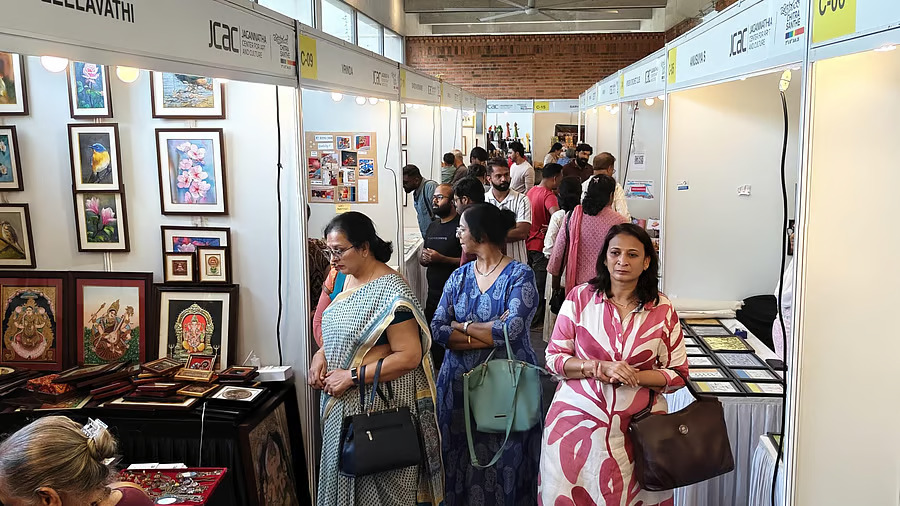
Unlike a closed gallery exhibition, this Chitra Santhe created an active, interactive space where painters, illustrators, and art lovers converged in an atmosphere buzzing with imagination and dialogue. It emerged as a rare opportunity — especially in an era when regular art fairs can sometimes feel sporadic — to reconnect the artistic community with its audience and to remind people why art matters in our daily lives. The event was organised by the Association of Visual Artists in collaboration with the Jagannatha Centre for Arts and Culture, aiming to fill a cultural space that has experienced irregular art showcases in the heritage city. Visitors were greeted by a wide array of works displayed across fifty-four individual stalls that reflected the richness of contemporary and traditional art forms in India. Each stall was a doorway into an artist’s world, displaying pieces ranging from vibrant acrylic paintings and delicate watercolours to intricate charcoal portraits, Mandala compositions, and mixed media work — each telling its own story through colour, form, texture and imagination. The diversity of styles underscored the multiplicity of artistic inspiration, from introspective personal themes to bold social commentary. Many of these pieces revealed the evolving role of art in society — serving not just as ornamental landscapes on canvas but as mirrors of culture, emotion and lived experience. This kind of showcase helps bring forward artists who might otherwise struggle to connect with appreciators beyond their immediate circles, giving them a chance to show, discuss and, in some cases, sell their art.
The response from visitors on the first day exceeded expectations. According to organisers, the fair was originally planned for around forty stalls, but strong demand led to the inclusion of fifty-four artists, indicating a vibrant enthusiasm among creators seeking space to share their work. Many artists reported strong sales, providing not only economic support but also emotional encouragement. One artist recorded sales worth forty thousand rupees on the opening day, while another sold several paintings within hours. For artists who often work for months or years in solitude, seeing their work find buyers and admirers is a powerful affirmation of their creative journey.
Artistic Legacy Meets Contemporary Expression
The significance of an event like Mysore Chitra Santhe extends beyond immediate commerce; it reflects Mysuru’s deep artistic traditions and the evolving contemporary art landscape across Karnataka and India. Mysuru has a long history of fostering artistic talent — from the royal patronage of the Mysore School of Painting to modern galleries that showcase local and national talents. Its proximity to visual arts institutions and traditional art hubs gives the city a unique cultural blend where heritage crafts and modern artistic explorations coexist.
In this context, the Chitra Santhe becomes more than an exhibition; it becomes a bridge between tradition and innovation. Artists from Mysuru and beyond draw on classical techniques, local motifs, cultural narratives and personal imagination to create works that resonate with varied audiences. Some may echo the structured elegance of Mysore style art, while others experiment with contemporary visual languages that connect local aesthetics with global trends. This creative conversation enriches both creators and viewers, nurturing appreciation for the continuing relevance of art in a rapidly changing world.
Supporting Artists and Sustaining Creativity
One of the most heartening aspects of the recent Chitra Santhe was the emphasis on accessibility and support for artists. The event was free for visitors, allowing art lovers of all ages and backgrounds to explore creations without barriers. For the artists themselves, stall spaces were offered at subsidised rates, ensuring that creative contribution — especially from those outside major urban art markets — was encouraged rather than impeded by financial constraints. For out-of-station artists, organisers even arranged free accommodation, reflecting a holistic approach that prioritises artistic participation over profit.
This support system demonstrates how art fairs can be inclusive platforms — not just marketplaces but environments that validate artists’ work, open lines of communication between creators and audiences, and inspire young visitors to imagine their own creative paths. In a time when art education and opportunities for consistent exposure can be limited, initiatives like this help bridge the gap.
Children were also engaged directly. A painting competition for young participants was held, divided into multiple categories, inviting the next generation of artists to test their skills, express their voices, and experience the thrill of being part of a larger artistic community. Prizes for these competitions were set to be distributed during the main Uttarayana cultural festival later in January, reinforcing a sense of continuity between different cultural expressions in the city.
Chitra Santhe and the Uttarayana Festival: Cultural Rhythm of Mysuru
The Mysore Chitra Santhe took place as a curtain-raiser to the upcoming Uttarayana cultural festival, a larger celebration scheduled to run from January 23 to 27. This timing embedded the art fair within Mysuru’s broader cultural calendar, allowing the Santhe to set the tone for weeks of artistic and cultural experiences. Uttarayana itself is anticipated as an expansive festival blending music, dance, craft exhibitions, and traditional performances — turning Mysuru into a vibrant hub of cultural energy.
By aligning visual art with wider cultural festivities, organisers amplified the role of art in shaping collective experiences. Art becomes not just a static display but part of the living cultural rhythm, intersecting with performance, community gatherings, food, rituals, and festival energies. Viewers are reminded that art is not isolated from life but deeply woven into the social and cultural fabric of the city.
Future Plans and the Vision for Art in the Region
Reflecting on the success of this edition, the Association of Visual Artists revealed plans to make the Mysore Chitra Santhe an annual fixture, expanding its reach and impact over time. The organisation also envisions hosting one major national-level fair and additional rural or tribal-focused art events each year, aiming to create a network of artistic opportunities that extend beyond the urban core. These future plans reflect a commitment not just to one event but to cultivating an artistic ecosystem — one where professional creators find sustenance, emerging talent finds support, and cultural diversity is celebrated at multiple levels.
Such intentions help strengthen Mysuru’s place on the cultural map of India, complementing other artistic institutions, galleries, festivals and heritage sites. When cities embrace consistent support for creative communities, they become places where art is not only produced but also nurtured, discussed, shared and integrated into everyday life.
The Transformative Power of Art for Society
Events like Mysore Chitra Santhe remind us why art matters. In a world filled with noise — economic pressures, digital distractions, political tensions and social shifts — art offers a space for reflection, connection, emotion and beauty. Walking through rows of paintings and illustrations, a visitor engages not just with colour on canvas but with narratives, identities, perspectives and experiences. Art encourages empathy and curiosity. It draws strangers into conversation and invites children to imagine beyond the page.
For the fifty-four artists who stood side by side in Mysuru, each stall held a personal journey — years of practice, experimentation, struggle and achievement. For the viewers who stopped to admire, question, purchase and applaud, the Santhe offered the joy of discovery, the thrill of connection, and the reminder that creativity is a shared human heritage.
Conclusion: A Festival of Vision, Craft and Community
The Mysore Chitra Santhe of 2026 was more than an event; it was a living tapestry of artistic expression, a vibrant meeting ground for creators and appreciators, and a reaffirmation of how art enriches public life. It showcased the beauty that emerges when artists are supported, audiences are welcomed without barriers, and culture is celebrated collectively.
As Mysuru continues to expand its cultural horizons, the Chitra Santhe stands as a beacon — reminding everyone that art has the power not only to decorate walls but to shape minds, touch hearts and build communities. In every brushstroke, every sketch and every glance, art speaks to us of our shared humanity and the endless ways imagination can illuminate the world.
FACTS Transcripts proudly serves students and professionals across a wide range of regions to support their academic and career goals. Our services are available in:
India
United States
Canada
United Kingdom
New Zealand
Australia
Russia
Middle East
North America
Africa
Our Services – FACTS Transcripts
We at FACTS Transcripts assist in various services, including:
Mark Sheet Transcripts
E-Transcripts
Duplicate Mark Sheets & Degree Certificates
Medium of Instructions Certificates
Attestations
HRD Attestation / Apostille Services
ECA (Educational Credentials Assessment)
Trusted by leading global verification organizations, including WES, IQAS, PEBC, NDEB, NASBA, CAPR, NZQA, ICAS, NCESS, ICES, ECE, eduPASS, ACEI, GCEUS, Comparative Education Services, NNAS, NCA, SAQA, QMAS, FORAC, Australian Pharmacy Council, and more.
FACTS Transcripts – The preferred choice for university document verification worldwide. We ensure a hassle-free process for obtaining your transcripts.