
Every January, as India approaches Republic Day, cities across Karnataka burst into vibrant celebration with festivals that highlight cultural pride, creativity and nature’s beauty. Among these, Mangaluru’s annual flower and fruit exhibition at Kadri Park has become a signature event that draws thousands of visitors — families, students, artists, nature lovers and tourists — to witness an extraordinary blend of horticulture, art and community spirit. In 2026, the exhibition is poised to offer one of its most eye-catching attractions yet: a floral replica of the Vande Bharat train, meticulously created using tens of thousands of flowers.
A Celebration Rooted in Nature and Community
The four-day flower and fruit show runs from January 23 to January 26 at Kadri Park in Mangaluru — a sprawling city park known for its lush gardens, musical fountain and longstanding role as a community space. Kadri Park has a history of hosting large floral displays, and this exhibition is one of its most anticipated annual events. Organised jointly by the Department of Horticulture, the district administration, Zilla Panchayat, the Kadri Park Development Committee and the Siri Thotagarike Sangha, the show combines horticultural excellence with educational displays and public engagement.
As part of the Republic Day period celebrations, the exhibition highlights not only the ornamental beauty of flowers but also local agricultural diversity, creative artistry and sustainable gardening practices. At a time when environmental awareness and green living are increasingly important, such events help bridge the gap between aesthetics and ecological education.
The Floral Vande Bharat: A Modern Icon in Petals
This year’s standout attraction is the floral replica of the Vande Bharat Express, India’s indigenous semi-high-speed train that symbolizes modern railway engineering and rapid connectivity. The model measures approximately 24 feet in length with a 30-foot track, featuring three bogies fashioned entirely out of fresh flowers. The design blends horticultural skill and artistic vision, creating a living sculpture that celebrates both the train’s significance and the beauty of nature.
Using around 15,000 flowering plants from more than 30 varieties, organisers have created a train that feels alive with colour and texture. The plants — including chrysanthemums, marigolds, zinnias, dianthus, asters, vinca rosea, cock’s combs, dahlias, petunias and torenias — have been grown in pots and artistically arranged throughout the park to enhance both the replica itself and its surrounding garden settings.
The choice of theme is thoughtful and symbolic. The Vande Bharat Express represents India’s aspirations for fast, modern infrastructure that connects regions and people. Reimagining it in floral form not only makes it accessible to a wider public but also gives visitors an opportunity to engage visually with the idea of progress meshed with nature — a reflection of how modern development and ecological awareness can be expressed together.
More Than Just Flowers: Diverse Attractions and Educational Displays
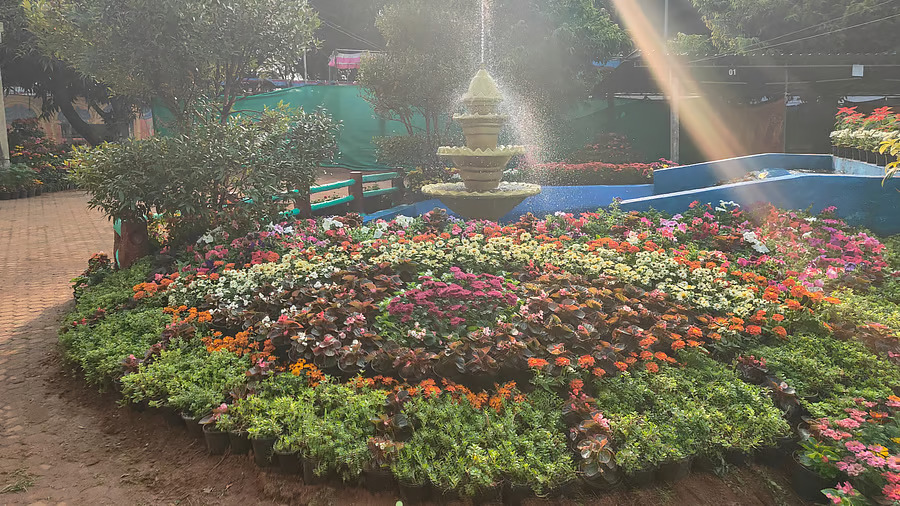
While the floral train is expected to draw large crowds, the exhibition offers many other attractions. The park’s pathways are lined with ornamental plants, bonsai collections and Ikebana (Japanese floral art) arrangements, showcasing diverse gardening styles and aesthetic traditions that inspire home gardeners and plant enthusiasts alike. The variety of exhibits emphasizes both field-grown blooms and delicate design techniques practiced by horticulturists.
A vegetable kitchen garden demonstration has been cultivated within the park, displaying crops such as brinjal, basale, chilli, tomato, beans, cauliflower, ridge gourd and bottle gourd. The idea is to educate visitors about kitchen gardening — a practical approach to sustainable living that encourages households to grow their own vegetables using limited space. Similar garden displays often blend visual appeal with real-world advice on soil care, seasonal planting and companion cropping, making them a highlight for many visitors.
Another engaging aspect of the show is the artistic carvings made from fruits and vegetables, which depict local cultural scenes, agricultural abundance and portray prominent personalities from various fields. These edible sculptures celebrate the region’s agrarian traditions and offer surprising forms that combine creativity with everyday produce.
For younger visitors, installations such as a six-foot Mickey Mouse figure and themed selfie points provide playful attractions, making the exhibition a family-friendly experience. These features draw younger crowds and help engage children with nature in a lively, imaginative way.
Stall Exhibitions and Community Participation
The show also integrates community involvement and economic activations. A plant festival accompanies the exhibition, offering a platform for nursery owners, seed sellers, fertiliser dealers, horticulture entrepreneurs and agricultural machinery vendors to set up their stalls. More than 100 vendors have registered, providing visitors with a chance to explore, learn and buy gardening products, tools and saplings.
In a bid to encourage gardening beyond the festival grounds, the Department of Horticulture has made arrangements to sell about 50,000 vegetable seedlings at a subsidised rate of one rupee each. These include tomato, brinjal and chilli saplings, which are popular choices for home gardens. Subsidised seedling sales have become an effective initiative in reaching out to households eager to start their own kitchen gardens, particularly among urban dwellers and students.
Various government departments are also participating with informational stalls that promote agricultural schemes, horticulture practices and farmer welfare programmes. These stalls help disseminate useful knowledge on topics such as soil health management, crop diversification, drip irrigation and modern cultivation techniques. Government participation adds an educational dimension to the show, linking visual enjoyment with practical agricultural insights.
Expected Audience and Cultural Impact
Organisers anticipate that the festival will attract between 50,000 to 60,000 visitors over four days. This makes it one of the major events in Dakshina Kannada district during the Republic Day celebrations. Many visitors come not just to enjoy the displays but also to participate in workshops, buy plants and learn new gardening techniques.
For Mangaluru, such exhibitions enhance community engagement and foster environmental consciousness. They also contribute to local tourism and support small businesses linked to horticulture and agriculture. Residents and tourists alike gain a deeper appreciation for plant diversity and creative expression.
Events like the Kadri Park flower show stand in a rich tradition of floral exhibitions across Karnataka. Bengaluru’s iconic Lalbagh Flower Show, for example, is another flagship horticultural event that draws visitors from across the world, featuring elaborate floral dioramas and thematic displays during Republic Day celebrations. These festivals celebrate nature, culture and community in uniquely engaging ways.
A Shared Celebration of Art, Nature and Progress
The floral Vande Bharat at Mangaluru’s flower show symbolizes more than aesthetic appeal — it reflects the way public events can bring together nature, art, engineering marvels and a sense of shared identity. It captures the imagination of visitors who see in it not just a train shaped by petals, leaves and colours, but also the story of innovation, connectivity and cultural celebration that defines contemporary India.
The careful planning, horticultural skill and civic participation behind the exhibition make it a memorable highlight of the Republic Day season in Mangaluru. By blending floral artistry with educational exhibits, this flower and fruit show becomes a space where people connect with nature, exchange ideas on sustainability and celebrate the joy of community collaboration.
FACTS Transcripts proudly serves students and professionals across a wide range of regions to support their academic and career goals. Our services are available in:
India
United States
Canada
United Kingdom
New Zealand
Australia
Russia
Middle East
North America
Africa
Our Services – FACTS Transcripts
We at FACTS Transcripts assist in various services, including:
Mark Sheet Transcripts
E-Transcripts
Duplicate Mark Sheets & Degree Certificates
Medium of Instructions Certificates
Attestations
HRD Attestation / Apostille Services
ECA (Educational Credentials Assessment)
Trusted by leading global verification organizations, including WES, IQAS, PEBC, NDEB, NASBA, CAPR, NZQA, ICAS, NCESS, ICES, ECE, eduPASS, ACEI, GCEUS, Comparative Education Services, NNAS, NCA, SAQA, QMAS, FORAC, Australian Pharmacy Council, and more.
FACTS Transcripts – The preferred choice for university document verification worldwide. We ensure a hassle-free process for obtaining your transcripts.