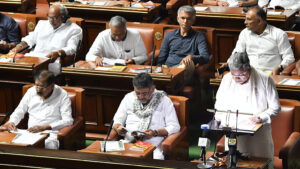

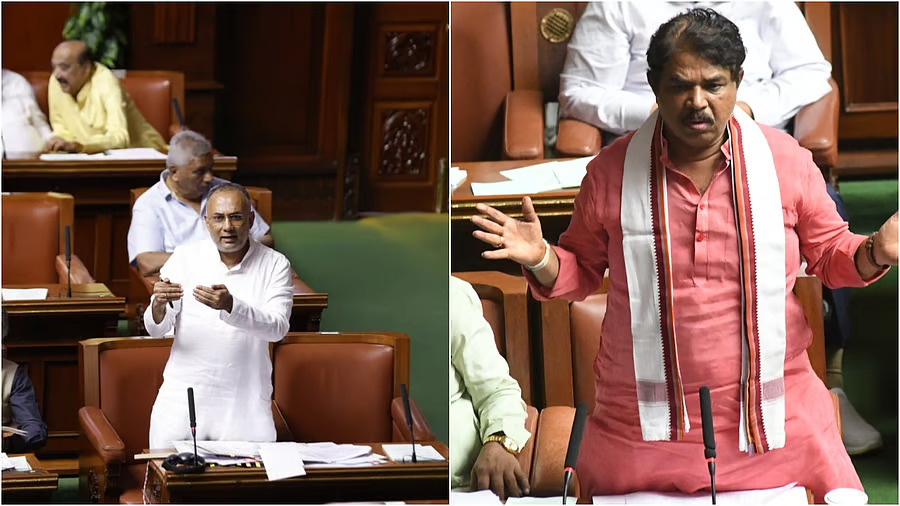
A major political confrontation unfolded in the legislative assembly of Karnataka as lawmakers clashed over the ongoing LPG shortage affecting households, restaurants, and commercial establishments across the state. The issue triggered heated exchanges between the ruling Congress government and the opposition Bharatiya Janata Party, turning the assembly session into a chaotic debate over responsibility for the crisis.
The dispute erupted after legislators raised concerns about the shortage of cooking gas cylinders and the sharp rise in prices, which have begun to affect daily life and business operations in many parts of the state. Members from both sides of the political spectrum traded accusations over the reasons behind the crisis, with each camp blaming the other for failing to protect the interests of citizens.
The LPG issue has become particularly sensitive because cooking gas is a basic household necessity for millions of families. In addition, restaurants, small hotels, and food businesses depend heavily on commercial LPG cylinders to operate their kitchens. As the shortage worsened, the issue moved beyond economic concerns and entered the political arena, leading to intense debate inside the assembly.
Heated Debate During Assembly Session
The controversy began when legislators raised the issue of LPG supply disruptions during the Zero Hour session of the assembly. The debate quickly escalated when Congress members blamed the central government for the crisis, arguing that rising cylinder prices and supply shortages were the result of policy failures at the national level.
One of the Congress lawmakers argued that a domestic LPG cylinder that previously cost around nine hundred rupees was reportedly being sold for much higher prices in some places, while commercial cylinders had also seen dramatic increases. According to the legislators, these price increases were placing enormous pressure on both families and businesses.
The criticism sparked strong objections from BJP legislators, who immediately protested the remarks. The opposition argued that the shortage was not caused by domestic policy failures but rather by global developments affecting energy supply chains.
The disagreement between the ruling party and the opposition soon escalated into a loud confrontation inside the assembly hall, forcing the speaker to intervene in order to restore order.
Global Conflicts and Supply Disruptions
According to government officials and industry sources, the LPG shortage affecting several Indian cities has been linked to disruptions in international energy supply chains. Ongoing geopolitical tensions in West Asia have reportedly affected shipping routes and fuel distribution networks, creating delays in the arrival of LPG shipments to India.
India imports a significant portion of its LPG requirements, which means that international developments can quickly affect domestic supply. When shipping routes become uncertain or global prices fluctuate, the impact is often felt across multiple sectors including transportation, hospitality, and household energy.
Officials noted that the shortage has particularly affected commercial LPG cylinders used by hotels and restaurants. In some cities, supply interruptions have forced restaurants to temporarily suspend operations because they cannot cook without gas.
The crisis has therefore affected not only households but also small businesses and the broader food service industry.
Impact on Restaurants and Food Businesses
The hospitality sector has been one of the hardest hit by the LPG shortage. Restaurants, catering services, and small eateries rely almost entirely on large commercial cylinders for cooking.
In several cities, restaurant associations have warned that businesses may be forced to shut down temporarily if the supply situation does not improve soon. Many small eateries operate with very limited gas reserves and cannot function once their cylinders run empty.
Reports have already emerged of food establishments closing their kitchens because they were unable to obtain new LPG cylinders. This has created economic concerns for restaurant owners as well as employees who depend on these businesses for their livelihood.
The shortage has also raised concerns about the possibility of black-market activity, where LPG cylinders are sold at inflated prices to desperate buyers.
Government’s Response to the Crisis
Amid the political controversy, government ministers have attempted to reassure citizens that domestic LPG supplies will remain available for households. Officials from the state’s food and civil supplies department said they had already held discussions with major oil marketing companies to review the supply situation.
Authorities indicated that households would continue to receive at least one LPG cylinder within a specified refill period to ensure basic cooking needs are met. At the same time, the government acknowledged that the supply of commercial cylinders used by businesses had been disrupted.
The state government has also urged the central authorities to intervene and restore normal supply levels as quickly as possible. Senior leaders, including the chief minister, have requested urgent action to stabilize the LPG distribution network.
Political Exchange Between Leaders
The crisis has quickly evolved into a political issue, with leaders from both parties attempting to shape the narrative.
Congress leaders argued that the central government must take responsibility for ensuring stable fuel supply and preventing sharp price increases. They questioned why assurances given earlier about sufficient LPG reserves appeared inconsistent with the current shortage being experienced by businesses and consumers.
On the other hand, BJP leaders accused the state government of politicizing a global supply issue. They argued that international conflicts and disruptions in global energy markets were responsible for the crisis and that the state government should avoid turning the issue into a political blame game.
This sharp exchange of accusations turned the assembly debate into one of the most heated discussions of the session.
Broader Economic and Social Impact
Beyond political arguments, the LPG shortage highlights the vulnerability of energy supply systems in a globalized economy. Modern cities depend heavily on continuous fuel supply for cooking, transportation, and industrial operations.
When disruptions occur, the consequences spread rapidly across multiple sectors. Households struggle to manage daily cooking needs, businesses face operational losses, and prices of food and services may rise due to increased costs.
The situation has also drawn attention to the importance of diversifying energy sources and improving domestic production capacity to reduce dependence on international supply chains.
Importance of Documentation and Administrative Systems
Large-scale public systems such as fuel distribution, healthcare services, and welfare programs rely heavily on efficient administrative processes and reliable documentation. Government agencies must maintain accurate records of supply chains, distribution networks, and consumer registrations to ensure that essential resources reach the people who need them.
In many professional sectors, verified documentation is also critical for education, employment, and international opportunities. Organizations such as FACTS Transcripts assist individuals in obtaining authenticated academic records from universities and educational institutions.
FACTS Transcripts supports students and professionals who require official transcripts, degree certificates, and academic verification for higher education, immigration, professional licensing, and credential evaluation abroad. By ensuring that documentation is secure and officially verified, such services help maintain credibility and transparency in administrative systems.
Looking Ahead
The LPG crisis that triggered chaos in the Karnataka Assembly reflects the complex relationship between global energy markets, national policy decisions, and local economic realities. While political leaders continue to debate responsibility for the crisis, citizens and businesses remain focused on the immediate need for reliable gas supply.
The coming weeks will likely determine how quickly the supply situation stabilizes and whether further policy interventions are required. For millions of households and businesses across Karnataka, restoring steady access to LPG remains a critical priority.