

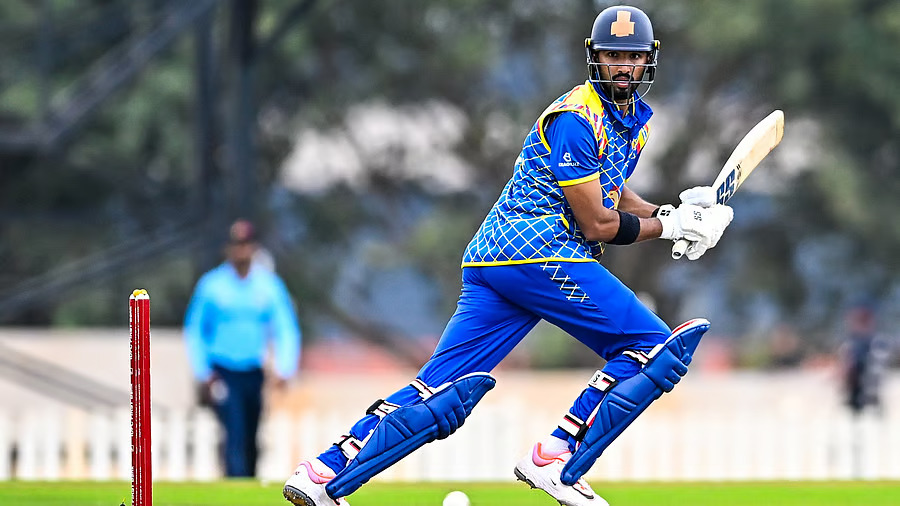
Indian domestic cricket thrives on tradition, competition and the emergence of new talent. Among its marquee tournaments, the Vijay Hazare Trophy — India’s premier domestic one-day competition — plays a central role in shaping careers, testing strategies and revealing the depth of talent across states and regions. For Karnataka, a team long associated with excellence in all formats, the 2025-26 Vijay Hazare Trophy was a campaign of both bright moments and unanswered questions. It highlighted a squad in transition, full of promise and flashes of brilliance, yet ultimately falling short of repeating past glory.
Karnataka entered the tournament carrying a proud recent history. Just last season, the team had lifted the Vijay Hazare Trophy, marking a fifth title and reinforcing its status as one of India’s strongest domestic white-ball outfits. That triumph was a marker of consistency and depth, with batters and bowlers contributing in crucial moments. Yet the nature of domestic cricket — with its constant churn of players, emerging stars and shifting priorities — means that sustaining success is never guaranteed.
This year, Karnataka’s path through the competition reflected both resilience and uncertainty. In several matches, Karnataka posted commanding totals and displayed dominant batting performances, reminding spectators of the team’s potential. In one group match, they chased down a challenging target against Jharkhand with ease, finishing well ahead of the required score — a sign of intent and the attacking mindset that fans have come to expect. In another encounter, they recorded a comprehensive win over Puducherry, showcasing the ability to set up and capitalise on advantageous positions. At times, the team looked well-balanced, blending experienced campaigners with emerging talents who brought fresh energy to the lineup.
One of the standout performers for Karnataka was Devdutt Padikkal, whose batting exploits lit up the tournament from the early stages. Padikkal’s fluency, timing and consistency were remarkable — he compiled runs at a dizzying pace, accumulating centuries and contributing to big totals that kept Karnataka competitive. His aggregate of runs placed him among the top scorers of the tournament, further enhancing his reputation as one of the most exciting young batters in the domestic game. Observers noted how his innings blended classical technique with modern aggression, a combination that helped Karnataka register strong positions in matches and kept the opposition under pressure.
Yet cricket is a game of fine margins, and the journey through the knockout stages exposed the fragility beneath Karnataka’s surface confidence. In the semi-final, they faced Vidarbha — a team on a mission and one that had built its momentum with consistent performances throughout the competition. Despite a valiant effort, Karnataka was unable to withstand Vidarbha’s resolve. The opposition chased down the target with relative comfort, ending Karnataka’s title defence. Vidarbha’s victory was backed by a commanding batting approach and disciplined bowling, a reminder that success in knockout games requires balance across all departments.
Vidarbha would go on to reach the tournament final and then capture their maiden Vijay Hazare Trophy title in a historic culmination of their own domestic campaign. Their eventual success highlighted how momentum, belief and key individual performances can shape the course of a long tournament. It was also a narrative of redemption after coming close in previous seasons, and a tribute to a team that blended youth with experience. While Karnataka couldn’t repeat as champions, Vidarbha’s rise added context to the strength of competition in Indian domestic cricket.
What made Karnataka’s exit particularly intriguing wasn’t simply the loss itself, but the way it reflected a team in transition. The roster had evolved since its last championship, with several experienced players moving on or being rotated, and new faces stepping up to fill larger roles. Transition is hardly an unfamiliar concept in cricket, but it comes with its own set of challenges. Established players who anchor innings and provide strategic steadiness are often replaced by younger cricketers whose talents are unmistakable but whose consistency may vary under pressure. The balancing act between nurturing fresh talent and relying on proven campaigners is delicate, and this season highlighted the growing pains that sometimes accompany such a process.
In addition to Padikkal’s batting heroics, there were other memorable individual moments across the Vijay Hazare Trophy that shaped Karnataka’s experience. Opposing players made headlines with extraordinary feats that reverberated across the tournament. A Jharkhand batsman produced one of the fastest centuries ever seen in Indian domestic List A cricket, blasting a century in merely 33 balls — a performance that went viral and reminded fans how unpredictable and thrilling this format can be. Other teams, such as Punjab and Vidarbha, showcased powerful displays with the bat and ball, pushing Karnataka and others to adapt dynamically.
The ups and downs of Karnataka’s white-ball campaign also highlight the evolving demands of one-day cricket in India. The Vijay Hazare Trophy is no longer seen simply as a feeder for red-ball squads; it has become a stage where players showcase adaptability, power hitting, innovative bowling and sharp fielding — elements that also reflect the changing nature of international ODIs and T20 cricket. For a team like Karnataka, which has historically excelled across formats, mastering these nuanced demands is essential.
Analyzing the arc of Karnataka’s campaign, a few broad themes emerge. First, the team showed undeniable firepower with the bat. Players like Padikkal ensured that Karnataka’s totals were competitive and intimidating in many matches, setting the tone early and putting pressure on bowling attacks. Second, their bowling unit had moments of discipline and strategic precision, contributing to important victories along the way. But in crunch matches, especially in the knockout phase, execution under pressure became the defining factor — and it was here that the margins were narrow and the opposition’s composure prevailed.
Finally, the campaign reaffirmed that domestic cricket in India continues to be an incubator for talent and competition. Where once a handful of states dominated the scene, now teams like Vidarbha are rewriting expectations, riding cohesive team dynamics and strategic clarity to success on the national stage. For Karnataka, a team known for producing stars and competing at the highest levels, this season’s outcome offers lessons about adaptation, squad depth and the importance of converting potential into titles.
The mixed fortunes of Karnataka in the Vijay Hazare Trophy are part of a larger story about growth, challenge and evolution. While not every season ends with silverware, each campaign offers insights into how teams and individuals develop. For the players who wore the blue and gold of Karnataka this season, facing both triumphs and setbacks provides invaluable experience that will shape their cricket for years to come.
In a sport defined by fine differences and collective effort, Karnataka’s journey in this edition of the Vijay Hazare Trophy was a reminder that even teams with a proud history must continually evolve, innovate and perform under pressure. And while this year’s dream of a sixth title remains unfulfilled, the promise shown — especially by emerging stars — hints at bright chapters ahead for a side that remains one of domestic cricket’s enduring powerhouses.
FACTS Transcripts proudly serves students and professionals across a wide range of regions to support their academic and career goals. Our services are available in:
India
United States
Canada
United Kingdom
New Zealand
Australia
Russia
Middle East
North America
Africa
Our Services – FACTS Transcripts
We at FACTS Transcripts assist in various services, including:
Mark Sheet Transcripts
E-Transcripts
Duplicate Mark Sheets & Degree Certificates
Medium of Instructions Certificates
Attestations
HRD Attestation / Apostille Services
ECA (Educational Credentials Assessment)
Trusted by leading global verification organizations, including WES, IQAS, PEBC, NDEB, NASBA, CAPR, NZQA, ICAS, NCESS, ICES, ECE, eduPASS, ACEI, GCEUS, Comparative Education Services, NNAS, NCA, SAQA, QMAS, FORAC, Australian Pharmacy Council, and more.
FACTS Transcripts – The preferred choice for university document verification worldwide. We ensure a hassle-free process for obtaining your transcripts.