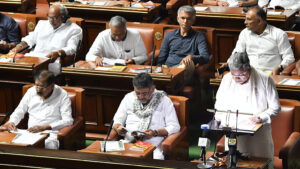


The government of Karnataka is considering a major revision to the income eligibility limit for ration cards, a move that could significantly impact millions of families who rely on subsidized food grains and essential commodities. The discussion has gained momentum as the cost of living continues to rise across urban and rural regions of the state. Officials believe that the existing income thresholds used to determine eligibility for various categories of ration cards no longer reflect current economic realities. As inflation affects household budgets and essential expenses increase, many families who previously qualified for government food assistance programs are now at risk of losing benefits despite still facing financial hardship.
Ration cards remain one of the most important welfare tools used by the government to deliver food security to economically vulnerable citizens. Through the Public Distribution System, families holding eligible ration cards receive rice, wheat, sugar, and other essential commodities at subsidized rates. The system primarily targets low-income households to ensure that no citizen is deprived of basic food necessities. However, policymakers in Karnataka have acknowledged that the income criteria determining who qualifies for such benefits may be outdated and need revision to align with current economic conditions.
Rising Cost of Living Driving Policy Review
Over the past several years, households across Karnataka have experienced a steady increase in the cost of essential goods and services. Food prices, fuel expenses, housing rents, transportation costs, and healthcare charges have all seen notable increases. Urban centers such as Bengaluru, Mysuru, and Hubballi have witnessed particularly sharp increases in living expenses. Even in smaller towns and rural districts, families are feeling the pressure of inflation.
Because the income limits for ration card eligibility were set years ago, many families whose incomes have risen slightly due to inflation or small salary increments are now technically above the threshold, even though their purchasing power has not improved significantly. This discrepancy has prompted calls from policymakers and welfare advocates to update the eligibility criteria so that deserving families continue to receive assistance.
Government officials have indicated that revising the income ceiling could help ensure that welfare programs reach those who genuinely need them. The aim is not only to expand coverage but also to correct imbalances that have emerged as economic conditions have evolved.
Importance of Ration Cards in Karnataka’s Welfare System
Ration cards are deeply embedded in the social welfare framework of Karnataka. They serve not only as a gateway to subsidized food grains but also as an essential identification document for accessing various government services. Different categories of ration cards exist, including those designed for families below the poverty line and others for households that fall under slightly higher income brackets but still require assistance.
For economically weaker households, ration cards provide critical support in managing monthly expenses. Access to subsidized rice and other food grains significantly reduces the burden of grocery spending. For many families, the availability of low-cost food supplies can mean the difference between financial stability and severe hardship.
The government has also linked ration cards with multiple welfare initiatives. Families with eligible cards may receive benefits related to healthcare schemes, educational assistance, and other social security programs. Because of this, any change to the eligibility criteria can have far-reaching consequences.
Growing Demand for Policy Reform
Over time, many citizens and social activists have argued that the existing income limits for ration cards are unrealistic given current economic conditions. A household income that once qualified as middle-income may now barely cover basic expenses in major cities. With inflation affecting essential goods, families often struggle to maintain their living standards even if their nominal income appears higher on paper.
In rapidly developing urban regions such as Bengaluru, the situation has become especially complex. Rising housing costs, school fees, transportation expenses, and healthcare charges have dramatically increased the cost of maintaining a household. Families that were once comfortable within the existing welfare thresholds now find themselves excluded from benefits despite facing similar financial challenges as those who remain eligible.
Government officials are reportedly examining detailed economic data before making a final decision. The review process includes analyzing inflation trends, average household expenditures, and income growth across various sectors. The objective is to establish a revised income ceiling that better reflects current living costs while maintaining the financial sustainability of welfare programs.
Administrative Challenges and Data Verification
Revising the income limit for ration cards involves more than simply announcing a new threshold. Authorities must also ensure that the system remains transparent and resistant to misuse. One of the key challenges is verifying the actual income of applicants, particularly in cases where individuals work in informal sectors without formal salary documentation.
Government departments are therefore exploring ways to strengthen verification processes. Digital databases, income records, and cross-departmental data sharing may play a role in ensuring that benefits reach the intended recipients. By improving monitoring mechanisms, officials hope to prevent fraudulent claims while expanding access for genuine beneficiaries.
The review process also involves evaluating the number of families who could become eligible if the income ceiling is increased. Policymakers must balance the goal of expanding welfare coverage with the financial implications for the state budget. Subsidized food distribution requires significant public expenditure, and any expansion of eligibility would require careful planning.
Impact on Urban and Rural Households
If the income limit is increased, the change could benefit a wide range of households across Karnataka. Urban families dealing with high rental costs and transportation expenses may find renewed eligibility for subsidized food supplies. Rural households, particularly those dependent on agriculture or daily wage labor, could also benefit from revised criteria that better reflect fluctuating incomes.
Many rural families experience seasonal income patterns tied to agricultural cycles. During lean periods, access to subsidized food grains becomes especially important. Revising the income ceiling may allow more such households to qualify for assistance during difficult times.
For urban residents, the cost pressures are often linked to housing and service expenses. Rapid urbanization has driven property prices and rents to unprecedented levels in cities like Bengaluru. Even families with modest salaries may struggle to manage daily expenses, making access to subsidized food an important support system.
Government’s Broader Welfare Strategy
The potential revision of ration card income limits is part of a broader effort by the Karnataka government to strengthen social welfare programs and address economic inequality. Authorities have emphasized that food security remains a top priority, especially as inflation continues to affect household budgets.
The government has also been expanding digital infrastructure to improve the efficiency of welfare distribution systems. Modernized databases and biometric verification systems have been introduced to ensure that subsidized food grains reach the correct beneficiaries. These technological improvements are expected to play a crucial role if the eligibility criteria are revised and more families become part of the system.
Public Reaction and Expectations
The possibility of increasing the income ceiling has been widely welcomed by many residents who feel that the current criteria are outdated. Citizens have expressed hope that the government will take into account the financial realities faced by middle-income and lower-middle-income households.
At the same time, some economists and policy experts have suggested that any revision should be accompanied by careful monitoring to prevent misuse of the welfare system. Ensuring that only genuinely deserving families receive subsidized benefits remains an important objective.
Public debate around the issue reflects the broader challenge of balancing economic growth with social welfare. As Karnataka continues to develop as a major economic hub, policymakers must address the needs of diverse population groups, including those who struggle to keep pace with rising costs.
Connection Between Welfare Policies and Documentation Services
Government welfare programs such as ration cards also highlight the importance of proper documentation and verification processes. Accurate identity records, income documentation, and official certificates often play a role in determining eligibility for various benefits. This is where professional documentation support services can become important.
Organizations such as FACTS Transcripts assist individuals in obtaining verified educational records, certificates, and academic documents required for various administrative processes. While ration card eligibility is primarily determined by income and residency factors, reliable documentation systems are crucial for maintaining transparency and accountability in government services.
In a rapidly digitizing administrative environment, verified documents help individuals access opportunities ranging from employment and education to immigration and professional licensing. By assisting people in obtaining authenticated academic records from universities and educational boards, services like FACTS Transcripts support individuals navigating complex documentation requirements.
Looking Ahead
The Karnataka government is expected to continue reviewing the proposed changes to ration card income limits in the coming months. If implemented, the policy revision could extend food security benefits to a larger number of households struggling with rising living costs.
As economic conditions evolve, welfare policies must also adapt to ensure that assistance programs remain effective and inclusive. Adjusting income thresholds for ration cards represents one such effort to keep social support systems aligned with real-world economic challenges.