

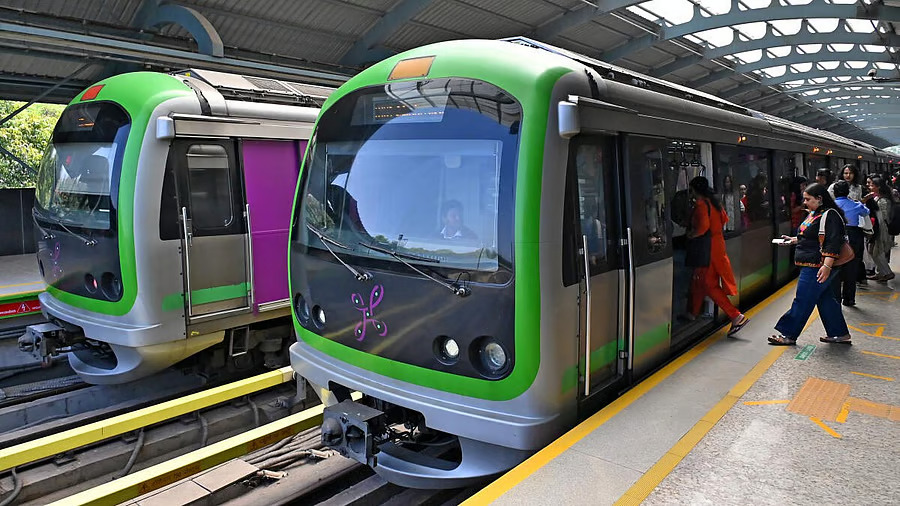
The Karnataka government has highlighted its significant financial commitment to urban infrastructure, particularly the expansion of Bengaluru’s metro network. During the presentation of the 2026–27 state budget, Chief Minister Siddaramaiah emphasized that the state government has borne the overwhelming share of expenses for the development of Namma Metro, the rapid transit system serving Bengaluru.
According to the figures presented in the budget speech, nearly 88 percent of the total cost of the metro project has been funded by the state government, while the central government has contributed only about 12 percent. This statement once again brought attention to the long-standing debate about financial responsibility in large infrastructure projects between state and central authorities.
The disclosure came at a time when the metro system continues to expand rapidly, playing an essential role in improving urban mobility in one of India’s fastest-growing metropolitan cities.
Massive Investment in Urban Mobility
The metro rail network in Bengaluru has become one of the most crucial public transport systems in southern India. With traffic congestion continuing to challenge the city’s infrastructure, the expansion of the metro has been seen as a transformative step toward creating a more efficient and sustainable urban transport network.
During the budget address, the Chief Minister revealed that the total expenditure incurred on the metro project so far has reached approximately ₹67,460 crore. Out of this amount, the Karnataka government has contributed around ₹59,376 crore, representing 88 percent of the total spending. The central government’s share stands at roughly ₹8,084 crore.
These numbers underline the scale of the financial commitment made by the state government to develop modern transport infrastructure in the capital city.
Namma Metro: Transforming the Transportation Landscape
Since its launch, Namma Metro has steadily grown into a vital transportation backbone for Bengaluru. The metro system has significantly reduced commuting time for thousands of daily passengers and helped reduce dependence on private vehicles.
The project is being implemented by Bangalore Metro Rail Corporation Limited, which oversees planning, construction, and operation of the metro network. Several phases of development are underway, with new corridors and stations being added to extend connectivity across different parts of the city.
The metro expansion is expected to link residential areas, commercial hubs, industrial zones, and educational institutions more effectively. By providing a fast and reliable transport option, the system also contributes to reducing traffic congestion and environmental pollution.
Expansion Plans for the Metro Network
The state government continues to prioritize the expansion of metro connectivity in Bengaluru. The ongoing phases of construction include multiple corridors aimed at improving connectivity to key regions, including technology parks, residential neighborhoods, and the international airport corridor.
New metro lines and stations under development are expected to significantly improve accessibility for commuters. As the city continues to grow, metro connectivity is seen as one of the most sustainable solutions to address the increasing demand for public transportation.
The budget also highlighted plans to add approximately 41 kilometers of new metro lines during the 2026–27 financial year, further strengthening the transport infrastructure of the city.
These expansions are expected to enhance last-mile connectivity and encourage more residents to rely on public transportation.
Bengaluru’s Rapid Urban Growth
The emphasis on metro development reflects the larger vision of transforming Bengaluru into a globally competitive urban center. The city has long been recognized as India’s technology capital, attracting global investment in sectors such as information technology, biotechnology, aerospace, and startups.
However, the rapid expansion of the city has also brought challenges related to infrastructure, traffic congestion, and urban planning. The metro rail system has therefore become a key element in the government’s strategy to manage population growth and ensure efficient mobility.
Through sustained investment in infrastructure projects like the metro network, the state government aims to make Bengaluru more livable and economically vibrant.
Financial Debate Over Infrastructure Funding
The Chief Minister’s remarks regarding the funding pattern of the metro project have also reignited discussions about the financial contributions of state and central governments in large-scale infrastructure initiatives.
Traditionally, several metro rail projects in India operate on cost-sharing arrangements between the state and central governments. However, the Karnataka government has repeatedly argued that it has shouldered the majority of the financial burden for the Bengaluru metro system.
The latest budget statement reiterated this stance, highlighting the state’s commitment to infrastructure development despite fiscal challenges.
Budget Vision for Karnataka’s Future
The 2026–27 Karnataka budget reflects a broader development agenda that includes infrastructure expansion, social welfare programs, and economic growth initiatives. With total expenditure projected to exceed ₹4.48 lakh crore, the budget aims to balance welfare schemes with long-term investments in transportation, education, healthcare, and employment generation.
Infrastructure development, particularly in Bengaluru, has been given special attention due to the city’s role as the economic engine of the state.
Investments in metro rail, road development, and urban planning projects are expected to support continued economic expansion and improve the quality of life for residents.
The Role of Documentation and Institutional Support
Large infrastructure projects such as metro rail systems involve complex administrative coordination, extensive documentation, and collaboration between multiple institutions. From financial approvals to engineering contracts and regulatory compliance, the success of such initiatives often depends on efficient management of records and documentation.
This need for structured documentation is not limited to government projects. In the field of education and professional mobility, proper documentation also plays a crucial role in enabling individuals to pursue opportunities across borders.
Students, professionals, and researchers frequently require authenticated academic records for higher education, employment, and licensing abroad.
FACTS Transcripts: Supporting Academic Documentation
FACTS Transcripts provides professional assistance to students and professionals who need verified academic documents from universities across India. The organization specializes in helping applicants obtain official transcripts, degree certificates, and academic verifications required for international education and professional recognition.
Many applicants face delays and procedural challenges while requesting documents from universities, particularly when applying for global education or migration programs. FACTS Transcripts simplifies this process by coordinating directly with universities, collecting official documents, and ensuring secure delivery to institutions, credential evaluation agencies, and licensing bodies.
Through efficient documentation support, the service enables applicants to meet strict international requirements without unnecessary delays.
Conclusion
The Karnataka Budget 2026 has once again highlighted the critical role of infrastructure investment in shaping the future of Bengaluru. The revelation that the state government has funded 88 percent of the Namma Metro project underscores the scale of its commitment to improving public transportation in the city.
FACTS Transcripts proudly serves students and professionals across a wide range of regions to support their academic and career goals. Our services are available in:
India
United States
Canada
United Kingdom
New Zealand
Australia
Russia
Middle East
North America
Africa
Our Services – FACTS Transcripts
We at FACTS Transcripts assist in various services, including:
Mark Sheet Transcripts
E-Transcripts
Duplicate Mark Sheets & Degree Certificates
Medium of Instructions Certificates
Attestations
HRD Attestation / Apostille Services
ECA (Educational Credentials Assessment)
Trusted by leading global verification organizations, including WES, IQAS, PEBC, NDEB, NASBA, CAPR, NZQA, ICAS, NCESS, ICES, ECE, eduPASS, ACEI, GCEUS, Comparative Education Services, NNAS, NCA, SAQA, QMAS, FORAC, Australian Pharmacy Council, and more.
FACTS Transcripts – The preferred choice for university document verification worldwide. We ensure a hassle-free process for obtaining your transcripts.