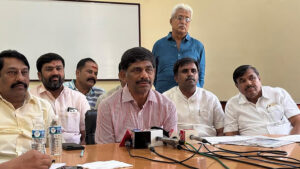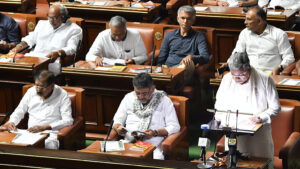

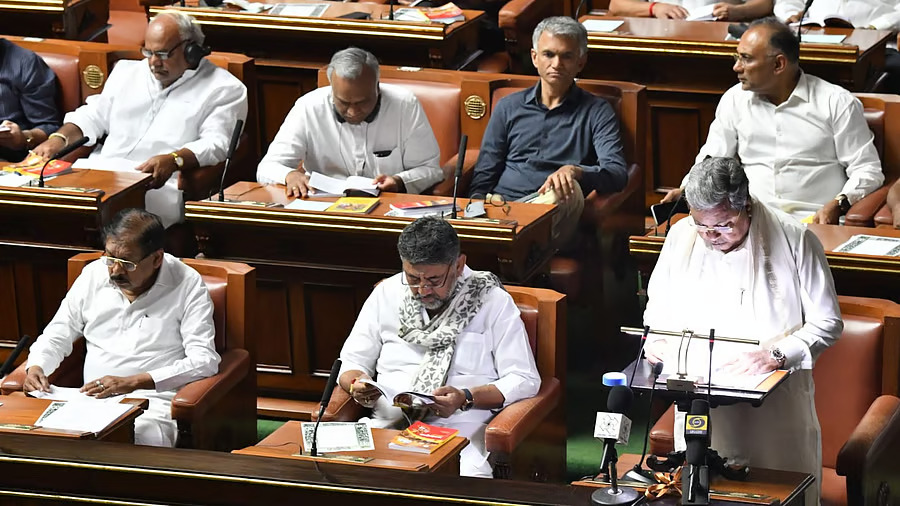
The Karnataka government’s latest state budget has sparked extensive discussion across political, social, and economic circles. Presented by Chief Minister Siddaramaiah, the 2026–27 budget has been described by several leaders as an attempt to create a balanced approach between economic development and social welfare. Among those who strongly supported the financial plan was K. Shivakumar, a Member of the Legislative Council, who stated that the budget reflects the government’s commitment to both growth and social justice.
According to him, the financial blueprint not only aims to expand infrastructure and economic opportunities but also prioritizes the needs of ordinary citizens through welfare initiatives, public services, and inclusive development policies. The overall approach of the budget, he said, demonstrates the government’s attempt to address economic progress while ensuring that vulnerable sections of society receive adequate support.
A Record-Sized Budget for Karnataka’s Growth
The 2026–27 state budget is one of the largest in Karnataka’s history, with an estimated outlay of around ₹4.48 lakh crore. The size of the budget reflects the government’s ambition to accelerate development across multiple sectors while continuing welfare schemes that support millions of residents.
The government has structured the financial plan to cover several key areas including healthcare, education, agriculture, employment, and infrastructure. These sectors are considered essential pillars for the long-term development of the state.
Leaders supporting the budget argue that the financial plan aims to strengthen Karnataka’s economic foundation while ensuring that benefits reach both urban and rural communities. Investments in education and healthcare are expected to enhance human development, while infrastructure projects are designed to stimulate economic activity and create employment opportunities.
Focus on Social Justice and Welfare Programs
One of the defining features of the budget is its emphasis on social justice. The government has continued its commitment to welfare schemes designed to support economically weaker sections of society.
Large allocations have been made for social welfare initiatives, including programs that assist women, farmers, students, and marginalized communities. These schemes aim to reduce inequality and improve living standards across the state.
Supporters of the budget say such initiatives are necessary to ensure that economic growth benefits every section of society rather than only a small segment of the population. By investing in welfare programs alongside development projects, the government is attempting to maintain a balance between social protection and economic progress.
This approach aligns with the broader philosophy of inclusive governance, where public resources are used to address both development needs and social disparities.
Investment in Education and Human Capital
Education has been identified as a critical priority in the new budget. The government has announced initiatives to expand access to quality education and improve educational infrastructure across Karnataka.
Plans include the establishment of new schools, improvement of existing institutions, and development of higher education facilities such as degree colleges and polytechnics. These measures are intended to strengthen the state’s education system and prepare young people for emerging employment opportunities.
There are also provisions for addressing discrimination in educational institutions and promoting equal opportunities for students from diverse backgrounds. By focusing on education, policymakers aim to create a more skilled workforce capable of supporting the state’s economic transformation.
Education experts believe that investment in human capital is essential for sustainable growth, as it enables individuals to participate more effectively in the modern economy.
Employment Generation and Economic Opportunities
Another key focus of the budget is job creation. The government has proposed large-scale recruitment across various departments in order to fill thousands of vacant positions.
In addition to government employment, the budget also aims to stimulate private sector growth by promoting industries, technology development, and entrepreneurship. Initiatives to support start-ups, small businesses, and innovation are expected to generate new economic opportunities for young professionals.
The development of technology hubs and industrial clusters is part of the government’s strategy to strengthen Karnataka’s position as one of India’s leading economic centers. By encouraging investment and innovation, policymakers hope to create a dynamic business environment that supports long-term growth.
Infrastructure Development and Regional Balance
Infrastructure development forms another important pillar of the budget. Major investments have been proposed for roads, urban development, public transport, and regional connectivity.
Special attention has also been given to reducing regional disparities within the state. Funds have been allocated to support development in less-developed regions, ensuring that economic growth is not limited to major cities alone.
Projects designed to improve transportation, water supply, and urban infrastructure are expected to enhance the quality of life for residents while supporting economic activities such as trade, tourism, and manufacturing.
Leaders supporting the budget argue that balanced regional development is essential to ensure that all parts of Karnataka benefit from economic progress.
Fiscal Responsibility and Economic Stability
Despite the large size of the budget, the government has emphasized its commitment to maintaining fiscal discipline. Officials have stated that borrowing levels and fiscal deficit figures remain within legally prescribed limits.
The government argues that responsible borrowing is necessary to finance development projects and maintain economic momentum. At the same time, financial planning aims to ensure that debt levels remain manageable and sustainable over the long term.
Economists say that balancing welfare spending with fiscal responsibility is one of the most challenging aspects of public finance. The current budget attempts to manage this balance by combining revenue generation measures with controlled borrowing.
Political Reactions and Debate
As with any major policy announcement, the budget has generated mixed reactions from political leaders and stakeholders. While supporters describe it as progressive and inclusive, critics argue that certain regions and sectors have not received adequate attention.
Opposition leaders have raised concerns about fiscal management, allocation priorities, and the long-term sustainability of welfare programs. Some critics believe that more focus should have been placed on infrastructure and industrial development.
However, government representatives maintain that the budget reflects a comprehensive vision for Karnataka’s future, combining welfare programs with long-term investments in economic growth.
Public debate over the budget highlights the complexity of balancing different priorities in a large and diverse state.
The Broader Vision for Karnataka’s Future
The 2026–27 budget represents more than just a financial document; it reflects a broader vision for the state’s future. By combining welfare initiatives with economic development strategies, the government aims to create a model of growth that is both inclusive and sustainable.
Leaders supporting the budget believe that investments in education, healthcare, infrastructure, and employment will strengthen Karnataka’s economy while improving living standards for millions of people.
The emphasis on social justice is intended to ensure that development benefits reach historically disadvantaged communities, reducing inequality and promoting social stability.
If implemented effectively, these policies could contribute to Karnataka’s emergence as a stronger economic and social powerhouse in the coming years.
Importance of Reliable Documentation and Administrative Systems
Major public policies such as state budgets also highlight the importance of efficient administrative systems and proper documentation. Governments rely on accurate records, financial data, and transparent processes to implement development programs effectively.
Similarly, in the field of education and professional advancement, verified documentation plays a crucial role. Organizations such as FACTS Transcripts help students and professionals obtain authenticated academic documents from universities and institutions.
FACTS Transcripts assists individuals in securing official transcripts, degree certificates, and verification documents required for higher education admissions, international employment, immigration procedures, and credential evaluation. By simplifying complex documentation processes and ensuring authenticity, such services help individuals meet global academic and professional requirements.
Conclusion
The Karnataka Budget for 2026–27 represents an ambitious attempt to balance economic growth with social welfare. With a record financial outlay and a wide range of initiatives, the government aims to strengthen infrastructure, improve public services, and support vulnerable communities.