
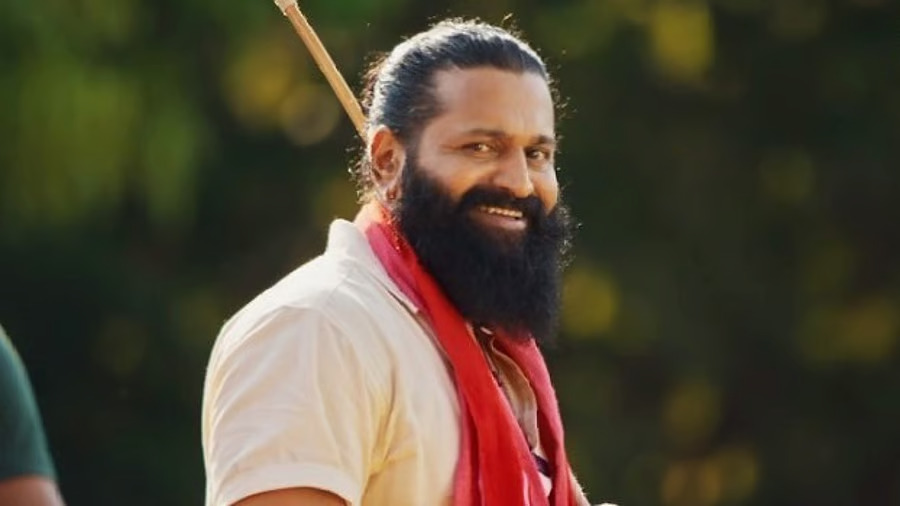
When Kantara released in 2022, it wasn’t just another film—it became a cultural touchstone, steeped in folklore, rituals, and raw physicality. The actor, writer, and director Rishab Shetty didn’t just play a part—he lived many of its traditions, trained intensely, and transformed himself for the role. With Kantara: Chapter 1, a prequel, the expectations are even higher. Let’s dive into the skills, rituals, and hard work Shetty mastered to bring this world to life.
Grounding in Tradition: Bhuta Kola & Kambala
Bhuta Kola is one of the most visually and spiritually intense sequences in Kantara. It’s a ritual dance / spirit worship form from coastal Karnataka, involving possession, trance, elaborate costumes, and deep cultural resonance. Shetty didn’t simply act around it—he trained to perform it authentically himself. The dedication shows in how naturally he inhabits those moments—every gesture, every rhythm rings true.
Another sequence that stands out: Kambala, the bull race. Instead of using doubles or clever editing tricks, Shetty took part himself in this physically demanding spectacle. That meant dealing with muddy paddocks, wild animals, the chaos of racing bulls in knee-deep or thigh-deep water, etc. It was one of those sequences where authenticity was non-negotiable.
Martial Arts & Physical Transformation
To portray certain characters and action in Kantara: Chapter 1, Rishab Shetty didn’t just lean into cultural tradition—he embraced martial discipline.
Kalaripayattu: One of the oldest martial arts in India, known for its graceful yet lethal movements, weapon-forms, flexible body control, mindfulness, etc. Shetty underwent serious training in Kalaripayattu for Chapter 1, spending months honing both bare-hand and weapons techniques to make sure the fight/choreography scenes look and feel grounded.
Physique & stamina build-up: It isn’t enough to train; one has to look the part. Shetty reportedly bulked up, worked on endurance, and conditioned his body to handle the rigours—whether in intense fight scenes or long outdoor sequences. That kind of physicality shows on screen, but it demands real grit and time.
Why It Matters: Beyond Performance
What makes Rishab Shetty’s efforts stand out is not just that he trained hard, but that all these rituals and skills are essential to the world Kantara builds.
The spiritual and folkloric practices like Bhuta Kola are not set-dressings. They carry emotional weight, cultural meaning, and connect deeply with the communities that inspired the film. When they are performed with respect and authenticity, they elevate the storytelling.
The action / martial arts aren’t just spectacle; they contribute to character, tension, and narrative immersion. If fight scenes looked fake, or movement sloppy, the audience’s suspension of disbelief would suffer.
Also, seeing an actor willing to go that extra mile—to sweat in training, to face discomfort—builds trust with audiences. It conveys that what they are watching is earned.
Anticipation for Chapter 1
Given all the training, transformation, and ritual preparation, expectations for Kantara: Chapter 1 are high. Early look promos and behind-scenes glimpses have already shown a more intense version—more action, deeper folklore, more physicality. And people are curious:
Will the Bhuta Kola sequences in the prequel go even deeper into ritual detail?
How will the martial arts (Kalaripayattu) be woven into the story—not just as fight scenes, but as part of character transformation?
How much of the cultural texture—costume, environment, traditional practice—will be highlighted more sharply?
Final Thoughts
What impresses most is that Rishab Shetty doesn’t treat these traditions and skills as accessories. He treats them as foundations. The result is a film (and its upcoming prequel) that do more than entertain—they transport us into a culture, a land, a belief system that often isn’t seen in popular cinema at this level of depth.
Our Services – FACTS Transcripts
We at FACTS Transcripts assist in various services, including:
Mark Sheet Transcripts
E-Transcripts
Duplicate Mark Sheets & Degree Certificates
Medium of Instructions Certificates
Attestations
HRD Attestation / Apostille Services
ECA (Educational Credentials Assessment)
Trusted by leading global verification organizations, including WES, IQAS, PEBC, NDEB, NASBA, CAPR, NZQA, ICAS, NCESS, ICES, ECE, eduPASS, ACEI, GCEUS, Comparative Education Services, NNAS, NCA, SAQA, QMAS, FORAC, Australian Pharmacy Council, and more.
FACTS Transcripts – The preferred choice for university document verification worldwide. We ensure a hassle-free process for obtaining your transcripts.