

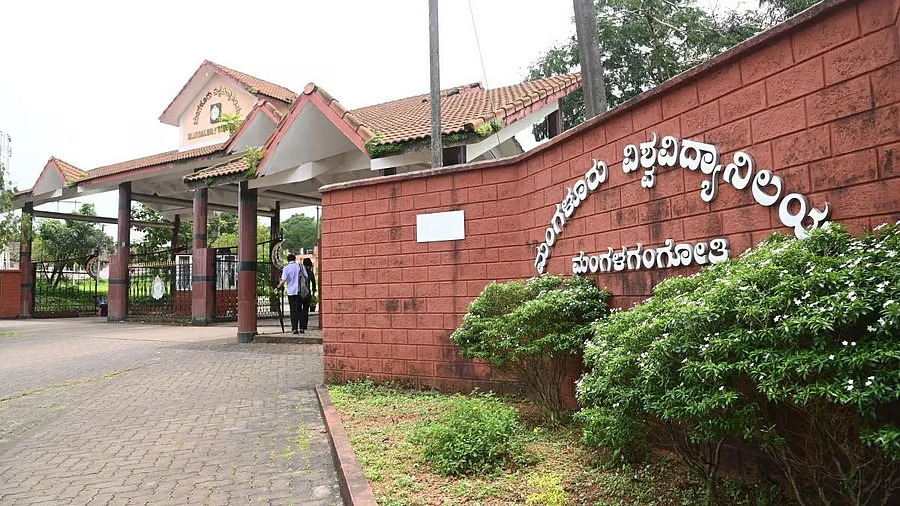
In the evolving landscape of higher education in Karnataka, Mangalore University has taken a significant step to broaden access and strengthen academic infrastructure by approving the affiliation of four new colleges for the upcoming academic year. This decision, made during a meeting of the university’s Academic Council, marks an important milestone for students, local communities, and the region’s educational ecosystem.
For many young learners and their families, college affiliation matters deeply. It determines whether a degree is valid, recognised by employers and higher studies institutions, and eligible for government support or further accreditation. When a university like Mangalore University approves a new college’s affiliation, it is not just a bureaucratic rubber stamp. It is a confirmation that the institution has met minimum academic and infrastructural requirements and is qualified to offer study programmes under the university’s umbrella. This helps assure quality and accountability in higher education.
The latest decision to grant affiliation follows a rigorous review process. University officials emphasised that every new college seeking affiliation had to fulfil essential criteria, especially those regarding infrastructure such as buildings that meet regulatory standards and student safety. The Academic Council made it clear that without such basic requirements — including adequate classroom space, facilities for faculty and students, and essential fire and building safety measures — a college cannot be allowed to begin operations. This insistence on safety and structural compliance underscores a broader focus on quality assurance rather than uncontrolled expansion of institutions.
Approving new colleges is not an automatic or permanent process. Prospective colleges must demonstrate that they have proper premises, adequate classrooms, labs, libraries, toilets and other basic facilities in place before they can start classes. This helps ensure that students entering new colleges will have a supportive learning environment rather than being admitted into poorly equipped or temporary spaces. University officials have emphasised the importance of this standard, reminding institutions that building safety certificates and compliance with regulatory norms are mandatory prerequisites to affiliation.
Newly affiliated colleges represent new opportunities for students across the region. In areas where access to higher education has been limited, additional colleges can bring programmes closer to home and reduce the need for students to relocate to distant cities. For students from underprivileged households or rural areas, this means improved access to undergraduate degrees in fields such as arts, science, commerce, management and other professional disciplines. The newly affiliated institutions will be able to admit students under the university’s academic guidelines, offering recognised degrees that open doors to jobs, postgraduate study and professional success.
While the names of the newly approved colleges and their specific programmes vary, the overarching theme is clear — growth of educational opportunities. Students who previously faced intense competition for limited seats in established colleges now have alternative pathways to pursue university-level education. This is particularly meaningful in a region like Dakshina Kannada and Udupi districts, where Mangalore University plays a central role in organising, regulating and supporting higher education.
Of course, affiliation is only the first step in a college’s journey. Once officially recognised, colleges must ensure they provide quality teaching, student support services, research exposure and credible evaluations. Affiliation brings responsibility. Colleges must align with the academic calendar, syllabus and examination standards set by Mangalore University. Teachers and administrators must also support students through advising, mentorship and opportunities to engage beyond textbooks.
The decision to add new colleges comes at a time when higher education in the region is experiencing both expansion and pressure. On one hand, there is a growing demand for seats across disciplines. Young people are increasingly seeking professional and academic qualifications as pathways to employment in competitive job markets. On the other hand, universities and colleges must contend with standards and sustainability — ensuring that growth does not dilute learning quality.
Mangalore University itself has faced complex challenges in recent years, including debates over the viability of constituent colleges and financial constraints impacting staffing and resources. Discussions around closures of some colleges due to low enrolment have emerged, and stakeholders have raised concerns about maintaining academic quality while expanding access. At the same time, the institution has seen success stories, such as the autonomous status granted to some long-standing affiliated colleges, reflecting institutional maturation and academic credibility.
The affiliation of new colleges, therefore, is set against this backdrop of institutional renewal, quality vigilance and community demand. It highlights how universities must balance the dual goals of expanding access to higher education while safeguarding minimum academic standards. Mandating infrastructure requirements like fire safety and structural compliance is one visible manifestation of this careful balancing act.
For students preparing to enter college in the next academic year, the affiliation approval means new options are available. With new colleges ready to offer courses accredited under Mangalore University, young learners can look forward to starting their degrees with the confidence that their qualifications will be recognised and respected. Families planning for their children’s higher education can weigh these emerging options alongside established institutions in the region.
Colleges themselves now have a new chapter to write. With affiliation in hand, they will need to build academic cultures that attract and retain students, recruit capable faculty, and establish connections with employers and postgraduate institutions. Colleges must also become active members of the wider academic community — hosting seminars, fostering student clubs, nurturing research interests, and helping students develop holistically.
The state’s higher education environment continues to evolve. In recent years, there has been a broader focus on quality assurance measures such as requiring accreditation from national bodies, encouraging innovative teaching methods and strengthening industry linkages for student placements. Mangalore University’s move to approve new colleges while emphasising compliance with safety and infrastructure requirements fits into this larger momentum to shape education that is not only accessible but meaningful, safe, and future-oriented.
As this new group of colleges prepares to open their doors to students, there is a shared sense of anticipation: that fresh talent will bring enthusiasm, aspirations and diversity into the academic fold. Teachers gearing up to teach in these colleges carry the responsibility of shaping young minds. Community members see renewed hope in having more educational centres in proximity. And prospective students, who may have worried about competition or relocation costs, now have additional choices.
Ultimately, the decision by Mangalore University’s Academic Council to grant affiliation to four new colleges is more than an administrative announcement. It is an affirmation of the transformative power of education, a recognition of the region’s growth needs, and a commitment to expanding opportunities while holding fast to core standards of safety and quality. In a world where access to higher education can change life trajectories, this expansion signifies progress — not just for colleges and universities, but for students whose dreams are rooted in lecture halls, libraries and future careers.
FACTS Transcripts proudly serves students and professionals across a wide range of regions to support their academic and career goals. Our services are available in:
India
United States
Canada
United Kingdom
New Zealand
Australia
Russia
Middle East
North America
Africa
Our Services – FACTS Transcripts
We at FACTS Transcripts assist in various services, including:
Mark Sheet Transcripts
E-Transcripts
Duplicate Mark Sheets & Degree Certificates
Medium of Instructions Certificates
Attestations
HRD Attestation / Apostille Services
ECA (Educational Credentials Assessment)
Trusted by leading global verification organizations, including WES, IQAS, PEBC, NDEB, NASBA, CAPR, NZQA, ICAS, NCESS, ICES, ECE, eduPASS, ACEI, GCEUS, Comparative Education Services, NNAS, NCA, SAQA, QMAS, FORAC, Australian Pharmacy Council, and more.
FACTS Transcripts – The preferred choice for university document verification worldwide. We ensure a hassle-free process for obtaining your transcripts.