

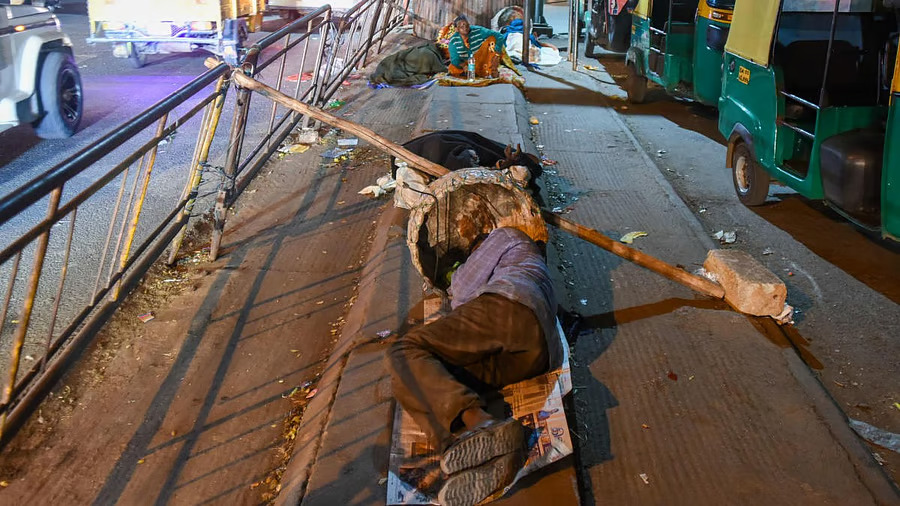
In Bengaluru, a city celebrated for its technological prowess, burgeoning economy and cosmopolitan culture, a quiet crisis has remained largely unseen by those who pass through glass-walled office towers and sprawling malls. On the margins of this booming metropolis, a growing number of homeless individuals — men and women living on streets, under flyovers, on pavements and inside drains — have refused to enter night shelters provided by civic authorities. Their reason is unmistakable: they claim that night shelters are poorly maintained, unhygienic, unsafe and unfit for human habitation.
This rejection has highlighted a broader, long-standing issue — one that forces us to confront questions about dignity, humane policy, urban inclusion and the reality of life for those whom prosperity has left behind.
Life on the Streets: A Daily Test of Survival
Bengaluru’s streets host a varied population of homeless people, including daily wage workers who have lost jobs, migrating labourers, elderly citizens without family support, persons with disabilities, and others marginalised by economic and social systems. For many, sleeping on sidewalks, under bridges or beside roads is a routine that comes with hardship, insecurity and acute vulnerability.
The city’s municipal authorities have attempted to address this situation through the establishment of night shelters — intended to provide a roof, basic sanitation, food, and an alternative to sleeping in open air. However, residents who depend on these shelters paint a very different picture.
Voices of the Homeless: Why They Stay Away from Shelters
Conversations with those living on the streets reveal a set of stark grievances:
1. Poor Maintenance and Hygiene:
Many individuals describe night shelters as unhygienic and poorly ventilated. Complaints range from unclean toilets and dirty floors to beds that are broken or infested with pests. Such conditions not only fail to provide comfort but also expose residents to health risks.
2. Lack of Safety and Security:
Several homeless people reported feeling unsafe inside shelters. Incidents of theft, fights, and lack of proper supervision contribute to their reluctance. Many prefer to sleep on the streets — despite the dangers of open-air living — simply because they feel more in control of their belongings and personal space.
3. Insufficient Facilities:
Some respondents mentioned that night shelters lack separate provisions for women, elderly persons and transgender individuals, making them reluctant to stay in mixed-crowd environments where risks of harassment are higher.
4. Limited Access to Basic Needs:
Food quality, water supply and medical support in shelters were described by many as inadequate. In extreme weather, the facilities often lack proper heating or cooling, further reducing their appeal.
These voices tell a powerful story — one where basic solutions, however well-intended, fall short when not aligned with the lived realities and dignity of the people they aim to support.
Civic Authorities Respond: Plans and Concerns
Officials responsible for urban welfare acknowledge the issues raised, but they also point to the challenges of managing massive demand with limited resources. The city’s night shelters were initially conceived as emergency spaces — meant to protect people from extreme weather, provide some degree of comfort and reduce vulnerabilities linked to street living.
Authorities have said that efforts are underway to improve conditions, including:
Periodic cleaning and maintenance drives
Increased sanitation support
Engagement with NGOs to enhance services
Provision of basic food and bedding
However, civic responses also highlight logistical and financial constraints, including staffing shortages, overcrowding during peak migrant inflows, and limited funding for health and safety improvements.
While officials stress that shelters are better than streets during extreme weather, residents’ refusal suggests a disconnect between policy intent and ground experience.
Why Homeless People Prefer Streets to Shelters
It may seem paradoxical that people living without shelter would reject a place designed to house them — but their reasoning underscores deeper socio-economic and psychological dimensions:
Sense of Autonomy:
For many homeless individuals, streets — difficult as they are — offer autonomy. Shelters can feel restrictive, overcrowded and regimented. On the street, people manage their own schedules, routines, spaces and relationships.
Fear of Stigma:
Some homeless individuals feel stigmatised and unwelcome in institutional spaces. A history of marginalisation can make shelters seem like an extension of social exclusion rather than a source of support.
Social Networks on Streets:
Many people living on roads build informal community networks — sharing food, information, and companionship. Moving to shelters sometimes means leaving behind these networks, which provide emotional and social support.
Distrust of Institutional Care:
Past negative experiences with poorly maintained shelters, coupled with lack of trust in authorities, make many wary of entering what they view as unwelcoming or unsafe environments.
Experts Weigh In: Rethinking Shelter Models
Urban policy analysts and social welfare experts stress that night shelters cannot be one-size-fits-all solutions. Instead, they argue for more humane and responsive approaches that consider the dignity and agency of homeless individuals.
Some of the expert recommendations include:
1. Community-Centred Shelter Design:
Shelters should be co-designed with input from homeless residents. Only then can facilities reflect the real needs of users — including gender-sensitive spaces, privacy, secure storage for belongings, and health support.
2. Long-Term Support Beyond Shelter:
Experts point out that homelessness is not just about lack of shelter — it’s linked to unemployment, mental health issues, family fragmentation, and systemic exclusion. Solutions must therefore integrate employment support, counselling, identity documentation assistance, and pathways to affordable housing.
3. Decentralised Resource Access:
Rather than centralised, overcrowded facilities, smaller neighbourhood-based units with basic amenities could offer safer, more familiar spaces for individuals reluctant to go far from their known communities.
4. Public-Private and Civil Society Partnerships:
Collaboration with NGOs, volunteer groups, healthcare providers and civic organisations can help bridge gaps in service delivery, enabling holistic support rather than rudimentary shelter provision.
Human Stories from the Streets
Several individuals shared their experiences candidly:
A former construction worker, now homeless for over three years, explained that he avoids night shelters because they remind him of institutional abandonment — “It feels like a temporary prison, not a home.”
A woman living on the streets with her children said she feared that shelters are unsafe for single mothers, especially at night. “I know every corner of the streets where I sleep. There it is hard, but I can watch my children.”
A youth who arrived in the city seeking work described multiple attempts to use night shelters — only to return to the streets due to poor conditions and overcrowding.
These stories are not outliers but reflections of a lived reality that demands empathy, nuanced understanding, and better policy design.
Wider Implications: Urban Development and Policy Priorities
The situation in Bengaluru underscores a larger challenge facing Indian cities — balancing rapid economic growth with inclusive, humane urban governance. As cities expand and populations become more mobile, the gap between prosperity and marginalisation becomes more visible.
Several policy implications emerge:
Affordable Housing Shortages:
Homelessness cannot be resolved by night shelters alone. There is an urgent need for affordable housing policies, long-term rental support, and housing-first models that prioritise permanent dwellings over temporary shelters.
Social Security Nets:
Access to basic social security, identity documents, employment opportunities and healthcare remains limited for many homeless individuals. Strengthened welfare systems could reduce vulnerability and improve quality of life.
Public Awareness and Empathy:
Engaging the broader public in conversations about homelessness can shift perceptions from stigma to solidarity. Cities thrive when all residents — including the most marginalised — are treated with dignity and respect.
Conclusion: A Call for Humane Urban Solutions
The refusal of Bengaluru’s homeless residents to enter night shelters due to poor conditions is more than a local spatial complaint — it is a powerful testament to the need for humane, rights-based approaches to urban welfare.
Shelters, as they currently exist, represent only the first step in addressing a complex social challenge. What is required now is a deeper commitment — not just to provide shelter, but to enhance dignity, opportunity and belonging.
FACTS Transcripts proudly serves students and professionals across a wide range of regions to support their academic and career goals. Our services are available in:
India
United States
Canada
United Kingdom
New Zealand
Australia
Russia
Middle East
North America
Africa
Our Services – FACTS Transcripts
We at FACTS Transcripts assist in various services, including:
Mark Sheet Transcripts
E-Transcripts
Duplicate Mark Sheets & Degree Certificates
Medium of Instructions Certificates
Attestations
HRD Attestation / Apostille Services
ECA (Educational Credentials Assessment)
Trusted by leading global verification organizations, including WES, IQAS, PEBC, NDEB, NASBA, CAPR, NZQA, ICAS, NCESS, ICES, ECE, eduPASS, ACEI, GCEUS, Comparative Education Services, NNAS, NCA, SAQA, QMAS, FORAC, Australian Pharmacy Council, and more.
FACTS Transcripts – The preferred choice for university document verification worldwide. We ensure a hassle-free process for obtaining your transcripts.