

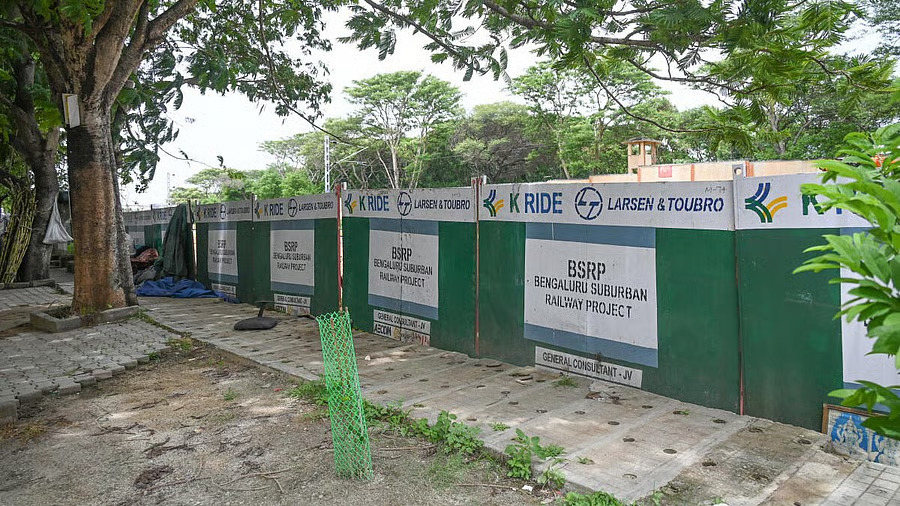
Bengaluru, India’s bustling tech metropolis and one of the fastest-growing urban centers in the country, has long struggled with traffic congestion, stretched public transport systems, and an urgent need for efficient alternatives. In this context, the idea of a suburban rail network was embraced as a transformative solution that could ease daily commutes, reduce travel time, and significantly improve the quality of urban life.
However, as months have turned into years, the ambitious suburban rail project has encountered numerous delays. Instead of tracking smoothly toward completion, the work has crawled forward, while the estimated cost of the project has surged — ballooning by an astonishing one thousand crore rupees. The gap between aspiration and execution has widened, prompting concern among commuters, policymakers, urban planners, and taxpayers alike.
The Promise of Suburban Rail: A Strategic Need
Bengaluru’s growth story is undeniable. The city is home to millions of professionals, students, migrant workers, and entrepreneurs. Every day, hundreds of thousands of commuters travel across its vast expanse from suburbs to business districts, IT corridors, educational hubs, and industrial areas.
Yet, limited mass rapid transit options have placed enormous strain on existing infrastructure. Traffic snarls, long wait times for buses, packed metro coaches and overcrowded roads are everyday realities.
The suburban rail system was envisioned to complement existing metro and bus networks — connecting peripheral towns and satellite suburbs with the urban core through frequent, high-capacity train services. Advocates highlighted benefits such as:
Faster inter-city and intra-city travel
Reduced dependency on road transport
Lower carbon emissions
Stimulated economic activity in suburban zones
Enhanced connectivity for working professionals
Despite these compelling potential benefits, the project’s implementation journey reveals the complexities of urban infrastructure development.
Slow Progress: Where Things Stand Now
The suburban rail project in Bengaluru has progressed in fits and starts. Authorities have reported that land acquisition, alignment planning, utility shifting, track laying and station design work are ongoing — but not at the pace initially expected.
Multiple factors have contributed to the slow pace:
Complex terrain and dense urban settlements, which require careful routing and minimize displacement
Coordination challenges between multiple government agencies and departments
Delays in securing clearances for construction in critical zones
Technical hurdles related to track alignment and integration with existing transport systems
The result: schedules have slipped, milestones have been pushed back, and commuter expectations have been tempered.
Soaring Costs: From Budget to Ballooning Expenditure
One of the most eye-catching aspects of the Bengaluru suburban rail story is the dramatic rise in estimated costs. Originally projected to be completed within a certain budget framework, the project’s financial requirements have expanded significantly. Current estimates indicate a cost escalation of over one thousand crore rupees compared to initial forecasts.
Several factors have contributed to this cost increase:
Inflationary pressures in construction materials and labor costs
Revised design requirements to account for engineering complexities
Delays that extended timeframes and added carrying costs
Additional expenses for land rehabilitation, compensation, and clearances
The escalation has prompted questions about budget oversight, project planning accuracy, and long-term fiscal impact. Critics argue that inadequate initial assessments and optimistic budgeting have led to the current predicament.
Supporters of the project, however, contend that such cost revisions are common in large infrastructure works and reflect a realistic response to evolving ground conditions rather than mismanagement.
Commuter Frustration: A City in Transit Limbo
For Bengaluru’s daily commuters, the suburban rail project represents both hope and frustration. Many residents express impatience with the slow pace, especially those who endure long journeys of two to three hours each day.
Key concerns voiced by commuters include:
Continued dependence on roads and buses that are overcrowded
Rising fuel costs adding to personal expenditure
Wasted time in daily travel that could be used productively
Lack of clear communication on revised timelines
In neighborhoods farthest from the city center, where transport alternatives are limited, dissatisfaction with delays is most acute.
Government’s Response: Assurance and Effort
Government officials involved in the project have responded to rising concerns by reaffirming their commitment to completing the suburban rail network. They emphasize that robust planning and quality execution take time and that short-cuts could compromise safety and long-term viability.
Officials also highlight measures being taken to accelerate progress, including:
Enhancing coordination between central and state agencies
Streamlining approval processes
Adopting advanced technology to reduce engineering delays
Exploring public-private partnerships for certain stretches
Authorities maintain that once operational, the suburban rail will be a game-changer, easing commuter burdens and elevating Bengaluru’s status as a modern, integrated urban hub.
The Bigger Picture: Urban Mobility and Policy Challenges
Bengaluru’s suburban rail project encapsulates broader questions about urban development in rapidly growing Indian cities. As metropolises expand, the challenges of transport infrastructure multiply. Effective solutions require not only vision, but also synchronized governance, sustained funding, precise planning and engagement with local stakeholders.
Urban planners point out that the delays and cost escalations in Bengaluru are not isolated phenomena, but rather indicative of systemic issues that affect megaprojects across the country.
These include:
Fragmented planning frameworks that struggle to bridge local and metropolitan priorities
Inadequate pre-construction studies that underestimate land, environmental and logistical realities
Reactive, rather than proactive, policy responses to anticipated urban growth
Shortage of skilled manpower specializing in large-scale urban transit projects
Experts call for a comprehensive urban transport strategy that integrates suburban rail, metro networks, rapid bus transit, non-motorised transport infrastructure and last-mile connectivity.
Economic Implications: Cost vs. Opportunity
The cost escalation of over one thousand crore rupees invites scrutiny beyond headlines. It raises important questions about fiscal responsibility, return on investment and long-term economic impact.
On one hand, the substantial increase in expenditure could strain public budgets and divert funds from other essential services such as health, education and basic civic infrastructure.
On the other hand, proponents underline the economic multiplier effect of efficient urban rail networks — including:
Reduced travel delays and higher productivity
Lower fuel consumption and pollution
Increased real estate values near transit corridors
Expanded job markets and easier access to employment
The debate reflects a classic development dilemma: balancing short-term financial constraints with long-term gains that may transform the city’s economic landscape.
Lessons from Other Cities: Learning from Experience
Urban experts often refer to examples from other Indian and global cities that have implemented suburban rail systems with varying degrees of success. Lessons from these cases highlight:
The importance of early stakeholder engagement
Rigorous baseline surveys and feasibility studies
Transparent cost-benefit analysis
Integration with other public transport modes
Clear and realistic delivery timelines
Cities such as Mumbai and Chennai, which have functioning suburban rail networks, offer insights into how such systems can reshape urban mobility. Drawing from their experiences could help Bengaluru refine its approach and shorten the gap between planning and delivery.
Looking Ahead: The Road to Completion
Despite delays and rising expenses, the suburban rail project remains a cornerstone of Bengaluru’s infrastructure ambitions. Work continues on planned corridors, track alignment, signaling systems, and station development.
Several actionable steps are expected in the months ahead:
Completion of critical sections that will operate in the initial phase
Continued land acquisition and clearance in sensitive areas
Testing and calibration of rail systems
Efforts to ensure seamless integration with metro and bus networks
Authorities are also exploring ways to enhance public communication about progress, including updated timelines, route maps, and commuter information systems.
Conclusion: Between Promise and Reality
The story of Bengaluru’s suburban rail project is one of vision, complexity, challenge and opportunity. It reflects the intricate balance between ambitious urban planning and the practical hurdles of execution. While rising costs and slow progress are cause for concern, the greater picture is still one of transformative potential.
For a city grappling with congestion, pollution and stretched transport infrastructure, the suburban rail network remains a compelling solution — albeit one that must be delivered with foresight, accountability and sustained public engagement.
FACTS Transcripts proudly serves students and professionals across a wide range of regions to support their academic and career goals. Our services are available in:
India
United States
Canada
United Kingdom
New Zealand
Australia
Russia
Middle East
North America
Africa
Our Services – FACTS Transcripts
We at FACTS Transcripts assist in various services, including:
Mark Sheet Transcripts
E-Transcripts
Duplicate Mark Sheets & Degree Certificates
Medium of Instructions Certificates
Attestations
HRD Attestation / Apostille Services
ECA (Educational Credentials Assessment)
Trusted by leading global verification organizations, including WES, IQAS, PEBC, NDEB, NASBA, CAPR, NZQA, ICAS, NCESS, ICES, ECE, eduPASS, ACEI, GCEUS, Comparative Education Services, NNAS, NCA, SAQA, QMAS, FORAC, Australian Pharmacy Council, and more.
FACTS Transcripts – The preferred choice for university document verification worldwide. We ensure a hassle-free process for obtaining your transcripts.