

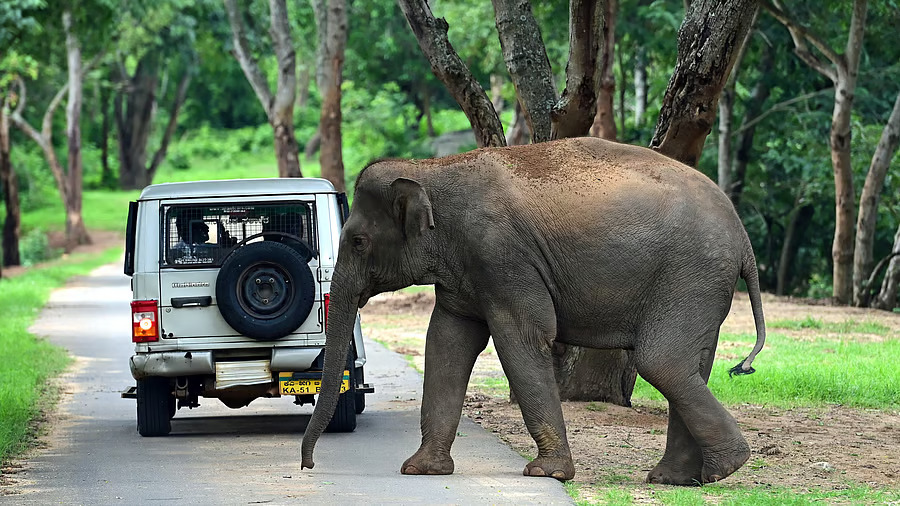
In an unfolding environmental and legal drama, activists and conservationists have approached India’s highest judicial forum to challenge a controversial decision involving the Bannerghatta Tiger Reserve in Karnataka. Their grievance centers on the shrinkage of the reserve’s designated buffer zone, a measure they argue undermines wildlife protection, threatens ecological balance, and contradicts established conservation laws.
The case has now captured public attention far beyond environmental circles, igniting wider debate about how development priorities intersect with natural heritage preservation, and what India’s policy roadmap for wildlife conservation should look like in a rapidly urbanizing era.
Bannerghatta Tiger Reserve: A Cultural and Ecological Gem
The Bannerghatta Tiger Reserve, located on the southern edge of Bengaluru, is one of India’s most significant wildlife sanctuaries. Situated where urban sprawl meets rich biodiversity, the reserve provides sanctuary to tigers, elephants, deer, leopards, barking deer, sloth bears, and countless bird and reptile species.
For decades, Bannerghatta has functioned not only as a haven for wildlife but also as a living classroom — drawing researchers, students, nature lovers and tourists from across the country. The surrounding buffer zone plays a crucial role in protecting core forest areas from human encroachment while offering animals space to roam, breed, and thrive.
The Controversy: Shrinking the Buffer Zone
At the heart of the legal challenge lies a policy change that restructures the buffer zone around the tiger reserve. Buffer zones act as protective outer rings, safeguarding the core habitat from the pressures of urban development, agriculture, pollution, and infrastructure expansion.
Recently, however, authorities reportedly redefined the boundaries of this zone, effectively reducing its geographical spread. Conservation activists argue that this shrinkage will:
Expose wildlife to increasing human‑wildlife conflict
Lead to habitat fragmentation and loss of migratory routes
Encourage illegal construction and encroachment
Threaten endangered species that rely on interconnected ecosystems
According to environmental advocates, the decision to alter the buffer zone was taken without adequate scientific justification and without meaningful public consultation — a move they describe as short‑sighted and perilous.
The Legal Action: Taking the Fight to the Supreme Court
In response, a coalition of environmental activists, conservation organisations and concerned citizens has filed a petition in the Supreme Court — urging the judiciary to intervene, review the policy change, and restore the buffer zone to its original extent.
The petition highlights key arguments:
Scientific Principles Ignored: The alteration did not take into account mandated wildlife impact assessments or ecological studies that demonstrate the necessity of expansive buffer regions for tiger movement and ecosystem integrity.
Violation of Conservation Mandates: Activists contend that the decision contravenes national wildlife protection laws and international conventions that India is a signatory to.
Risk of Irreversible Damage: Once buffer zones are legally redefined and land is diverted for development, reversing the process could be extremely difficult, if not impossible.
In their legal submission, petitioners have urged the Supreme Court to issue directives ensuring that conservation science, species protection priorities and legal safeguards are not compromised in the name of development.
Why Buffer Zones Matter: Beyond Paper Boundaries
Buffer zones are not just lines on a map — they are living, breathing landscapes that serve multiple vital functions:
Ecological Connectivity:
These zones allow animals to move freely between core forest patches in search of food, breeding grounds, or seasonal habitats. Disruption of this connectivity can lead to increased stress, inbreeding, and diminished population health.
Reducing Human‑Wildlife Conflict:
Buffer regions provide a transitional space between human settlements and dense forest, reducing the likelihood of animals inadvertently entering villages and farmlands where they risk conflict with people.
Conservation Integrity:
Wildlife does not recognize administrative boundaries. Large, contiguous ecosystems are essential if biodiversity is to remain robust and sustainable.
In the case of Bannerghatta, scientists have historically emphasised that its buffer zone acts as a safety valve that prevents habitat isolation — a critical factor for the long‑term survival of species such as tigers, leopards, elephants and other mammals.
Voices from the Ground: What Activists Are Saying
Environmental organisations and local activists have voiced strong opposition to the policy shift. Many argue that expanding urbanization around Bengaluru already places significant strain on surrounding forests and ecologies, and that reducing the buffer zone only accelerates irreversible damage.
One activist involved in the petition explained that wildlife corridors have already been disrupted by prior infrastructure projects, and that shrinking protective zones makes a bad situation worse. Their stance is that intelligent urban planning must be paired with stringent conservation measures — not trade‑offs where wildlife loses ground.
They also emphasise that Bengaluru’s reputation as a ‘green city’ and a technology hub should be matched by a responsible approach to environmental stewardship — safeguarding the natural assets that enrich the region culturally, ecologically and economically.
Government’s Position: Development Needs and Urban Pressures
Authorities defending the decision have argued that adjustments in buffer zone boundaries reflect evolving land use requirements and “development imperatives.” They assert that such decisions are necessary to accommodate infrastructure upgrades, housing needs, and economic growth for a rapidly expanding urban population.
Officials have maintained that wildlife protection remains a priority and that changes in buffer delineation were made following procedural guidelines. However, they have also acknowledged that the city’s growth trajectory demands thoughtful integration of infrastructure and environmental planning — a challenge that continues to test governance frameworks.
Some authorities have indicated that alternate conservation measures could be considered, such as compensatory green spaces or rejuvenation of degraded areas outside the buffer. Yet, critics argue that such measures are often insufficient substitutes for a scientifically determined, legally recognized buffer with ecological continuity.
Broader Environmental Context: Urbanisation vs. Wildlife Protection
The Bannerghatta dispute is part of a larger national conversation about how Indian cities balance growth with ecological preservation. Across the country, expanding metropolises increasingly press against forests, wetlands, rivers and open lands — forcing decisions that pit economic development against environmental priorities.
In many instances, well‑intended development projects have led to habitat fragmentation, water scarcity, displacement of indigenous communities, and loss of biodiversity. Conservationists warn that without a firm commitment to protecting natural landscapes, India’s rich flora and fauna could face existential threats in the coming decades.
Legal Experts Weigh in: The Role of the Judiciary
Legal scholars tracking the case have emphasised that the Supreme Court has historically played a pivotal role in environmental jurisprudence — stepping in when policies or administrative decisions threaten to undermine long‑established legal protections for forests, wildlife and ecological balance.
Experts note past instances where the judiciary has upheld conservation law, intervened in cases of illegal land use change, and reinforced the importance of scientific evidence in environmental decision‑making.
They stress that the current petition — challenging the Bannerghatta buffer zone adjustment — could set an important precedent. A favourable ruling for conservationists would reaffirm that environmental safeguards are integral to sustainable development, rather than optional add‑ons.
Local Communities and Wildlife Stakeholders: A Shared Concern
The implications of shrinking buffer zones extend beyond wildlife alone — local villagers, farmers and forest‑dependent communities also have stakes in the outcome. These groups often coexist with forests, drawing livelihoods from sustainable practices such as beekeeping, medicinal plant gathering, eco‑tourism, and cultural heritage tourism.
Reduction of protected zones could disrupt these livelihoods, increase vulnerability to wildlife crop damage, and degrade the natural capital that sustains rural economies.
Looking Ahead: What’s at Stake
As the Supreme Court prepares to hear the petition, a great deal hinges on the outcome. For conservation advocates, a legal victory would not only safeguard Bannerghatta’s buffer zone but also reinforce the role of science and law in shaping land use policy.
For those focused on development imperatives, the case highlights the need for more nuanced and carefully integrated planning mechanisms — ones that harmonize urban expansion with nature preservation.
The court’s decision could influence policy and conservation strategies not just in Karnataka, but across India — where megacities and biodiversity hotspots are increasingly entangled.
Conclusion: A Defining Moment for Conservation
The dispute over the Bannerghatta Tiger Reserve buffer zone represents a defining moment in India’s environmental journey. It underscores the complex interplay between urban growth, wildlife protection and legal frameworks in a period of intense ecological change.
As civic society, scientists, policymakers, and legal experts converge on this issue, the stakes are clear: a balanced, sustainable future depends on decisions that respect both human needs and the intrinsic value of wildlife and natural habitats.
FACTS Transcripts proudly serves students and professionals across a wide range of regions to support their academic and career goals. Our services are available in:
India
United States
Canada
United Kingdom
New Zealand
Australia
Russia
Middle East
North America
Africa
Our Services – FACTS Transcripts
We at FACTS Transcripts assist in various services, including:
Mark Sheet Transcripts
E-Transcripts
Duplicate Mark Sheets & Degree Certificates
Medium of Instructions Certificates
Attestations
HRD Attestation / Apostille Services
ECA (Educational Credentials Assessment)
Trusted by leading global verification organizations, including WES, IQAS, PEBC, NDEB, NASBA, CAPR, NZQA, ICAS, NCESS, ICES, ECE, eduPASS, ACEI, GCEUS, Comparative Education Services, NNAS, NCA, SAQA, QMAS, FORAC, Australian Pharmacy Council, and more.
FACTS Transcripts – The preferred choice for university document verification worldwide. We ensure a hassle-free process for obtaining your transcripts.