

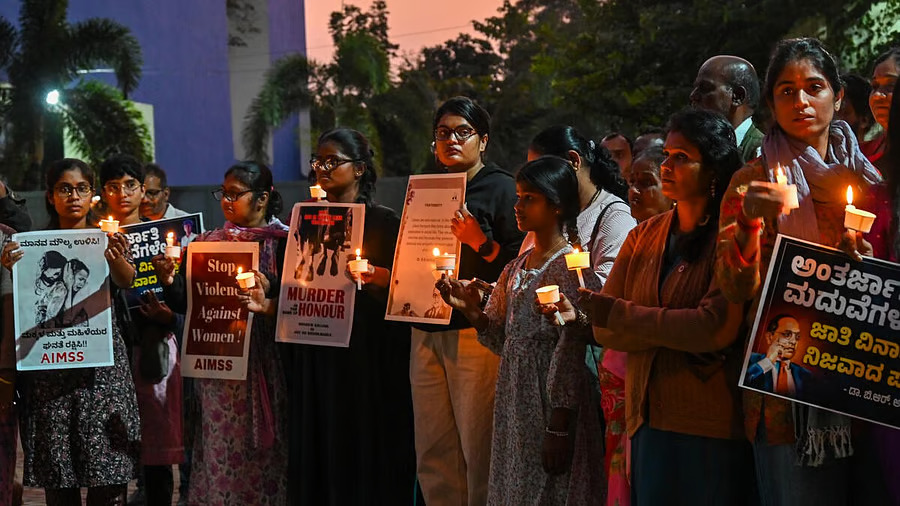
In the vibrant but complex social landscape of Karnataka, a seismic legal and ethical shift is underway. The state is preparing to introduce a special law aimed at preventing honour crimes — violent acts committed in the name of family honour, tradition or social custom, particularly in cases of inter-caste and inter-community relationships. This initiative has emerged in the aftermath of a shocking incident that shook the state and reignited public debate on caste discrimination and personal liberty.
The proposed legislation — officially known as the Karnataka Freedom of Choice in Marriage and Prevention and Prohibition of Crimes in the Name of Honour and Tradition Bill, 2026 — seeks to fill a glaring gap in India’s legal framework. Until now, crimes motivated by “honour” have only been prosecuted as ordinary criminal offences like murder, abduction or assault. There has been no dedicated law that recognises the specific social dynamics and purposeful violence behind honour killings. The new bill aims to change that by creating a clear legal category for honour crimes and by specifically protecting the right of individuals to choose their life partners without fear of violence or coercion.
Why This Law Matters Now
The urgency behind the proposed law stems from a tragic event in late 2025 that shook both Karnataka and the nation. A young 20-year-old woman was allegedly killed by her own family members because she married a man from a different caste. She was several months pregnant, and her death brought into sharp focus the brutal reality that caste-based prejudice and so-called honour violence continue to claim innocent lives, even in parts of India where discrimination has long been legally prohibited. This incident underscored how deeply entrenched social attitudes can sometimes override constitutional rights, prompting widespread outrage and calls for effective legal remedies.
Across India, honour killings are understood as violence inflicted on individuals — often women — who defy traditional norms around marriage, caste, religion, or family expectations. These crimes are not random acts of violence but are calculated attempts to enforce conformity and maintain social hierarchies. Unfortunately, the existing Indian Penal Code treats such cases only as murder or assault, overlooking the discriminatory motivations that drive them and the broader societal harm they cause.
Core Features of the Proposed Bill
The Karnataka bill represents a comprehensive effort to criminalise not just honour killings but a wide range of related acts that restrict personal freedom, dignity, and bodily autonomy. Its provisions reflect a deep understanding of the complexity of honour crimes and the need for both punitive and protective measures.
Freedom of Choice and Personal Autonomy
At the heart of the bill is the principle that every adult has the inherent right to choose their own life partner without requiring the consent of family, caste, clan, community or any third party. Marriage decisions, whether inter-caste or inter-religious, are framed as expressions of personal liberty and dignity. By affirming this in law, the bill seeks to protect individuals from violence and discrimination simply for exercising their constitutional rights.
Definition and Scope of Honour Crimes
The bill defines “honour crimes” broadly to include acts that cause death, physical harm, mental trauma, social and economic exclusion, forced rituals and symbolic actions intended to shame the couple, and various other forms of coercion or intimidation. These acts are criminalised when they are committed in the name of caste, custom, tradition, culture, community, or family honour. The wide scope acknowledges that honour-based violence is not limited to homicide but includes a spectrum of harmful practices designed to punish non-conformity.
Stringent Penalties and Legal Accountability
Under the proposed law, those responsible for honour killings face a minimum term of imprisonment and substantial fines. Lesser but still serious penalties are prescribed for other honour crimes like grievous hurt, simple hurt or acts that interfere with personal liberties. Importantly, the offences are made cognisable and non-bailable, signalling the state’s intent to treat these crimes with the gravity they deserve.
Victim Protection and Institutional Mechanisms
Beyond punishment, the bill emphasises protective and preventive measures. It includes provisions for safeguarding victims, their families, and witnesses, ensuring access to justice and rehabilitation. Designed institutional mechanisms seek to promote timely investigation and fair trial, while also preventing further harm through protective orders and civil remedies. By offering structured protection, the law aims to reduce fear and encourage reporting and prosecution of such crimes.
Balancing Tradition and Transformation
The proposed law represents a paradigm shift in how honour crimes are understood and addressed. For generations, caste and community norms have dictated who one should or should not marry, often enforcing rigid social boundaries. In many regions, the backlash against inter-caste or inter-religious relationships has ranged from ostracism and social boycott to brutal violence.
The Karnataka bill seeks to challenge these norms by making it clear that social custom cannot justify violence or coercion. It rejects the premise that family or community “honour” can be protected by stripping away an individual’s basic rights. The legislation signals a move toward individual dignity, equality, and social inclusion, a step that aligns with constitutional ideals but has been difficult to enforce in practice.
By acknowledging a diverse society where marriage and relationships should be based on personal choice and mutual consent, the bill confronts entrenched prejudice. It shifts the focus from protecting social reputation to protecting human lives and liberties.
Legal and Social Implications
If enacted, this law will have far-reaching implications across Karnataka and potentially beyond. It will hold perpetrators accountable in ways that go beyond treating honour crimes as isolated incidents of violence. Instead, such acts will be understood as systemic abuse rooted in discrimination and social coercion.
The legislation also sets a precedent for other states grappling with similar crimes. It highlights the need for legal systems to recognise the special dynamics of honour-based violence rather than reducing such cases to ordinary criminal offences. In doing so, it reinforces constitutional protections — including equality before the law, freedom of conscience and expression, and personal liberty — which are fundamental to India’s democratic framework.
Beyond Legislation: Changing Social Mindsets
While the proposed law is a landmark step in criminal justice reform, combating honour crimes also requires sustained social and cultural change. Laws can provide deterrence and redress, but long-term transformation demands education, awareness and engagement with communities. Cultural narratives that stigmatise inter-caste or inter-religious unions must be challenged through dialogue, inclusion and a reaffirmation of individual rights.
Civil society groups, educators, activists and community leaders all have a role to play in reinforcing the message that personal freedom and dignity cannot be sacrificed at the altar of tradition or social prestige. True reform will emerge when society begins to view every citizen’s autonomy as inviolable, irrespective of caste, religion or gender.
Conclusion: A Law for Liberty and Justice
Karnataka’s proposed honour killing law is more than a legal instrument; it is a declaration of values. By confronting honour-based violence head-on and validating personal choice, the state is embracing a future where human dignity is paramount. This proposed legislation recognises the right to love, to choose, and to live without fear — ideals that lie at the very heart of a just and equitable society.
FACTS Transcripts proudly serves students and professionals across a wide range of regions to support their academic and career goals. Our services are available in:
India
United States
Canada
United Kingdom
New Zealand
Australia
Russia
Middle East
North America
Africa
Our Services – FACTS Transcripts
We at FACTS Transcripts assist in various services, including:
Mark Sheet Transcripts
E-Transcripts
Duplicate Mark Sheets & Degree Certificates
Medium of Instructions Certificates
Attestations
HRD Attestation / Apostille Services
ECA (Educational Credentials Assessment)
Trusted by leading global verification organizations, including WES, IQAS, PEBC, NDEB, NASBA, CAPR, NZQA, ICAS, NCESS, ICES, ECE, eduPASS, ACEI, GCEUS, Comparative Education Services, NNAS, NCA, SAQA, QMAS, FORAC, Australian Pharmacy Council, and more.
FACTS Transcripts – The preferred choice for university document verification worldwide. We ensure a hassle-free process for obtaining your transcripts.