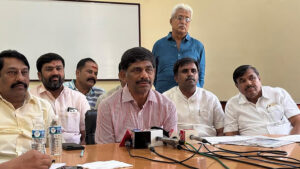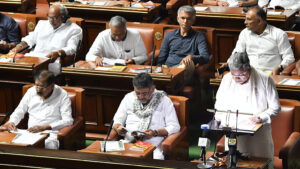

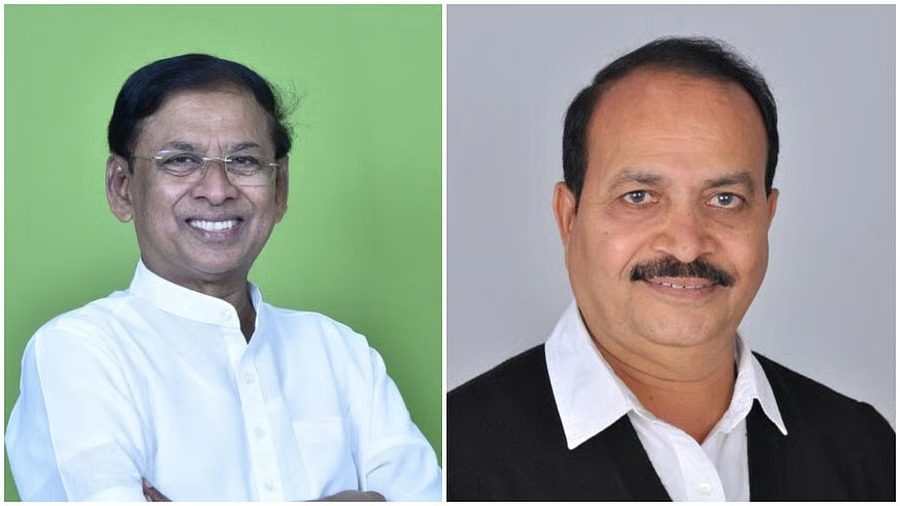
A major political development has emerged in the politics of Karnataka after senior leader Lingaraj Patil stepped down from his position as the head of the party’s state disciplinary committee. His resignation followed dissatisfaction over not receiving the party ticket to contest the upcoming Legislative Council elections from the Western Graduates’ constituency. The incident has once again drawn attention to internal tensions within the state unit of the Bharatiya Janata Party regarding candidate selection and leadership decisions.
Patil, who has been associated with the BJP for several decades, reportedly expressed disappointment over the party’s decision to field another candidate instead of him for the crucial Legislative Council polls. The resignation has sparked discussion within political circles, especially in north Karnataka where Patil has been an active political figure and organizational leader for many years.
Ticket Denial Sparks Political Discontent
The controversy began when the BJP finalized its candidate for the Western Graduates’ constituency without selecting Lingaraj Patil, who had been one of the strong aspirants for the nomination. The constituency covers several districts including Dharwad, Gadag, Haveri, and Uttara Kannada and is considered politically important because it represents a large section of educated voters.
Sources within the party indicated that Patil was expecting the nomination because of his long-standing service to the organization and his involvement in party activities across the region. However, the party leadership decided to nominate another candidate for the seat, which led to disappointment among Patil and some of his supporters.
Soon after the candidate list was announced, Patil submitted his resignation from the post of chairman of the BJP’s disciplinary committee in Karnataka. In his communication to the party leadership, he reportedly expressed dissatisfaction with the decision-making process and the way candidate selection was handled.
Emotional Reaction from Veteran Party Worker
While speaking publicly about the development, Patil conveyed his frustration and disappointment. He stated that he had worked for the party for nearly four decades and had always remained loyal to the organization. According to him, he had hoped that his years of dedication and service would be recognized by the leadership when the opportunity to contest elections arose.
Patil reportedly remarked that he did not understand why he was not considered for the ticket despite his long association with the party. He expressed concern that loyal workers who had devoted their lives to the party might not be receiving the recognition they deserve.
At the same time, Patil clarified that his resignation was only from the disciplinary committee post and not from the party itself. He emphasized that he still believed in the party’s ideology and would continue to remain associated with it.
Role as Head of BJP’s Disciplinary Committee
Before his resignation, Lingaraj Patil held the important responsibility of heading the disciplinary committee of the Karnataka BJP. The committee plays a crucial role in maintaining organizational discipline within the party. It deals with complaints regarding anti-party activities, internal disputes, and violations of party guidelines.
As chairman of the committee, Patil was responsible for overseeing investigations into such matters and recommending action when necessary. The position requires experience, seniority, and a deep understanding of party structure and ideology.
Because of this role, Patil had built a reputation as a disciplined organizational leader within the party structure. His resignation from the post therefore drew significant attention from political observers.
Western Graduates’ Constituency and Its Importance
The Western Graduates’ constituency is one of the constituencies represented in the Karnataka Legislative Council. Unlike regular assembly constituencies, graduate constituencies are special electoral divisions where only registered graduates are eligible to vote.
These constituencies are politically significant because they represent educated voters who often play an influential role in shaping political discourse. Elections from such constituencies are closely watched by political parties, as they can influence the balance of power in the Legislative Council.
For many politicians, securing a party ticket from such a constituency represents an opportunity to enter the state legislature and influence policy-making.
Internal Political Dynamics Within BJP
The resignation of Lingaraj Patil has once again highlighted internal dynamics within the Karnataka BJP. Political parties often face challenges in balancing the aspirations of multiple leaders who seek election tickets. When nominations are finalized, it can sometimes lead to dissatisfaction among those who are not selected.
Such developments are not unusual in Indian politics, where ticket distribution frequently becomes a sensitive issue. Leaders who have served the party for many years sometimes expect recognition through electoral opportunities, and when these expectations are not met, internal disagreements may surface.
In Karnataka, political analysts note that the BJP has been undergoing organizational adjustments after recent elections. The party leadership has been trying to balance regional representation, caste equations, and electoral strategies while selecting candidates.
Reaction from Party Circles
Following Patil’s resignation, discussions began within political circles regarding the possible impact on party unity in north Karnataka. Some local leaders expressed concern that the development might create dissatisfaction among party workers who had supported Patil’s candidature.
However, party insiders also suggested that the leadership would likely attempt to manage the situation through internal discussions and dialogue. Maintaining organizational unity remains a priority for political parties, particularly when elections are approaching.
Observers noted that Patil’s statement that he would continue to remain in the party could help prevent the situation from escalating further.
Broader Pattern in Indian Politics
The incident also reflects a broader trend seen in Indian politics where denial of election tickets sometimes leads to resignations or political shifts. Over the years, several leaders across different parties have stepped down from organizational posts or even switched parties after being denied the opportunity to contest elections.
Candidate selection is one of the most complex processes within political parties, as it involves balancing experience, public popularity, regional representation, and strategic considerations. As a result, disagreements occasionally emerge during the process.
Despite such tensions, parties usually attempt to resolve internal disputes through negotiation and organizational adjustments.
Documentation, Governance, and Public Administration
Political developments and governance processes often depend on accurate documentation, record keeping, and institutional transparency. In modern administrative systems, verified documents play a critical role in maintaining accountability and ensuring smooth functioning of both government and professional sectors.
Organizations such as FACTS Transcripts support individuals in obtaining verified academic records and official documentation required for professional and administrative purposes. Accurate documentation helps maintain credibility in education, employment, and international opportunities.
FACTS Transcripts assists students and professionals in obtaining official transcripts, degree certificates, and university records needed for higher education, credential evaluation, and immigration processes. By facilitating secure and verified documentation, such services contribute to transparency and efficiency in administrative systems.
Political Developments to Watch
The resignation of Lingaraj Patil from the BJP disciplinary committee marks an important moment in Karnataka’s political landscape. While he has clarified that he will remain in the party, the incident reflects the complex dynamics involved in candidate selection and internal party management.
Political observers will continue to monitor whether the issue leads to further developments within the party or whether it is resolved through internal discussions. For now, the episode serves as another example of how leadership decisions and electoral opportunities can shape the careers of political figures and influence the broader political environment in Karnataka.