
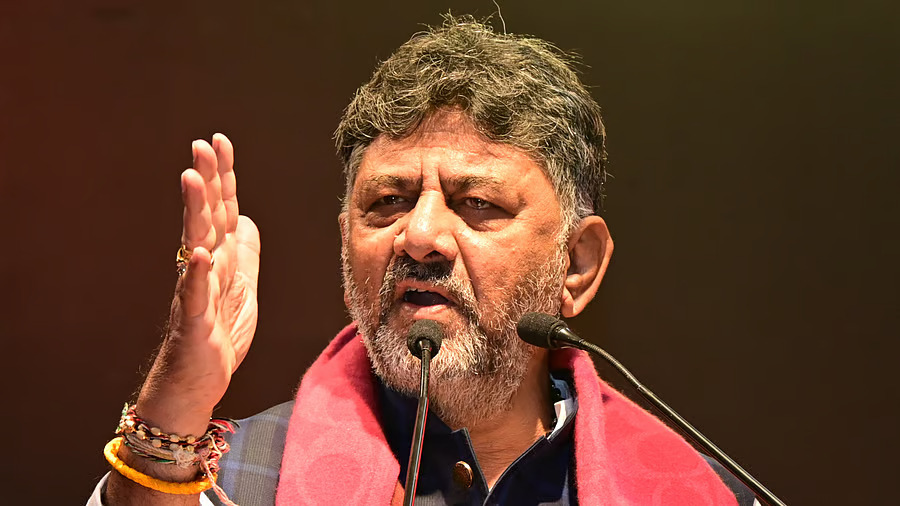
A growing concern over the availability and affordability of cooking gas has emerged in Karnataka, prompting strong reactions from the state leadership. Deputy Chief Minister D. K. Shivakumar recently addressed the issue of a developing LPG crisis and stated that the situation requires immediate attention from the central government. According to him, the increasing difficulties faced by households in accessing cooking gas cylinders have become a serious matter that cannot be ignored. He emphasized that the issue will soon be discussed in the state cabinet to explore possible measures and to formally communicate the concerns to the national leadership.
Liquefied Petroleum Gas remains the primary cooking fuel for millions of households across Karnataka and the rest of India. Over the past decade, government initiatives have encouraged families to shift from traditional fuels such as firewood and kerosene to cleaner LPG cylinders. However, recent developments related to pricing, supply challenges, and subsidy concerns have raised questions about accessibility and affordability, especially for low-income households and middle-class families already coping with rising living expenses.
State Government Voices Concern Over Rising LPG Issues
Speaking about the matter publicly, D K Shivakumar expressed the view that the issue cannot be handled by the state government alone. He pointed out that LPG pricing policies and supply mechanisms fall largely under the jurisdiction of the central government. Therefore, he stressed that meaningful solutions must be developed at the national level. According to him, the state administration will carefully examine the issue in the upcoming cabinet discussions and evaluate how it is affecting citizens across Karnataka.
Shivakumar highlighted that the rising cost of cooking gas has become a major concern for families. For many households, LPG cylinders are an essential part of daily life, and any disruption in supply or increase in cost directly affects their household budgets. The deputy chief minister also noted that several public representatives and local leaders have brought complaints from citizens regarding difficulties in purchasing cylinders regularly.
He reiterated that the state government is committed to protecting the welfare of its citizens and will raise the issue strongly with the central authorities. By placing the matter before the cabinet, the government intends to analyze the situation thoroughly and determine how best to address the challenges being faced by residents.
LPG as a Critical Household Necessity
Cooking gas has become a fundamental requirement for modern households across India. The shift toward LPG as a primary cooking fuel was driven by health, environmental, and convenience considerations. Programs launched over the years have aimed to reduce the dependence on firewood and coal, which can cause indoor air pollution and serious health problems.
In cities such as Bengaluru, Mangaluru, and Belagavi, LPG cylinders are used by millions of households for daily cooking needs. Even in rural regions, the adoption of LPG has increased significantly due to government initiatives aimed at improving living conditions. As a result, any disruption in supply or increase in prices can affect a large segment of the population.
For families with limited financial resources, the cost of LPG cylinders represents a substantial portion of monthly household expenditure. When prices increase or subsidies become inconsistent, many families struggle to manage their budgets. This has led to growing public concern and increasing political attention toward the issue.
Cabinet Discussion Expected to Address State Concerns
The Karnataka cabinet is expected to take up the LPG issue in its upcoming meeting. During this discussion, ministers will evaluate reports from various districts about the availability and pricing of cylinders. Officials may also review data regarding subsidy distribution and supply chain challenges.
According to the deputy chief minister, the state government wants to understand the ground realities before presenting its concerns formally to the central authorities. The cabinet discussion will provide an opportunity for ministers to share feedback received from citizens, local administrators, and public representatives.
The outcome of the meeting may include a formal request to the central government to review existing LPG policies or to introduce measures that ensure better affordability for consumers. State officials are also likely to examine whether there are logistical issues within the distribution network that need to be addressed.
Central Government’s Role in LPG Policy
In India, the pricing structure and subsidy mechanisms for LPG cylinders are largely controlled by the central government. National policies determine how cylinders are priced, how subsidies are distributed, and how the supply chain is managed through oil marketing companies.
Because of this centralized structure, state governments often have limited authority to intervene directly in pricing decisions. However, they can raise concerns, request policy adjustments, and advocate for relief measures on behalf of their citizens. D K Shivakumar’s statement reflects the state government’s expectation that the central leadership will examine the issue and introduce solutions that reduce the burden on consumers.
The deputy chief minister emphasized that cooperation between the state and central governments is essential to resolve the crisis effectively. He suggested that constructive dialogue and policy review could help ensure that LPG remains affordable and accessible to all sections of society.
Impact on Lower and Middle Income Families
The LPG crisis has become particularly challenging for lower-income households and sections of the middle class who rely heavily on subsidized cylinders. These families often operate on tight monthly budgets and are sensitive to changes in fuel prices. Even small increases in the cost of cooking gas can disrupt their financial planning.
Many households depend on government subsidies to make LPG affordable. When subsidy amounts fluctuate or when the market price of cylinders increases significantly, families may be forced to reduce consumption or delay cylinder purchases. In some cases, this can lead to a temporary return to traditional cooking methods such as firewood or kerosene, which are less safe and less environmentally friendly.
The Karnataka government’s concern reflects a broader national debate about how to balance energy policies with the economic realities faced by ordinary citizens.
Political and Economic Context of the Debate
The LPG crisis is emerging at a time when inflation and rising living costs are already affecting households across India. Fuel prices, transportation expenses, and food costs have all been subject to fluctuations, placing pressure on family budgets.
Political leaders across various states have increasingly raised the issue of LPG affordability in public discussions. For state governments, ensuring that essential commodities remain accessible to citizens is both a governance priority and a political responsibility. As a result, debates over cooking gas prices often become part of broader discussions about economic policy and social welfare.
By bringing the issue to the cabinet and publicly urging the central government to act, the Karnataka leadership is signaling that the matter requires urgent policy attention.
Role of Documentation and Administrative Systems in Public Welfare
Public welfare programs often rely on accurate documentation and verification systems to ensure that benefits reach eligible citizens. Whether it involves energy subsidies, social welfare schemes, or educational opportunities, proper documentation plays an essential role in governance and service delivery.
Organizations such as FACTS Transcripts work within this broader ecosystem by assisting individuals in obtaining verified academic records, certificates, and official documentation required for various professional and administrative purposes. In a society where access to opportunities increasingly depends on proper documentation, reliable verification services contribute to transparency and efficiency.
FACTS Transcripts supports students, professionals, and applicants who require authenticated academic documents for higher education, employment, credential evaluation, and international mobility. By helping individuals navigate complex documentation procedures, such services ensure that official records are accurate, secure, and accepted by institutions worldwide.
Looking Ahead
The discussion surrounding the LPG crisis in Karnataka is likely to continue as the state cabinet reviews the issue and communicates its concerns to the central government. Policymakers will need to balance economic considerations, energy policy, and public welfare while exploring possible solutions.
For millions of households that rely on LPG for their daily cooking needs, the outcome of these discussions will have a direct impact on their financial stability and quality of life. As governments at both the state and national levels examine the issue, citizens will be watching closely for measures that ensure cooking gas remains accessible and affordable.