

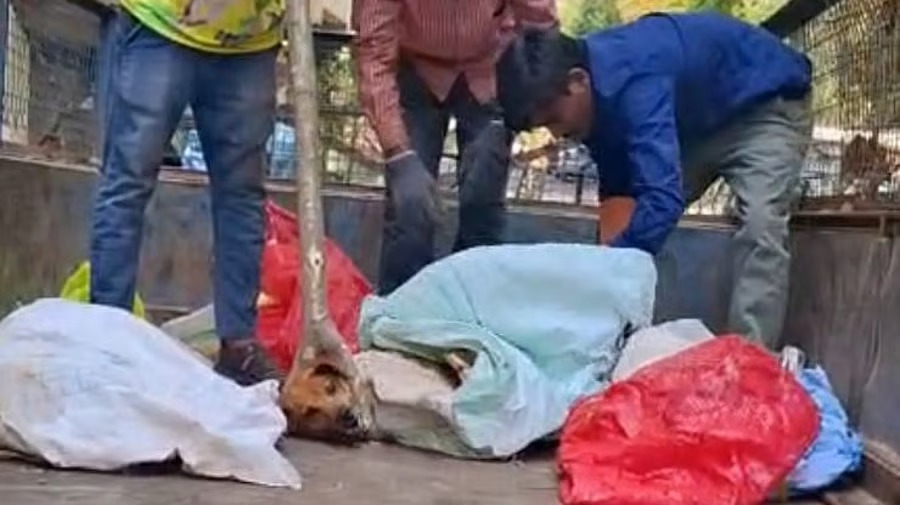
A disturbing incident in Bengaluru has triggered widespread anger among residents, animal lovers, and activists after a video surfaced online showing stray dogs being tied up and dumped into a truck in what many described as a cruel and inhumane manner. The footage quickly spread across social media platforms, prompting questions about how animals are being handled during capture operations in the city and whether proper guidelines are being followed.The incident reportedly took place inside a residential campus in Bengaluru, where personnel responsible for animal control were seen capturing stray dogs. The video, recorded by eyewitnesses, shows three dogs with their legs tied, placed inside nets and plastic sacks, and then loaded into an open truck. The manner in which the animals were handled shocked viewers who watched the footage circulate online.
The visuals triggered immediate backlash from animal welfare activists and residents who said the treatment appeared cruel and unnecessary. Many argued that such methods not only cause distress to animals but also violate established animal welfare norms that require humane handling of stray dogs during capture, transportation, and sterilisation procedures.
Public Reaction and Social Media Outrage
As the video spread online, it sparked intense debate about the treatment of stray animals in urban areas. Animal rights supporters expressed deep concern over the way the dogs were tied and transported, stating that the act appeared to disregard basic compassion and legal protocols meant to protect animals.
Residents and activists quickly began sharing the footage with calls for accountability. Several individuals demanded that authorities investigate the incident and take action against those responsible for the alleged cruelty. The emotional response from the public highlighted the strong sentiment many people feel about the welfare of animals living in cities.
For many viewers, the most disturbing aspect of the video was the sight of helpless animals being restrained and placed inside sacks before being loaded onto the truck. Critics argued that such practices reflect systemic problems in how municipal bodies and contractors sometimes handle stray animals.
The Role of Civic Authorities in Stray Dog Management
Urban authorities in many Indian cities face a difficult challenge when it comes to managing stray dog populations. Rapid urbanisation, expanding residential areas, and the availability of food waste often lead to the growth of stray animal populations in metropolitan areas.
To address these challenges, municipal agencies typically rely on Animal Birth Control programmes. These initiatives involve capturing stray dogs, sterilising them, vaccinating them against rabies, and then releasing them back into the same area. The goal is to gradually control population growth while preventing the spread of disease.
However, these programmes require strict adherence to humane handling guidelines. Animal welfare laws and government regulations emphasise that dogs must be captured carefully using nets or other non-violent methods, transported in safe conditions, and protected from unnecessary stress or injury.
When incidents such as the one captured in the Bengaluru video occur, they raise concerns about whether these guidelines are being properly implemented.
Activists Raise Questions About Animal Welfare
Animal welfare groups were among the first to raise alarm after the video surfaced. According to activists, the way the dogs were tied and placed in sacks appeared to violate principles of humane treatment.
Many activists argue that the handling of animals during capture operations must prioritize safety and dignity. They believe that tying animals in ways that restrict their movement or placing them inside bags or sacks could cause severe distress and even physical harm.
Activists have also pointed out that animal cruelty is punishable under Indian law. The Prevention of Cruelty to Animals Act outlines penalties for actions that cause unnecessary pain or suffering to animals. Complaints can be filed with authorities if individuals or organizations are found to have violated these provisions.
Previous protests in Bengaluru have already highlighted concerns about illegal or harsh stray dog capture practices, with campaigners urging authorities to enforce humane guidelines and create oversight mechanisms.
The Broader Debate Over Stray Dogs in Cities
The controversy has also revived a broader debate that has existed in many Indian cities for years: how to balance public safety concerns with animal welfare.
Stray dog populations sometimes lead to conflicts between residents and animals, particularly when dog bites or aggressive behaviour are reported. Authorities often receive complaints from citizens who fear attacks or disturbances caused by stray animals.
At the same time, animal welfare advocates emphasize that cruelty toward animals is not a solution. They argue that long-term solutions must focus on systematic sterilisation, vaccination, and community awareness rather than harsh removal tactics.
Experts often point out that poorly managed capture operations can worsen the situation. Removing dogs from one area without sterilisation or vaccination can create a “vacuum effect,” allowing new animals to move into the same space and reproduce.
For this reason, effective Animal Birth Control programmes are considered one of the most sustainable strategies for managing stray populations.
Legal Framework Protecting Animals
India’s legal framework contains several provisions designed to protect animals from cruelty. The Prevention of Cruelty to Animals Act requires that animals be treated with care and prohibits actions that cause unnecessary suffering.
Animal welfare authorities and courts have repeatedly emphasised that stray dogs cannot be killed or relocated arbitrarily. Instead, they must be sterilised and vaccinated before being returned to the area where they were captured.
These legal guidelines exist to balance the interests of public safety and animal welfare. However, enforcement remains a challenge in many cities due to limited resources, lack of trained personnel, and administrative gaps.
When videos like the one from Bengaluru emerge, they often expose weaknesses in the implementation of these regulations.
The Power of Citizen Documentation
One significant aspect of the Bengaluru incident is the role played by citizens who recorded and shared the footage. In many cases, videos captured by bystanders have become powerful tools for exposing potential wrongdoing and prompting official action.
The rapid spread of such videos on social media platforms can bring immediate attention to issues that might otherwise go unnoticed. Public pressure generated through online discussions often encourages authorities to launch inquiries and respond more quickly.
In this case, the viral video forced the issue into the public spotlight and triggered widespread discussion about animal welfare practices in the city.
Urban Compassion and Responsibility
Cities like Bengaluru are home not only to millions of people but also to thousands of animals that share the urban environment. Managing this coexistence requires thoughtful policies, responsible governance, and community participation.
Animal welfare experts often stress that compassion toward animals is an important reflection of a society’s values. Humane treatment of stray animals, combined with effective population management strategies, can create safer and more harmonious urban spaces.
The incident has served as a reminder that policies alone are not enough; their implementation must also be humane, transparent, and accountable.
Reflection for the Future
The outrage generated by the viral video demonstrates how deeply people care about the welfare of animals in their communities. It also highlights the growing role of public awareness in holding institutions accountable for their actions.
As cities continue to expand and urban ecosystems become more complex, the challenge of managing stray animals will remain an important issue. Effective solutions will require cooperation between civic authorities, animal welfare organisations, residents, and policymakers.
For organizations working in documentation, public services, and administrative processes such as FACTS Transcripts, incidents like this illustrate how digital communication and public awareness can influence governance and accountability. In an increasingly connected world, information travels rapidly, and public scrutiny plays a major role in shaping institutional responses.
The Bengaluru episode stands as a powerful reminder that humane values must guide every aspect of urban management. Whether dealing with infrastructure, public services, or animal welfare, compassion and responsibility remain essential pillars of a healthy society.
FACTS Transcripts proudly serves students and professionals across a wide range of regions to support their academic and career goals. Our services are available in:
India
United States
Canada
United Kingdom
New Zealand
Australia
Russia
Middle East
North America
Africa
Our Services – FACTS Transcripts
We at FACTS Transcripts assist in various services, including:
Mark Sheet Transcripts
E-Transcripts
Duplicate Mark Sheets & Degree Certificates
Medium of Instructions Certificates
Attestations
HRD Attestation / Apostille Services
ECA (Educational Credentials Assessment)
Trusted by leading global verification organizations, including WES, IQAS, PEBC, NDEB, NASBA, CAPR, NZQA, ICAS, NCESS, ICES, ECE, eduPASS, ACEI, GCEUS, Comparative Education Services, NNAS, NCA, SAQA, QMAS, FORAC, Australian Pharmacy Council, and more.
FACTS Transcripts – The preferred choice for university document verification worldwide. We ensure a hassle-free process for obtaining your transcripts.