

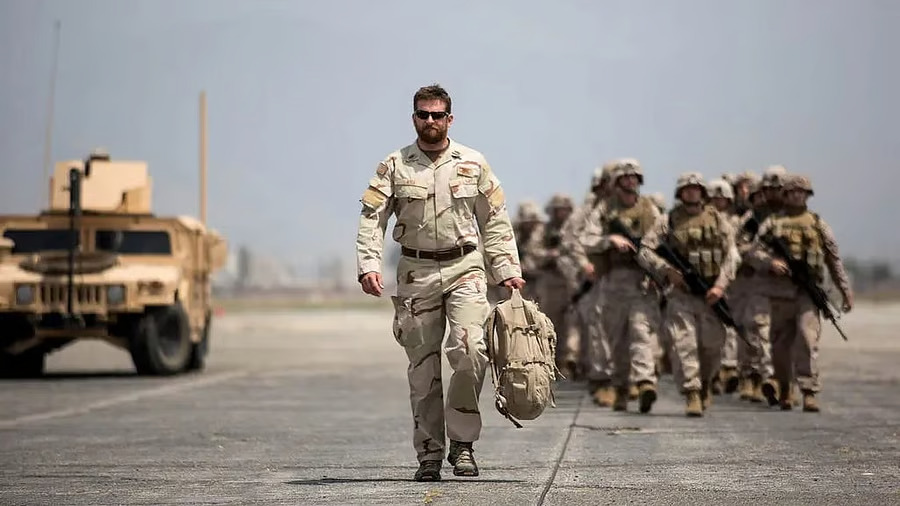
The escalation of tensions in the Middle East following the United States and Israel’s military actions against Iran has sparked intense global debate. While governments, diplomats, and military strategists analyze the conflict from political and security perspectives, another discussion has emerged within the cultural sphere. Observers are revisiting the long-standing relationship between war and cinema, particularly the role of Hollywood in shaping public perceptions of military power and conflict.
This debate has revived what many critics describe as Hollywood’s “Top Gun complex,” a phrase used to describe the film industry’s tendency to portray war in glamorous, heroic, and visually thrilling ways. The term draws inspiration from the iconic aviation film Top Gun, which became a cultural phenomenon and symbolized how entertainment can merge patriotism, military imagery, and cinematic spectacle.
As real-world conflicts dominate global headlines, many analysts argue that it is important to understand how decades of war movies have influenced the way audiences imagine modern warfare.
The Long Relationship Between Hollywood and War
Since the early twentieth century, Hollywood has produced films centered on war, military service, and battlefield heroism. These films have often been shaped by the historical context in which they were created.
During World War II, American cinema produced numerous films designed to boost morale and encourage public support for the war effort. Movies of that era frequently portrayed soldiers as noble defenders of freedom, highlighting themes of sacrifice, unity, and national pride.
After the war, however, Hollywood’s portrayal of military conflict began to evolve. The Korean War and the Vietnam War introduced more complex narratives that questioned the costs of war and the psychological toll experienced by soldiers. Films such as MASH and Apocalypse Now offered darker and more critical portrayals of military intervention, reflecting the growing skepticism among the public toward foreign wars.
These films presented soldiers not simply as heroic figures but as individuals struggling with trauma, confusion, and moral dilemmas. This shift marked an important turning point in how war stories were told on the big screen.
The Rise of the Military Blockbuster
Despite these critical portrayals, the late twentieth century witnessed the rise of large-scale action films that reintroduced a more heroic image of military power. Among the most influential was the 1986 film Top Gun, starring Tom Cruise as a daring naval aviator.
The film combined high-energy aerial combat scenes, patriotic imagery, and a powerful soundtrack, transforming it into one of the most successful films of its era. Its impact extended beyond the box office. Interest in military aviation reportedly increased dramatically following the film’s release, demonstrating how cinema can shape public perceptions of the armed forces.
For critics, Top Gun symbolized the beginning of a cinematic trend in which military power was portrayed as thrilling, technologically advanced, and morally straightforward. The formula proved extremely successful, leading to numerous films that celebrated fighter jets, special forces operations, and high-tech weaponry.
The “Top Gun Complex”
The phrase “Top Gun complex” refers to Hollywood’s recurring pattern of framing war through spectacle and heroism rather than through its human costs. In many blockbuster films, conflicts are depicted as clean, decisive battles fought by skilled heroes who overcome impossible odds.
Critics argue that such portrayals often simplify the messy realities of warfare. Civilian casualties, political complexities, and long-term consequences rarely receive the same attention as explosive action sequences and dramatic dogfights.
This cinematic style has become particularly influential in shaping popular culture’s understanding of modern warfare. For younger audiences raised on high-budget action films and video games, war can sometimes appear more like entertainment than a devastating human tragedy.
The Current Conflict and Cultural Reactions
The ongoing conflict involving the United States, Israel, and Iran has intensified these debates. Some commentators believe that popular culture has blurred the line between entertainment and real-world warfare.
Recent controversies highlight this concern. For instance, a promotional video released during the conflict combined footage of military strikes with clips from famous action movies such as superhero and blockbuster films. The montage sparked widespread criticism, with many arguing that it trivialized the seriousness of war by presenting it in a cinematic style.
Public figures in the entertainment industry have also expressed discomfort with the use of Hollywood imagery to frame real military operations. Some have warned that portraying war through the lens of popular culture risks turning real human suffering into spectacle.
The Influence of the Military on Cinema
Another aspect of the “Top Gun complex” debate involves the close relationship between Hollywood studios and the military establishment. For decades, filmmakers have collaborated with defense institutions to access military equipment, aircraft, ships, and training facilities.
These partnerships can help create visually impressive films with authentic military hardware. However, critics argue that such cooperation may also influence how the military is portrayed on screen. In some cases, scripts are reportedly reviewed by defense officials to ensure that the portrayal of the armed forces remains favorable.
Documentaries and academic research have explored this relationship, suggesting that military institutions sometimes see film and television as opportunities to promote a positive image of the armed forces.
Supporters of these collaborations argue that they simply ensure technical accuracy and realism in films. Opponents, however, worry that such partnerships blur the line between entertainment and public relations.
War Films That Challenge the Narrative
Not all Hollywood war films glorify conflict. Many filmmakers have attempted to present more complex and critical perspectives on war.
Films focusing on the psychological consequences of combat, the trauma experienced by veterans, and the moral ambiguity of military operations have become increasingly common. These movies emphasize the emotional and ethical struggles faced by soldiers rather than presenting war as pure heroism.
Recent films inspired by real battlefield experiences have attempted to portray combat in a more realistic and unsettling way. For example, modern war dramas based on firsthand accounts of soldiers highlight confusion, fear, and moral uncertainty in ways that contrast sharply with the high-energy spectacle of action blockbusters.
Such films demonstrate that Hollywood is not monolithic; it contains both celebratory portrayals of military power and deeply critical reflections on the costs of war.
War as Entertainment in the Digital Age
The relationship between war and entertainment has become even more complicated in the digital era. Social media platforms frequently circulate images, videos, and commentary about conflicts in real time. In some cases, these posts incorporate elements from video games, movies, and pop culture.
Analysts note that some governments and political actors have adopted cinematic storytelling techniques to communicate with audiences online. Promotional videos featuring dramatic music, slow-motion explosions, and references to popular culture have been used to frame military actions in ways that resemble movie trailers or video game scenes.
Critics warn that this style of communication may “gamify” war, turning real military operations into viral content designed to capture attention rather than encourage thoughtful discussion.
The Cultural Responsibility of Cinema
The renewed discussion about Hollywood’s “Top Gun complex” ultimately raises a broader question about the responsibilities of filmmakers and media creators.
Cinema is one of the most powerful storytelling mediums in the world. Films shape how audiences understand history, politics, and global events. When war is presented primarily as entertainment, it can influence public attitudes toward military action and international conflict.
At the same time, storytelling is not inherently propaganda. Many filmmakers have used cinema to challenge dominant narratives, expose injustices, and highlight the human consequences of war.
The challenge lies in balancing artistic freedom with ethical awareness. Movies can entertain audiences while still acknowledging the realities of violence and the human costs of war.
A Reflection for the Modern World
The current geopolitical tensions in the Middle East serve as a reminder that war is not merely a cinematic spectacle but a complex and often tragic reality. While Hollywood films can inspire audiences with stories of bravery and heroism, they also have the power to encourage reflection about the consequences of conflict.
The debate surrounding Hollywood’s “Top Gun complex” illustrates how culture and politics are deeply intertwined. As global events unfold, the way they are represented in films, media, and digital culture continues to influence how societies interpret and respond to them.
For organizations engaged in global communication and documentation services such as FACTS Transcripts, these discussions highlight the growing role of media narratives in shaping international awareness. In an interconnected world where information travels instantly across borders, understanding how stories are framed becomes increasingly important.
Cinema will continue to produce stories about war, heroism, and conflict. The challenge for audiences and creators alike is to ensure that these stories do not overshadow the deeper realities of the world they portray.rt their academic and career goals. Our services are available in:
India
United States
Canada
United Kingdom
New Zealand
Australia
Russia
Middle East
North America
Africa
Our Services – FACTS Transcripts
We at FACTS Transcripts assist in various services, including:
Mark Sheet Transcripts
E-Transcripts
Duplicate Mark Sheets & Degree Certificates
Medium of Instructions Certificates
Attestations
HRD Attestation / Apostille Services
ECA (Educational Credentials Assessment)
Trusted by leading global verification organizations, including WES, IQAS, PEBC, NDEB, NASBA, CAPR, NZQA, ICAS, NCESS, ICES, ECE, eduPASS, ACEI, GCEUS, Comparative Education Services, NNAS, NCA, SAQA, QMAS, FORAC, Australian Pharmacy Council, and more.
FACTS Transcripts – The preferred choice for university document verification worldwide. We ensure a hassle-free process for obtaining your transcripts.