
Bengaluru is a city that continues to expand at an extraordinary pace. Known as India’s technology capital, the city hosts a large concentration of IT companies, start-ups, research institutions, and rapidly growing residential neighbourhoods. This growth has brought economic prosperity and global recognition, but it has also placed enormous pressure on the city’s infrastructure, particularly its electricity supply. As the demand for power increases year after year, energy planners are now looking toward renewable sources and new technologies to ensure that Bengaluru can sustain its future growth.
One of the key agencies responsible for meeting the city’s electricity needs is the Bangalore Electricity Supply Company Limited, commonly known as BESCOM. The power utility has begun preparing for a significant surge in electricity consumption in the coming decade. Several factors are expected to contribute to this rise, including the rapid adoption of electric vehicles, the expansion of data centres and technology parks, and the increasing energy requirements of residential communities.
Electric mobility is expected to become one of the biggest drivers of future electricity demand. As electric vehicles become more popular across India, Bengaluru has emerged as one of the leading cities in the transition toward cleaner transportation. The number of electric cars, scooters, delivery vehicles, and autorickshaws using battery power has grown steadily, and this trend is expected to accelerate in the coming years. To support this shift, BESCOM has already developed a network of charging stations across the city and plans to expand this infrastructure further.
Current estimates suggest that electricity consumption from electric vehicles could rise dramatically over the next decade. Energy planners believe that demand from EV charging alone may reach around 955 million units of electricity by 2030, compared to about 257 million units in 2025. At the same time, the electrical load generated by EV charging could increase from nearly 98 megawatts in 2025 to more than 363 megawatts by the end of the decade.
These projections highlight the scale of transformation expected in Bengaluru’s energy ecosystem. What was once a relatively small component of power consumption is rapidly becoming a major factor that utilities must prepare for.
BESCOM currently operates more than two hundred public EV charging stations within its network. The organisation has taken a strategic approach by ensuring that charging costs remain affordable for users, particularly gig-economy workers, delivery riders, and auto drivers who rely heavily on electric vehicles for their livelihood. According to officials, the utility views EV charging infrastructure not purely as a profit-making enterprise but as a public service designed to accelerate the shift toward cleaner transportation.
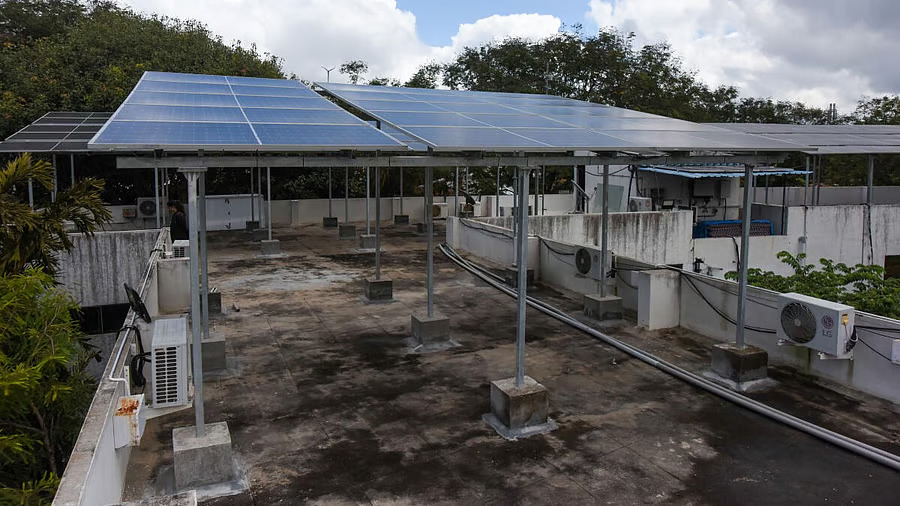
Alongside the expansion of charging infrastructure, renewable energy is becoming a central pillar of the city’s energy strategy. Solar power, especially rooftop solar installations, is expected to play a crucial role in meeting future electricity demand. Bengaluru’s climate and urban architecture provide favourable conditions for rooftop solar panels on residential buildings, commercial complexes, and institutional campuses.
Authorities are actively encouraging households, apartment complexes, and businesses to adopt solar energy systems. Through net-metering arrangements, individuals who generate solar power can feed surplus electricity back into the grid, reducing overall strain on the city’s power network while lowering energy costs for consumers.
The solar push is also aligned with broader environmental goals. By increasing the share of renewable energy in the electricity mix, Bengaluru can reduce its reliance on fossil fuels while supporting India’s national climate commitments.
Urban expansion is another key factor influencing electricity demand. Bengaluru continues to attract professionals and students from across the country, leading to rapid growth in housing, commercial infrastructure, and transportation systems. New metro lines, industrial corridors, and technology hubs are being developed across the metropolitan region, all of which require a stable and reliable supply of electricity.
The rise of data centres is particularly significant in this context. As digital services expand and cloud computing becomes increasingly important, technology companies are building large data facilities that require continuous power to operate servers, cooling systems, and network equipment. These facilities consume vast amounts of electricity, adding to the city’s already growing power requirements.
Residential consumption is also increasing. The widespread use of air conditioners, electronic devices, and smart appliances in modern homes has raised baseline electricity usage. As living standards improve and more households acquire energy-intensive appliances, demand for reliable power supply continues to grow.
BESCOM officials recognize that managing this demand will require careful planning and technological innovation. One approach involves introducing smarter charging systems for electric vehicles. Instead of allowing all vehicles to charge simultaneously during peak hours, utilities may encourage charging at specific times through time-of-day tariffs. By offering lower electricity rates during off-peak hours, utilities can distribute demand more evenly across the day and prevent overload on the grid.
Another strategy involves integrating renewable energy directly into EV charging infrastructure. Solar-powered charging stations, combined with battery storage systems, are being explored as a way to reduce dependence on conventional grid electricity. Such systems can generate power during the day and store excess energy for use during evening charging periods.
In addition to urban initiatives, solar projects in rural areas are also helping to stabilize the broader power network. Solar plants developed under national renewable energy programmes are feeding electricity into the grid, reducing pressure on traditional power sources during peak demand periods.
The expansion of solar power is not limited to rooftop installations. Energy planners are exploring innovative solutions to address land constraints around Bengaluru. In some cases, degraded land and unused spaces are being converted into solar parks to generate additional renewable energy capacity.
These initiatives form part of a wider effort to ensure that Bengaluru’s electricity infrastructure evolves alongside its economic growth. The city’s transformation into a global technology hub has made reliable energy supply a critical component of its development strategy.
For residents and businesses, this evolving energy landscape represents both challenges and opportunities. On one hand, the rising demand for electricity requires significant investment in infrastructure, grid management systems, and renewable energy projects. On the other hand, the transition toward cleaner energy and electric mobility offers the possibility of a more sustainable and environmentally friendly urban future.
The changes underway in Bengaluru’s energy sector also highlight a broader shift taking place across India. As cities expand and economies modernize, the need for smarter, greener power systems is becoming increasingly important. Utilities are being called upon to innovate, adopt new technologies, and collaborate with policymakers to build resilient energy networks.
For organisations operating in digital and documentation sectors such as FACTS Transcripts, these developments reflect the broader transformation of urban infrastructure and professional ecosystems. Modern education, technology services, and professional documentation processes are increasingly integrated with digital systems that depend on reliable electricity and network infrastructure.
Students, researchers, and professionals rely on uninterrupted power to access digital records, submit academic documentation, communicate with institutions, and participate in global knowledge networks. As cities like Bengaluru continue to grow and adopt new technologies, the stability and sustainability of their power systems will play a crucial role in supporting these activities.
The plans being developed today by energy providers will shape the future of Bengaluru’s economy and daily life. By combining renewable energy expansion, EV infrastructure development, and smart grid technologies, the city is attempting to build a power system capable of supporting both rapid growth and environmental sustainability.
In the coming years, the success of these efforts will determine how effectively Bengaluru can balance its ambitions as a global innovation hub with the pressing need for clean and reliable energy.nd professionals across a wide range of regions to support their academic and career goals. Our services are available in:
India
United States
Canada
United Kingdom
New Zealand
Australia
Russia
Middle East
North America
Africa
Our Services – FACTS Transcripts
We at FACTS Transcripts assist in various services, including:
Mark Sheet Transcripts
E-Transcripts
Duplicate Mark Sheets & Degree Certificates
Medium of Instructions Certificates
Attestations
HRD Attestation / Apostille Services
ECA (Educational Credentials Assessment)
Trusted by leading global verification organizations, including WES, IQAS, PEBC, NDEB, NASBA, CAPR, NZQA, ICAS, NCESS, ICES, ECE, eduPASS, ACEI, GCEUS, Comparative Education Services, NNAS, NCA, SAQA, QMAS, FORAC, Australian Pharmacy Council, and more.
FACTS Transcripts – The preferred choice for university document verification worldwide. We ensure a hassle-free process for obtaining your transcripts.