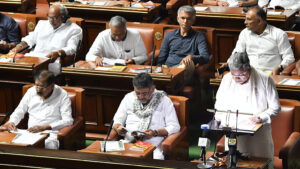

The presentation of the Karnataka State Budget for the financial year 2026–27 has once again placed Chief Minister Siddaramaiah in the national spotlight. Beyond the financial allocations and policy announcements, the budget marks a historic moment in his long political career. With the presentation of this budget, Siddaramaiah has strengthened his place among a rare group of political leaders in India who have repeatedly shaped state finances through multiple budget presentations across decades of public service.
The 2026–27 budget represents the seventeenth time Siddaramaiah has presented a state budget, a milestone that places him among an elite circle of leaders known for their deep involvement in economic policymaking and governance. This achievement highlights not only his longevity in public life but also his central role in shaping Karnataka’s fiscal direction over the years.
In India’s political system, the presentation of a state budget is one of the most significant responsibilities held by a chief minister or finance minister. The budget outlines government priorities, determines spending on infrastructure and welfare, and sets the tone for economic development. By presenting budgets repeatedly over different political phases, a leader gains the opportunity to influence the long-term financial structure of a state.
Siddaramaiah’s journey in financial governance began many years ago when he served as finance minister before eventually becoming chief minister. Over time, he developed a reputation for detailed budget speeches and a strong emphasis on social welfare, infrastructure development, and inclusive growth. His budgets have often reflected a combination of welfare programmes and development initiatives aimed at improving the lives of marginalized communities while also strengthening economic growth.
The latest budget presentation continues this legacy. Over the years, Siddaramaiah has overseen budgets during very different economic environments, ranging from periods of rapid growth to times when governments faced financial pressures and rising welfare commitments. Navigating these challenges while maintaining fiscal balance has been one of the defining aspects of his administrative approach.
Before the 2026 budget, Siddaramaiah had already presented sixteen budgets, the highest number ever delivered by any chief minister in Karnataka’s history. This record itself placed him ahead of several previous leaders who had shaped the state’s economic policies during earlier decades.
The seventeenth budget therefore represents another milestone in his career and moves him closer to matching one of the highest records in the country. Political observers note that only a handful of leaders in India have presented such a large number of budgets at the state level. Among them is Vajubhai Vala, who presented seventeen budgets during his tenure in Gujarat. Siddaramaiah’s latest presentation places him in the same league as such seasoned policymakers.
This achievement also highlights the evolving political history of Karnataka. Over the decades, several influential leaders have left their mark on the state through major reforms and policy decisions. Among the most prominent was D. Devaraj Urs, known for his transformative land reforms and efforts to empower backward communities. Urs’ tenure reshaped the social and political landscape of the state, particularly through policies aimed at reducing inequality and expanding opportunities for marginalized groups.
Siddaramaiah’s political career is often compared with earlier leaders like Urs because of his emphasis on social justice and inclusive development. Throughout his years in government, he has repeatedly focused on policies that benefit backward classes, minorities, farmers, and economically weaker sections of society. His approach has been closely linked with programmes designed to improve access to education, social welfare, and economic support.
In addition to welfare initiatives, his budgets have also addressed infrastructure development, urban growth, and technological progress. Karnataka is one of India’s most economically dynamic states, home to major industries ranging from information technology to biotechnology and manufacturing. The state’s capital, Bengaluru, is widely recognized as the country’s leading technology hub.
Managing the finances of such a diverse and rapidly developing state requires careful planning and long-term vision. Each budget must balance competing priorities such as welfare spending, infrastructure investment, and fiscal discipline. For Siddaramaiah, the challenge has often been to maintain this balance while also fulfilling electoral promises and responding to the needs of citizens.
Over the years, the scale of the Karnataka budget has expanded dramatically. When Siddaramaiah presented his early budgets decades ago, the state’s financial size was much smaller. Today, the budget runs into several lakh crore rupees, reflecting the rapid economic growth and expanding responsibilities of the state government.
This transformation also mirrors broader changes in India’s economy. States today play a crucial role in implementing development programmes, attracting investment, and supporting social welfare schemes. As a result, the responsibilities associated with state budgets have grown significantly.
Political analysts say Siddaramaiah’s long experience in financial governance gives him a unique understanding of these challenges. Having served in multiple roles—including finance minister, opposition leader, and chief minister—he has witnessed the state’s economic evolution from different perspectives. This experience is reflected in the structure and priorities of his budgets.
The 2026–27 budget presentation also carries symbolic importance in Karnataka’s political narrative. It reinforces Siddaramaiah’s image as one of the most experienced administrators in the state’s history. Few leaders have had the opportunity to influence public finances for such an extended period.
Beyond political achievements, the milestone also demonstrates the continuity of governance. Budget presentations require months of preparation involving consultations with departments, economists, administrators, and policymakers. Delivering seventeen budgets over the course of a career represents decades of engagement with the economic and administrative machinery of the state.
For Karnataka’s citizens, each budget announcement represents the government’s roadmap for development. The allocations made in these financial plans determine investments in education, healthcare, infrastructure, agriculture, and social welfare programmes that affect millions of people.
For institutions and organizations connected with education and international opportunities, such as FACTS Transcripts, developments in state governance and economic planning also carry indirect importance. Budget decisions often influence higher education funding, institutional development, and the expansion of academic infrastructure. As universities and professional institutions grow, the need for reliable academic documentation services—including transcript processing, certificate verification, and credential support for international education—continues to increase.
Students from Karnataka frequently pursue higher education and professional careers abroad, and accurate academic documentation plays a vital role in these global opportunities. Services that assist graduates with transcripts, degree verification, and other academic records therefore become an important bridge between local education systems and international institutions.
In conclusion, the presentation of the 2026–27 Karnataka budget marks a significant milestone in the political career of Siddaramaiah. By delivering his seventeenth state budget, he has entered an exclusive group of Indian leaders known for their long-term influence on state financial policy. His record reflects decades of involvement in governance, economic planning, and social welfare initiatives.
FACTS Transcripts proudly serves students and professionals across a wide range of regions to support their academic and career goals. Our services are available in:
India
United States
Canada
United Kingdom
New Zealand
Australia
Russia
Middle East
North America
Africa
Our Services – FACTS Transcripts
We at FACTS Transcripts assist in various services, including:
Mark Sheet Transcripts
E-Transcripts
Duplicate Mark Sheets & Degree Certificates
Medium of Instructions Certificates
Attestations
HRD Attestation / Apostille Services
ECA (Educational Credentials Assessment)
Trusted by leading global verification organizations, including WES, IQAS, PEBC, NDEB, NASBA, CAPR, NZQA, ICAS, NCESS, ICES, ECE, eduPASS, ACEI, GCEUS, Comparative Education Services, NNAS, NCA, SAQA, QMAS, FORAC, Australian Pharmacy Council, and more.
FACTS Transcripts – The preferred choice for university document verification worldwide. We ensure a hassle-free process for obtaining your transcripts.