
The geopolitical situation in West Asia has become increasingly tense following the death of Iran’s Supreme Leader, Ayatollah Ali Khamenei. In the days after the incident, the Government of India took a significant diplomatic step by formally expressing condolences to the Iranian leadership and people. The gesture came as India carefully navigates a delicate international situation involving major global powers and regional instability.
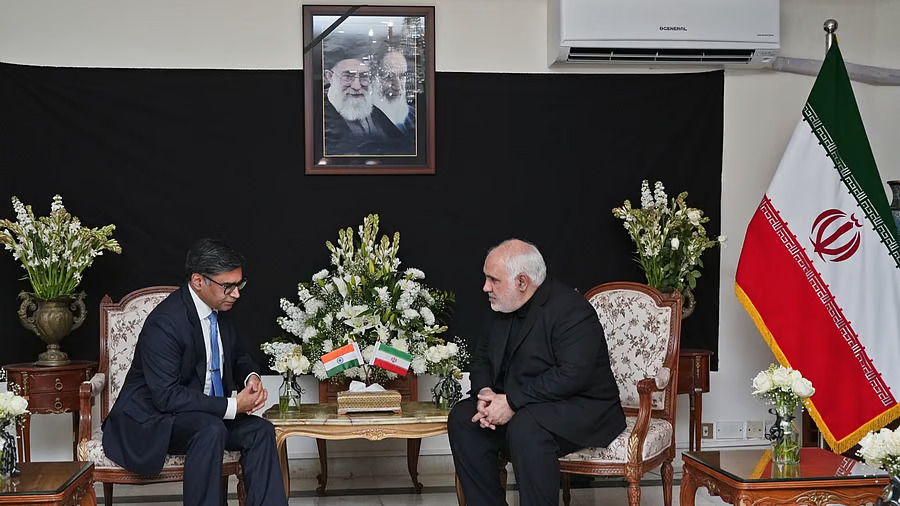
India’s diplomatic outreach was led by Vikram Misri, who visited the Iranian Embassy in New Delhi and met with Mohammad Fathali. During the visit, the Indian Foreign Secretary signed the condolence book at the embassy and conveyed sympathy on behalf of the Indian government and its citizens. The move reflects India’s long-standing diplomatic practice of extending respect and condolences when global leaders pass away, regardless of political complexities.
The meeting between senior Indian and Iranian diplomats took place during a moment of heightened global attention on the Middle East, as tensions continue to rise following the dramatic developments surrounding Khamenei’s death. According to diplomatic sources, the condolence visit symbolized India’s commitment to maintaining respectful and constructive relations with Iran while supporting regional stability.
The Circumstances Surrounding Khamenei’s Death
The death of Ayatollah Ali Khamenei has sent shockwaves across the Middle East and the wider international community. Reports indicate that the Iranian leader was killed in a major military strike linked to escalating tensions between Iran and its geopolitical rivals. The incident is being described by analysts as one of the most consequential developments in West Asian politics in decades.
Khamenei had served as Iran’s Supreme Leader for many years and was widely regarded as the most powerful political and religious authority in the country. His influence extended across Iran’s government, military institutions, and foreign policy decisions. The sudden loss of such a central figure has triggered a period of national mourning across Iran, with public ceremonies and official statements expressing grief and unity among the Iranian population.
The Iranian government has strongly condemned the circumstances of the attack that resulted in the leader’s death. Iranian officials have described the incident as an act of military aggression and warned that their country reserves the right to respond. The developments have intensified global concerns about a potential expansion of conflict in the already volatile Middle East region.
India’s Diplomatic Response
India’s response to the situation has been measured and diplomatic. By sending its Foreign Secretary to the Iranian Embassy, New Delhi signaled both respect for Iran and its intent to maintain stable bilateral relations. Signing the condolence book is a symbolic but meaningful act within diplomatic protocol, indicating solidarity during a period of national mourning.
During the meeting, Vikram Misri conveyed condolences to Ambassador Mohammad Fathali and reiterated India’s respect for the Iranian people. The gesture also highlighted the importance India places on its relationship with Iran, which has historically included cooperation in trade, energy, regional connectivity, and cultural exchanges.
India and Iran share a complex yet strategic relationship that has evolved over several decades. The two countries have collaborated on infrastructure projects, regional connectivity initiatives, and energy trade. Despite geopolitical pressures and shifting alliances, India has consistently attempted to maintain balanced relations with both Iran and other countries in the region.
Rising Tensions in West Asia
The killing of Iran’s Supreme Leader has added another layer of tension to an already volatile geopolitical landscape. In the aftermath of the incident, Iranian officials have warned that the country will respond strongly to what they described as “criminal military aggression.” Diplomatic representatives have emphasized that Iran did not initiate the conflict and claimed that negotiations were underway before the attack occurred.
Statements from Iranian officials suggest that the government believes the incident was intended to derail diplomatic processes and provoke wider confrontation. At the same time, Tehran has indicated that it is prepared to defend its sovereignty and respond strategically to any further aggression.
The developments have raised concerns globally about the possibility of a wider regional conflict involving multiple nations. Experts believe that any escalation could affect global oil markets, international trade routes, and the security of millions of expatriates living in West Asian countries.
India’s Strategic Balancing Act
India’s approach to the crisis reflects its broader foreign policy strategy of maintaining strategic autonomy. New Delhi has historically sought to preserve balanced relations with various powers in the Middle East, including Iran, Israel, and Gulf nations.
By offering condolences while avoiding inflammatory statements, India appears to be emphasizing diplomacy and stability. Such a cautious approach allows the country to maintain dialogue with all parties involved while safeguarding its national interests, particularly in areas such as energy security, regional connectivity, and the safety of Indian citizens living abroad.
The Middle East hosts millions of Indian expatriate workers, and any escalation of conflict in the region could directly affect their safety and livelihoods. Therefore, India’s diplomatic response is also guided by the need to ensure regional peace and protect its diaspora.
Global Reactions and International Concerns
The international community has reacted strongly to the death of Ayatollah Ali Khamenei. Several governments and political leaders have issued statements expressing concern over the potential consequences for regional stability. Some countries have condemned the killing, while others have called for restraint and diplomatic engagement.
Global analysts warn that the situation could reshape political alignments in the Middle East. Iran’s leadership structure is expected to undergo significant changes as the country begins the process of selecting a successor to the Supreme Leader. This transition could influence Iran’s domestic politics as well as its approach to foreign policy.
In addition, the possibility of retaliatory actions or military escalation has prompted calls from international organizations for dialogue and conflict prevention. Diplomats across the world are closely monitoring the situation, recognizing that developments in the region can have far-reaching global implications.
The Role of Diplomacy in a Time of Crisis
India’s decision to extend condolences and engage diplomatically highlights the importance of dialogue during periods of geopolitical uncertainty. Diplomacy remains one of the most effective tools for preventing misunderstandings and reducing tensions between nations.
By maintaining communication channels with Iran, India reinforces its commitment to peaceful engagement and international cooperation. Such diplomatic gestures may appear symbolic, but they play an important role in sustaining relationships and encouraging stability during times of crisis.
Looking Ahead
The coming weeks are expected to be crucial for Iran and the broader Middle East. As Iran begins the process of leadership transition and assesses its strategic options, the international community will be watching closely.
For India, the situation presents both challenges and responsibilities. Maintaining strong relations with multiple partners in the region while promoting peace and stability will require careful diplomatic navigation.
The condolence visit by Foreign Secretary Vikram Misri to the Iranian Embassy in New Delhi marks an important moment in India’s diplomatic response to the unfolding crisis. It underscores India’s emphasis on respect, dialogue, and balanced foreign policy during one of the most significant geopolitical developments in recent years.
FACTS Transcripts proudly serves students and professionals across a wide range of regions to support their academic and career goals. Our services are available in:
India
United States
Canada
United Kingdom
New Zealand
Australia
Russia
Middle East
North America
Africa
Our Services – FACTS Transcripts
We at FACTS Transcripts assist in various services, including:
Mark Sheet Transcripts
E-Transcripts
Duplicate Mark Sheets & Degree Certificates
Medium of Instructions Certificates
Attestations
HRD Attestation / Apostille Services
ECA (Educational Credentials Assessment)
Trusted by leading global verification organizations, including WES, IQAS, PEBC, NDEB, NASBA, CAPR, NZQA, ICAS, NCESS, ICES, ECE, eduPASS, ACEI, GCEUS, Comparative Education Services, NNAS, NCA, SAQA, QMAS, FORAC, Australian Pharmacy Council, and more.
FACTS Transcripts – The preferred choice for university document verification worldwide. We ensure a hassle-free process for obtaining your transcripts.