
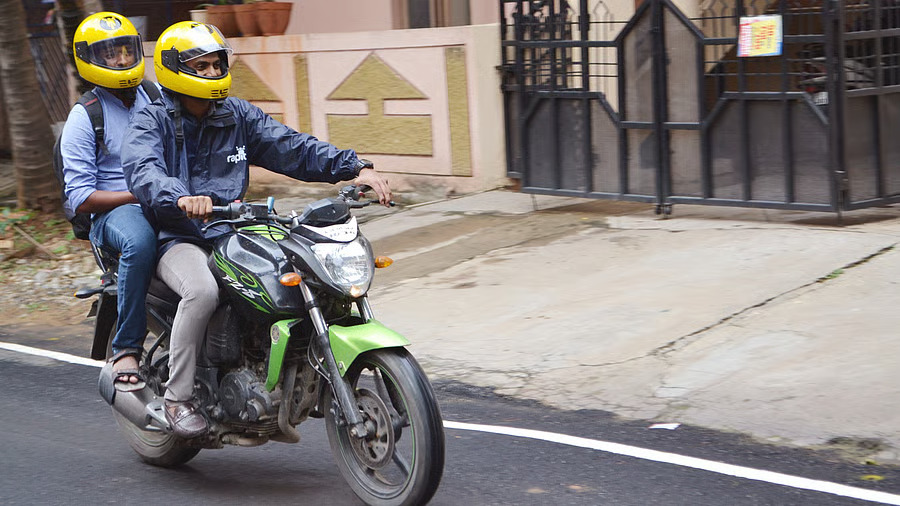
In January 2026, the Karnataka High Court delivered a landmark decision that overturned the controversial ban on bike-taxi services that had been in place since June 2025. This judgment has not just revived a transport option that millions of commuters enjoyed, but also thrust into the spotlight deep questions about regulation, livelihoods, public safety and the future of gig work in India’s tech-enabled cities.
The ban’s reversal has been met with mixed reactions across the spectrum — from ride-hailing companies welcoming the order with enthusiasm, to transport associations expressing concern and calling for clearer rules. This episode provides a fascinating case study on how law, technology and livelihoods intersect in modern Indian cities.
A Brief History of the Bike-Taxi Controversy
To understand the significance of the court’s recent order, it helps to trace how the controversy unfolded.
In April 2025, a single judge of the Karnataka High Court held that bike-taxi operations such as those run by Rapido, Ola, and Uber Moto were illegal in the absence of specific state rules under the Motor Vehicles Act governing their operation. The court directed that the government could not register motorcycles as transport vehicles or issue contract carriage permits unless such guidelines were notified.
Following this ruling, the state government enforced the order, leading to an effective ban on bike-taxi services from June 16, 2025. Aggregators were asked to suspend operations and apps removed bike-taxi options. Enforcement included transport department action against operators and seizures in some cases.
The ban triggered widespread backlash. Riders dependent on bike taxis for income protested strongly, with hunger strikes and open letters to political leaders. They argued that the ban had left thousands without a livelihood and at risk of financial hardship. Some protesters claimed that hundreds of thousands were affected across multiple cities in Karnataka.
At the same time, many commuters voiced frustration at losing an affordable and convenient transit option, reporting that with bike taxis gone, autos and cabs charged exorbitant fares. These users highlighted how gaps in Bangalore’s public transport made bike taxis a vital part of daily mobility.
The High Court’s New Order: What Changed?
In January 2026, a division bench of the Karnataka High Court — comprising Chief Justice Vibhu Bakhru and Justice C.M. Joshi — revisited the issue. The bench overturned the earlier single-judge order and ruled that the state cannot categorically prohibit bike-taxi services simply because motorcycles are not traditional commercial vehicles.
The court clarified that:
Motorcycles can be registered and used as transport vehicles under the Motor Vehicles Act if they meet legal requirements.
Aggregators and bike owners must submit applications for licensing and permits.
The state government is obligated to consider these applications and grant approvals according to the law, including imposing reasonable conditions through regional transport authorities.
While Karnataka is free to develop regulatory guidelines, a blanket prohibition is not justified in the absence of such rules.
This effectively revives bike-taxi services statewide, subject to compliance with licensing and safety requirements.
Reactions from Ride-Hailing Companies
Ride-hailing firms such as Rapido and Uber welcomed the High Court order as a win for gig workers and commuters alike. Industry spokespeople argued that the ruling provides much-needed legal certainty for a mobility ecosystem that had been operating in limbo for months.
For these companies, the judgment represents not just relief from legal uncertainty but also an opportunity to reaffirm bike taxis as an integral part of urban transport. They have expressed eagerness to engage with the government to operationalize services within a clear regulatory framework and expand access in cities across Karnataka.
This positive reception highlights how technology platforms and mobility innovators see legal clarity as essential for scaling services, ensuring compliance, and protecting both riders and users under predictable rules.
Concerns from Transport Associations
Not everyone greeted the reversal with open arms. The Federation of Karnataka State Private Transport Associations raised questions about how the order will play out in practice. Leaders of the federation pointed out that the High Court’s directions do not yet clarify whether personal two-wheelers — privately owned bikes — can operate as bike taxis immediately or only after formal permits are in place.
Their concerns focus on:
Safety and hygiene standards for bike-taxi operations.
The legal status of individual vehicles without permits.
The potential impact on existing auto and taxi services that already operate under stricter regulations.
These voices reflect the ongoing tension between innovation and regulation — how to balance new mobility models with established transport infrastructures and safety norms.
The View from the Streets: Riders and Commuters
Gig workers and everyday commuters form a vital perspective in this debate. For many riders who rely on bike-taxi platforms to support their families, the ban brought months of uncertainty and financial strain. The High Court’s decision is being welcomed by associations representing bike taxi workers, who see it as validation of their livelihood and a push toward legal recognition.
Customers who depend on bike taxis for last-mile connectivity — especially in dense urban corridors where buses and metros do not reach conveniently — have also expressed relief. For these commuters, bike taxis are not a luxury but a cost-effective and quick way to navigate congested city roads.
However, some remain cautious, waiting to see how and when regulations are put in place and whether safety, fare fairness, and insurance protections will be strengthened.
The Larger Implications for Urban Mobility
The bike-taxi episode in Karnataka reflects broader themes in the evolution of urban transport in India:
Regulatory Frameworks Must Catch Up with Innovation
Technology platforms often introduce new services faster than existing legal and regulatory frameworks can adapt. The Karnataka case shows how legal uncertainty can disrupt services, affect livelihoods, and unsettle markets. Courts and governments face the challenge of balancing innovation with public interest.
Livelihoods and Informal Economies Matter
Gig workers operate at the intersection of flexibility and vulnerability. When legal or policy shifts disrupt services, income security becomes a pressing concern for large numbers of workers. The debates around the bike-taxi ban brought these issues into sharp relief.
Mobility Options Shape Urban Life
Affordable and flexible transport options like bike taxis influence how cities function. Losing such services can push commuters toward more expensive or less efficient alternatives, affecting daily routines, traffic patterns, and even the cost of living.
The Need for Inclusive Policy Making
Stakeholders across the ecosystem — from government agencies to transport associations, technology firms and commuter groups — must be involved in crafting policies that balance safety, fairness, innovation, and economic opportunity.
What Happens Next?
While the High Court’s order has lifted the ban, the work is far from over. Karnataka now faces the challenge of drafting clear, comprehensive regulations that govern:
Licensing and permits for bike taxis.
Safety standards and insurance requirements.
Integration with other public and private transport options.
Fair compensation and rights for gig workers.
How the state formulates these regulations will determine whether bike taxis become a stable, regulated part of urban transport or continue to operate in a patchwork of uncertainty.
Conclusion
The reversal of the bike-taxi ban in Karnataka marks a significant milestone in the ongoing evolution of urban mobility in India. It underscores the challenges and opportunities that arise when law, technology and everyday life collide. As ride-hailing companies, transport associations, workers and commuters digest the court’s ruling, the focus will now shift to creating a regulatory ecosystem that is both forward-looking and grounded in public interest.
FACTS Transcripts proudly serves students and professionals across a wide range of regions to support their academic and career goals. Our services are available in:
India
United States
Canada
United Kingdom
New Zealand
Australia
Russia
Middle East
North America
Africa
Our Services – FACTS Transcripts
We at FACTS Transcripts assist in various services, including:
Mark Sheet Transcripts
E-Transcripts
Duplicate Mark Sheets & Degree Certificates
Medium of Instructions Certificates
Attestations
HRD Attestation / Apostille Services
ECA (Educational Credentials Assessment)
Trusted by leading global verification organizations, including WES, IQAS, PEBC, NDEB, NASBA, CAPR, NZQA, ICAS, NCESS, ICES, ECE, eduPASS, ACEI, GCEUS, Comparative Education Services, NNAS, NCA, SAQA, QMAS, FORAC, Australian Pharmacy Council, and more.
FACTS Transcripts – The preferred choice for university document verification worldwide. We ensure a hassle-free process for obtaining your transcripts.