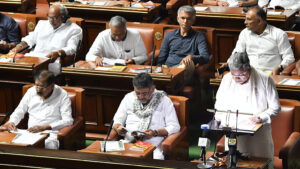


In a significant policy shift announced in January 2026, the Government of Karnataka decided to exempt renewable energy projects from the requirement of obtaining permission to use agricultural land. Traditionally, any use of land classified as agricultural for non-agricultural purposes — such as setting up industrial facilities, commercial infrastructure, or large-scale utilities — has required a formal land conversion order from the Deputy Commissioner under the state’s land laws. This amendment marks an important milestone in the efforts to accelerate clean energy adoption and strengthen Karnataka’s renewable energy landscape.
The Policy Change: What Exactly Changed?
Under the existing framework, agricultural land in Karnataka could not be used for non-agricultural purposes without specific permission from district authorities, primarily the Deputy Commissioner. This was intended to protect farmland and agricultural livelihoods. However, with growing urgency to expand renewable energy capacity — driven by climate goals, economic strategy and energy security — the state government has now carved out an exemption: renewable energy projects will no longer be obligated to seek this bureaucratic approval for land use. This applies to projects such as solar parks, wind farms, and other forms of renewable energy installations.
What this essentially means is that developers of renewable energy projects can move forward with land use without waiting for lengthy conversion permissions — reducing red tape and speeding up project implementation.
A Strategic Shift Towards Sustainability
Karnataka has long positioned itself as a leader in renewable energy within India. The state is home to the Pavagada Solar Park, one of the largest solar power facilities in the world, developed across tens of thousands of acres in a drought-prone region. This project demonstrated how renewable energy and rural economies can co-exist, as farmers leased land and received income while the land continued to serve productive purposes.
Building on such precedents, the new exemption reflects Karnataka’s ambition to scale up its clean energy footprint rapidly. By cutting out procedural hurdles related to land use, the state is creating an enabling environment for investors and developers. It aligns well with broader goals of reducing dependence on fossil fuels, lowering carbon emissions, and meeting evolving energy demands sustainably.
Why This Matters: Benefits and Broader Impacts
1. Accelerating Renewable Energy Development
Renewable energy projects are capital-intensive and often take years to reach fruition. One of the biggest bottlenecks historically has been land acquisition and land conversion, especially in states where agricultural land is classified conservatively to protect farming interests. By exempting renewable energy projects from mandatory conversion approvals, Karnataka is effectively cutting out a major bureaucratic delay, allowing projects to start sooner and progress faster.
2. Boosting Investment Confidence
Simplified regulatory norms send a powerful signal to investors and developers that Karnataka is open for business, especially in clean energy. Clearer, predictable rules reduce the risk and cost associated with project planning. This could attract both domestic and global firms keen to invest in renewable projects in India.
Developers now have greater clarity on land use requirements under state and energy policies, especially with Karnataka’s Renewable Energy Policy that already outlines procedures for project approval and land deemed conversion once certain clearances are obtained.
3. Supporting Climate and Economic Targets
India’s renewable energy goals are among the most ambitious globally. With national commitments to cut emissions and expand renewable capacity, state-level policies play a pivotal role. Karnataka’s move dovetails with these national objectives and helps the state contribute meaningfully to India’s broader energy transition.
4. Balancing Agricultural Priorities with Energy Goals
While the exemption makes it easier for renewable energy projects to utilize land, Karnataka continues to maintain safeguards around agricultural preservation in other ways. The state has taken simultaneous steps such as declaring significant agricultural zones to protect farmland, as seen in recent decisions around land in Devanahalli. This dual approach aims to balance the protection of farmland with the need to expand renewable energy.
Addressing Concerns and Ensuring Sustainability
Some stakeholders may express concern that easing rules around agricultural land use could risk putting pressure on farmland or unsettle rural communities. It’s crucial that the policy is implemented with strong safeguards:
Land Use Planning: Clear delineation of areas suitable for renewable projects, especially on fallow, dryland, or areas with limited agricultural productivity.
Fair Compensation and Benefits: Ensuring that landowners benefit from renewable energy projects through leasing models or revenue sharing, as seen at Pavagada Solar Park.
Community Consultation: Engaging local stakeholders early so that projects meet local needs and concerns, not just developer interests.
The state must also maintain robust environmental assessment protocols so that renewable energy development does not inadvertently harm ecosystems or disrupt water resources and agricultural productivity.
Looking Ahead: What This Means for Karnataka’s Energy Future
Karnataka’s decision is part of a broader shift in how Indian states approach energy transition and land use. By streamlining land use permissions for renewable energy projects, the state is signalling that clean energy is a priority — one that intersects with economic growth, climate responsibility, and innovation.
This policy, while technical in nature, has the potential to accelerate renewable capacity expansion, catalyse investment, and inspire similar reforms in other states across India that are grappling with balancing agricultural protection with energy expansion. It also situates Karnataka as a frontrunner in India’s sustainable energy trajectory.
As implementation unfolds, the state’s ability to harmonize land policy with environmental safeguards and community well-being will determine how successful this reform proves to be in practice.
FACTS Transcripts proudly serves students and professionals across a wide range of regions to support their academic and career goals. Our services are available in:
India
United States
Canada
United Kingdom
New Zealand
Australia
Russia
Middle East
North America
Africa
Our Services – FACTS Transcripts
We at FACTS Transcripts assist in various services, including:
Mark Sheet Transcripts
E-Transcripts
Duplicate Mark Sheets & Degree Certificates
Medium of Instructions Certificates
Attestations
HRD Attestation / Apostille Services
ECA (Educational Credentials Assessment)
Trusted by leading global verification organizations, including WES, IQAS, PEBC, NDEB, NASBA, CAPR, NZQA, ICAS, NCESS, ICES, ECE, eduPASS, ACEI, GCEUS, Comparative Education Services, NNAS, NCA, SAQA, QMAS, FORAC, Australian Pharmacy Council, and more.
FACTS Transcripts – The preferred choice for university document verification worldwide. We ensure a hassle-free process for obtaining your transcripts.