
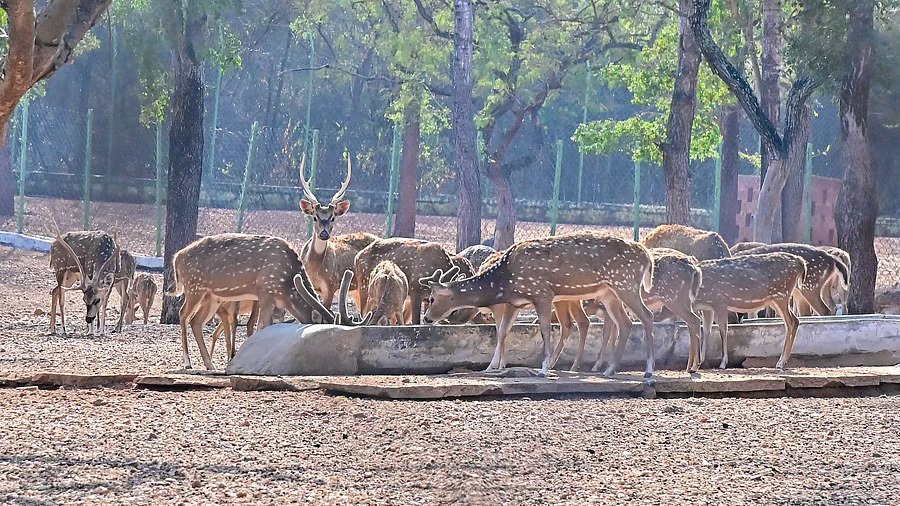
In the heart of Karnataka’s Davangere city, a quiet crisis has unfolded at the local zoo — a place where children laugh, families walk, and young minds learn about wildlife and conservation. This should be a space of wonder and well-being. Yet in recent weeks, tragedy has tempered the usual rhythm of daily life inside the zoo’s boundaries. Four beautiful spotted deer — graceful, gentle, icons of India’s woodland heritage — have died in a short span of time. Their passing has shaken zoo authorities, animal lovers, local residents, and observers across the state, raising serious questions about animal welfare, veterinary care, habitat conditions, and the challenges of managing wildlife in human-made environments.
What happened to these deer is not just about numbers on a report chart or a brief headline on an online news page. It is about life, loss, responsibility, and the deeper meaning of what it means to care for animals that cannot speak for themselves. It is about the growing pains of a zoo that was envisioned as a place of education and conservation but now finds itself confronting complex health, ecological, and administrative hurdles.
The Deer That Died: A Quiet Tragedy That Echoed Louder Than Silence
Spotted deer, also called chital in India, are among the most cherished members of the deer family. With their gentle brown coats dappled with white spots, they embody beauty and serenity. They are social animals, moving in herds and displaying intricate behaviors that delight visitors and remind us of wild herds in forests far beyond city limits.
At the Davangere Zoo, these deer were part of a larger captive wildlife population — animals that depend entirely on human caregivers for food, habitat, health care, and protection. Over the course of recent weeks, tragedy struck not once but four times. Four spotted deer, previously part of the zoo’s herd, were found dead. For zoo keepers, veterinarians, and regular visitors, the losses were disturbing not only because of the rarity of such events but also because they came so close together.
Each death brought questions: what caused it, were the animals in pain, was there an underlying health condition, could it have been prevented? The fact that multiple deaths occurred in quick succession heightened concern and prompted deeper investigation.
Diagnosing the Invisible: The Difficulty of Veterinary Investigation
One of the most challenging aspects of this episode has been the difficulty of identifying the exact cause of the deer deaths. Normally, when an unexpected animal death occurs, a post-mortem examination — a veterinary autopsy — is conducted to determine whether infection, poisoning, organ failure, trauma or some external factor was responsible.
At the Davangere Zoo, however, this medical detective work proved more complicated than expected. The veterinary team took samples and conducted initial tests, but nothing pointed conclusively to a single disease or specific toxin. Some preliminary findings suggested that the deer might have suffered from a respiratory infection or stress-related conditions, but the results were inconclusive. To get closer to definitive answers, samples had to be sent to an advanced diagnostic laboratory outside the city.
This process, while necessary, introduced unavoidable delays. Transporting biological samples, ensuring they remain uncontaminated, coordinating with specialised laboratories, and then waiting for detailed reports — this all adds time when swift answers are most needed. In the meantime, the remaining deer in the herd, along with other species in the zoo, had to be monitored closely for any signs of illness, distress, or behavioural changes.
For veterinarians, this has been a race against the clock. Every hour without clear information is an hour in which other animals could potentially become ill. But at the same time, wildlife diagnostics — especially for complex conditions — cannot be rushed without risking inaccurate conclusions.
Beyond the Medicine: Habitat, Stress, and the Hidden Causes of Animal Illness
Animals in captivity live in a very different world from their wild counterparts. A zoo does not simply provide food and shelter, it must also create an environment that is as close as possible to what the animals are adapted to. This includes appropriate space, shade, terrain, water sources, social groupings, nutrition, enrichment and psychological well-being.
In the natural forest, spotted deer roam wide areas, graze on diverse vegetation, and use their instincts to respond to seasonal changes. In a zoo, all these conditions must be simulated by human management. When deer are confined to relatively smaller enclosures, regular habitat maintenance becomes critical. Poor drainage, excessive heat, contaminated water sources, overcrowding, lack of fresh forage and inadequate shade can all contribute to stress and illness.
Stress in animals — especially prey species like deer — is not always visible. Unlike humans, who can describe discomfort or pain, animals manifest internal stress through subtle changes in behaviour, appetite and immune response. What looks like a perfectly calm animal may be carrying an undetected burden of physiological strain that can weaken its resistance to disease.
At Davangere Zoo, authorities have been carefully evaluating enclosure conditions, water quality, natural forage availability and weather impact. Bengaluru and central Karnataka weather can vary dramatically, with high humidity and heat affecting animal well-being. Ensuring water bodies do not become mosquito breeding grounds, that vegetation remains healthy and food sources are nutritionally balanced are all part of the daily operational challenges. These factors are just as important as veterinary care in keeping animals healthy.
The Emotional Toll: Zoo Staff and Community Reeling From Loss
While the public may see animals in cages or enclosures, zoo keepers and veterinarians see personalities, relationships and individual lives. Keepers often form deep bonds with the animals they care for over years, observing their quirks, rhythms and preferences. Losing an animal is not just a procedural event. It is an emotional loss for people who have fed them, cleaned their habitats, observed their births and watched their growth.
Veterinary staff at the zoo have spent long nights reviewing medical records, consulting specialists, and discussing possible interventions. Zookeepers have expressed sadness, frustration and concern for the welfare of the herd that remains. For visitors, especially children who come to see the friendly gaze of the spotted deer, the absence of these beloved animals has been a reminder of fragility and the responsibilities of human care.
Local community members have also shared their reactions. Many feel a sense of collective ownership over the zoo’s animals — as though these creatures are part of their extended neighbourhood. When an animal dies, it is not just a statistic reported in a brief news article. It becomes a shared moment of sorrow and reflection.
Wider Implications: Lessons for Zoos and Wildlife Management in India
The deer deaths at Davangere Zoo are not an isolated occurrence in the realm of captive wildlife management. Across India and the world, zoos grapple with complex health, environmental and ethical challenges. Modern zoos have evolved from mere exhibition spaces into centres of conservation, research and education. With that evolution comes greater responsibility for animal welfare standards, scientific veterinary protocols, habitat enrichment programs and community engagement.
This episode highlights several broader imperatives:
Zoos must have access to advanced veterinary diagnostics, either on site or through rapid laboratory support.
Continuous monitoring of habitat conditions is not just best practice — it is essential for early detection of environmental stressors that can lead to illness.
Animal enrichment — activities that stimulate natural behaviours — should be prioritised to reduce psychological distress.
Staff training must be ongoing, with opportunities to learn the latest in animal care innovations.
Communication with the public helps demystify zoo operations and humanise the work that goes on behind the scenes.
In many advanced zoos, animal welfare is integrated with research into wildlife diseases, nutrition science, behavioural ecology and environmental health. For a growing zoo like the one in Davangere, building such capacities — or partnering with institutions that have them — can profoundly elevate the quality of care and reduce the likelihood of unexplained deaths in the future.
Hope Through Action: What Comes Next for Davangere Zoo
Rather than being defined by loss, the current situation at Davangere Zoo can become a turning point — a moment for renewal, learning and improvement. Zoo authorities are already taking steps to respond proactively:
They have increased monitoring of the remaining deer herd and other species to catch any early signs of health issues.
Water quality tests, parasite screenings, nutritional audits and habitat reviews are underway to ensure that environmental factors are not contributing to illness.
Veterinary samples have been sent for specialised analysis to reach conclusive medical explanations.
Outdoor enclosures are being reviewed for shade structures, forage availability and micro-habitat variety so that captive animals can exhibit more natural behaviours.
Staff welfare programs aim to reduce stress among caregivers, recognising that animal well-being is closely tied to caregiver competence and morale.
Beyond these measures, the incident has sparked broader discussions among wildlife conservationists, zoologists and animal rights advocates about how to improve zoo systems across the state. Training workshops, inter-zoo collaborations, academic partnerships and funding support are all potential avenues that could emerge from this crisis.
What This Means for the Public: Understanding the Value of Zoos
Zoos are often misunderstood. For some people, they are places for recreation and family outings. For others, they are symbols of human domination over nature. But in the modern era, the role of a zoo has become more nuanced. The best zoos are institutions that:
Educate the public about biodiversity and conservation challenges.
Provide sanctuary for animals that cannot survive in the wild due to injury or environmental threats.
Participate in breeding programs for endangered species.
Conduct scientific research that can help protect animals both in captivity and in the wild.
When zoos face challenges like unexplained animal deaths, it forces a deeper conversation about the ethics and responsibilities of caring for sentient beings. It reminds visitors that zoos are not amusement parks, but places where complex biological, veterinary and ecological systems intersect with human compassion and scientific advancement.
Conclusion: Life, Loss and the Responsibility of Care
The death of four spotted deer at Davangere Zoo is a poignant reminder that captivity does not eliminate vulnerability. Elegant, gentle, beloved animals still face health risks, stress and environmental challenges even under human care. Their loss has been deeply felt by zoo staff, local residents and visitors alike.
Yet this tragedy also presents an opportunity — a chance to strengthen animal care practices, expand veterinary capabilities, improve habitat design, and engage the community as active partners in wildlife welfare. If these lessons lead to better outcomes for the animals that remain and for future generations of zoo inhabitants, then this difficult moment may ultimately contribute to a more compassionate, informed and effective approach to captive wildlife management.
FACTS Transcripts proudly serves students and professionals across a wide range of regions to support their academic and career goals. Our services are available in:
India
United States
Canada
United Kingdom
New Zealand
Australia
Russia
Middle East
North America
Africa
Our Services – FACTS Transcripts
We at FACTS Transcripts assist in various services, including:
Mark Sheet Transcripts
E-Transcripts
Duplicate Mark Sheets & Degree Certificates
Medium of Instructions Certificates
Attestations
HRD Attestation / Apostille Services
ECA (Educational Credentials Assessment)
Trusted by leading global verification organizations, including WES, IQAS, PEBC, NDEB, NASBA, CAPR, NZQA, ICAS, NCESS, ICES, ECE, eduPASS, ACEI, GCEUS, Comparative Education Services, NNAS, NCA, SAQA, QMAS, FORAC, Australian Pharmacy Council, and more.
FACTS Transcripts – The preferred choice for university document verification worldwide. We ensure a hassle-free process for obtaining your transcripts.