
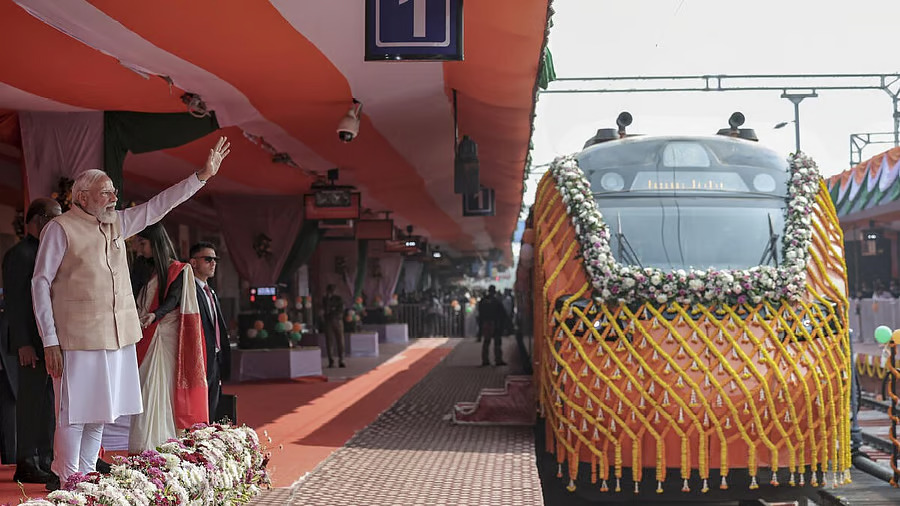
India’s railway network is undergoing a transformation. Alongside traditional trains that have been the backbone of overland travel for decades, a new generation of fast and comfortable trains has been introduced under the Vande Bharat banner. These trains are designed to offer passengers a far superior experience, with modern coaches, faster travel times, and enhanced onboard facilities. With the latest addition to this fleet — the Vande Bharat Sleeper train — Indian Railways has taken a further step by providing a premium overnight travel option that reimagines long-distance journeys. However, with this premium service comes a set of stricter cancellation rules that passengers must understand before booking. These rules are significantly different from those of regular trains, and failing to follow them can lead to major financial losses.
The New Cancellation Policy Explained
When regular express or mail trains operate, there has traditionally been some flexibility built into the ticket cancellation and refund process. Passengers could cancel many hours ahead of departure and still receive a partial refund after some cancellation charges were deducted. With the Vande Bharat Sleeper trains, the logic behind cancellation has changed to reflect the premium nature of the service.
Under the updated framework:
If a passenger cancels a confirmed ticket more than 72 hours ahead of scheduled departure, they will receive a refund, but after a significant deduction amounting to a quarter of the fare.
If cancellation happens between 72 hours and up to 8 hours before departure, the deduction rises sharply, with half of the fare retained as a cancellation fee.
If a ticket is cancelled within 8 hours of the train’s departure, no refund is provided at all. This means the entire fare is forfeited.
These rules are uniformly applied across all classes on the Vande Bharat Sleeper train — whether one has booked a berth in the highest class or in a more economical one.
Moreover, passengers must remember that if they do not cancel their ticket within the required time frame, or if they fail to file a Ticket Deposit Receipt (TDR) at least eight hours before departure, they will not be eligible for any refund, even if they fail to board the train. This makes last-minute changes or emergencies far more costly than on other trains.
Why Are These Rules Stricter?
Understanding the reasons behind the stringent policy requires a look at how the sleeper variant of the Vande Bharat trains is designed to operate.
Unlike ordinary long-distance trains that prepare seating charts only a few hours before departure, Vande Bharat Sleeper services finalise their reservation charts much earlier. The preparation of seat charts around eight hours before departure is intended to optimise berth allocation, reduce last-minute unpredictability, and ensure that occupancy is maximised on these high-speed services.
Because of this early preparation, it becomes difficult for railways to reallocate seats that are suddenly cancelled close to departure. In regular trains, last-minute cancellations sometimes free up seats that can be allocated to passengers on the waiting list. In the Vande Bharat system, however, cancellations within eight hours are not reallocated, which is one reason why no refund is issued during this period.
This tight cancellation timeline is part of a broader strategy to ensure that the service maintains high occupancy and limits speculative bookings. When passengers book tickets casually with the hope of cancelling later based on changing plans, it can lead to empty berths at the last moment. By enforcing stricter cancellation penalties, the railways aim to discourage this behaviour.
Comparing With Traditional Trains
To fully appreciate the difference, it helps to compare with the cancellation norms of conventional long-distance trains that millions of travelers use every year. In traditional services, cancellation charges are generally much lower, and partial refunds are often available even a few hours before departure. For example, cancellation fees in a regular express train might be a flat nominal amount if done well in advance, and even if a ticket is cancelled closer to departure, passengers typically get a portion of the fare back.
In contrast, Vande Bharat Sleeper’s model places greater financial responsibility on the passenger to be certain of their travel plans. The entire ticket can be lost if cancellation takes place too close to the journey time, which reflects the premium, near-airline-like positioning of this service.
No Reservation Against Cancellation or Waiting Lists
Another important aspect of the Vande Bharat Sleeper experience is that the train will issue only confirmed tickets — there will be no provision for reservation against cancellation (RAC) or waiting list bookings. This is a major departure from the familiar railway system where passengers often travel on RAC status, sharing berths or seats until full confirmation is obtained through last-minute cancellations by other travelers.
By limiting travel to fully confirmed ticket holders only, Indian Railways is attempting to run the Vande Bharat Sleeper like a premium airline service, where every passenger knows their seating position ahead of time, and there is no shuffling or uncertainty at the station platform.
This confirmed-only policy ensures predictability for both passengers and railways but also means that once tickets are sold, they are harder to fill or reallocate if cancelled late. This setup directly influences the tougher cancellation penalties.
Strategic Reasons Behind the Rules
The steeper cancellation norms should be seen in the broader context of Indian Railways’ efforts to modernise passenger services and improve financial sustainability.
The Vande Bharat Sleeper train is designed to offer:
Faster travel times on long overnight routes.
Better comfort with fully air-conditioned coaches.
A travel experience that aims to be closer to premium airline journeys than traditional rail travel.
In order for such services to remain economically viable while offering high-end comfort, railways have had to rethink ticketing policies and cancellation norms. The idea is not to penalise passengers unfairly but to align the booking behaviour with the nature of the service. Predictable occupancy and minimal last-minute cancellations help to keep costs in check and services efficient.
At the same time, the rigid structure of confirmed tickets, combined with higher minimum chargeable distances and additional fees such as Goods and Services Tax where applicable, positions the Vande Bharat Sleeper as a top-end offering compared to conventional overnight trains.
What This Means for Travelers
For the everyday traveler, these rules underscore the importance of careful planning when booking travel on Vande Bharat Sleeper trains. Because the financial stakes are higher, passengers are encouraged to:
Book only when travel plans are fixed.
Avoid last-minute cancellations, as they may lead to complete fare loss.
Understand the refund windows and cancellation slabs clearly before paying.
In other words, this is not a service where casual or flexible travel arrangements work well. The policy framework is aimed at people who need reliable, premium overnight transportation and are willing to commit to their plans.
Conclusion: A New Era of Train Travel With New Responsibilities
The introduction of the Vande Bharat Sleeper train marks a significant milestone in India’s rail travel landscape. It combines speed, comfort, and a modern passenger experience, setting a new benchmark for long-distance overnight journeys.
However, with these enhancements come rules and responsibilities that passengers must understand. The cancellation policy, which can make ticket refunds costly or even non-existent for late cancellations, reflects a shift toward a more disciplined, airline-style approach to rail travel. It rewards firm planning and penalises uncertainty, encouraging passengers to commit to their journeys with greater clarity.
FACTS Transcripts proudly serves students and professionals across a wide range of regions to support their academic and career goals. Our services are available in:
India
United States
Canada
United Kingdom
New Zealand
Australia
Russia
Middle East
North America
Africa
Our Services – FACTS Transcripts
We at FACTS Transcripts assist in various services, including:
Mark Sheet Transcripts
E-Transcripts
Duplicate Mark Sheets & Degree Certificates
Medium of Instructions Certificates
Attestations
HRD Attestation / Apostille Services
ECA (Educational Credentials Assessment)
Trusted by leading global verification organizations, including WES, IQAS, PEBC, NDEB, NASBA, CAPR, NZQA, ICAS, NCESS, ICES, ECE, eduPASS, ACEI, GCEUS, Comparative Education Services, NNAS, NCA, SAQA, QMAS, FORAC, Australian Pharmacy Council, and more.
FACTS Transcripts – The preferred choice for university document verification worldwide. We ensure a hassle-free process for obtaining your transcripts.