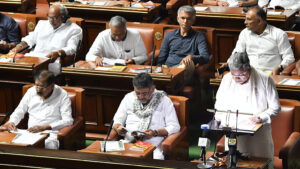

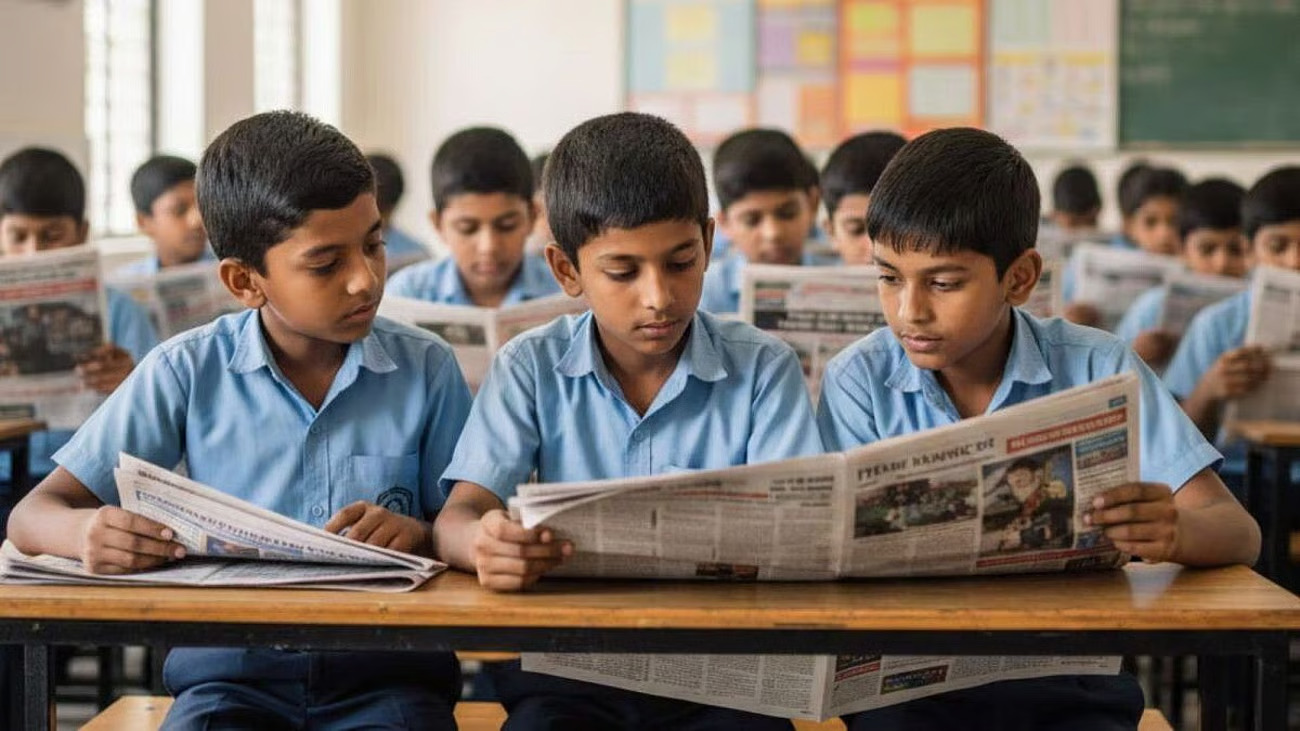
Democracy is often imagined as something that thrives in grand forums — in parliaments, courtrooms, and political battlegrounds. We speak of elections, constitutions, civil liberties, and freedom of expression as the pillars that uphold democratic life. Yet the roots of democratic strength are far more humble and far more profound. Democracy does not begin in a war room or a campaign headquarters. It begins in the quiet corners of daily life — in the classroom assembly hall, in the kitchen at breakfast, in the hands of a child reading the morning news aloud.
When a child learns to read the news, something much deeper is taking place than the mere decoding of words on a page. A young mind is being trained to observe the world, to question why things happen, to distinguish fact from opinion, to recognise that societies are woven together through the choices people make, the events that shape history, and the ideas that motivate action. This single act — reading, thinking, questioning — lays the foundation for a generation capable of sustaining democratic values in an increasingly complex world.
At its core, democracy depends on informed citizens. If citizens do not understand what is happening around them, how can they make thoughtful decisions about leadership, policy, or justice? Reading is not a passive activity. It is an act of engagement. When children read news articles, they expose themselves to stories of governance, human rights, economics, science, culture, and conflict. They see not only the problems of the world but also how people and societies respond to those problems. This exposure is the first step in developing an informed conscience, a sense of responsibility, and a willingness to participate meaningfully in civic life.
Fostering news literacy in children also helps to build critical thinking. In a time when information is abundant and not all of it is accurate, the ability to evaluate sources, weigh evidence, understand context, and challenge misleading claims is indispensable. A child who learns to ask “Why?” and “How do we know this is true?” is less likely to be swayed by falsehoods and more likely to make decisions based on reason rather than emotion. This ability is not innate; it is cultivated through practice, guidance, and repetition.
In schools where children are encouraged to read current affairs, debate issues, and express their perspectives, something remarkable happens. Students become participants in democracy even before they reach voting age. They learn to respect diverse viewpoints because news stories often present multiple sides of an issue. Through discussion, they discover that two intelligent people can disagree without hostility. They understand that dialogue, rather than silence or conflict, is the way forward in a pluralistic society.
Parents, too, play a vital role in this process. When families make space for conversations about current events, they are teaching children that civic life is not separate from personal life. Talking about news at home helps a child make connections between abstract events and real human consequences. It helps them see the value of empathy, compassion, and reasoned debate. These qualities are not just beneficial for individual growth; they are the lifeblood of a society that values respect and fairness.
Moreover, reading news encourages curiosity about the world. A child who reads about environmental challenges may wonder how natural resources can be conserved. A child who reads about economic inequality may begin to understand the importance of fairness in policy. A teenager who follows international relations may develop a nuanced view of diplomacy versus conflict. All of these early inquiries shape future adults who are not merely spectators but active contributors to democratic discourse.
At the same time, news reading fosters awareness of one’s rights and duties. Democracies are founded on the concept that citizens have both powers and responsibilities. Knowing what is happening at local, national, and global levels equips individuals to demand accountability from leaders and to hold institutions to ethical standards. It teaches that democracy is not a spectator sport; it requires participation, vigilance, and commitment.
The benefits extend beyond civic awareness. Students who read newspapers regularly often develop better language skills, broader vocabulary, and improved comprehension. They learn how to interpret complex texts, identify bias, and recognise persuasive language. These skills are invaluable not just for academic success but for navigating life with clarity and confidence.
Some education systems have recognised this and have taken steps to make news reading a part of the school experience. Morning assemblies that include reading a news editorial or discussion sessions where students reflect on recent events are not mere formalities. They are deliberate efforts to shape young minds into thoughtful citizens. These practices reinforce that education is not just about solving equations or memorising dates; it is about understanding the story of human society and one’s place within it.
In a world increasingly shaped by digital platforms, social media, and instant communication, the ability to approach information with discernment becomes even more critical. Children today encounter news not solely through printed pages but through screens, apps, and feeds that mix fact, opinion, and misinformation. Helping them navigate this landscape with wisdom and caution is essential to ensure that democratic systems remain resilient against distortions and manipulations.
Ultimately, the defence of democracy begins with the cultivation of informed, critical, empathetic, and engaged minds. When a child takes up a newspaper, reads it thoughtfully, asks questions, and forms opinions based on reflection rather than hearsay, the seeds of democratic citizenship are being planted. This process, repeated across millions of young readers, strengthens the collective conscience of a nation.
Democracy cannot thrive on ignorance. It flourishes only where knowledge, dialogue, and reason are cherished. The child who reads the news is not simply learning about the world — they are taking the first step toward becoming a guardian of democratic values. In that simple act lies the promise of a future where citizens are equipped not just to understand their world but to shape it with wisdom and integrity.
FACTS Transcripts proudly serves students and professionals across a wide range of regions to support their academic and career goals. Our services are available in:
India
United States
Canada
United Kingdom
New Zealand
Australia
Russia
Middle East
North America
Africa
Our Services – FACTS Transcripts
We at FACTS Transcripts assist in various services, including:
Mark Sheet Transcripts
E-Transcripts
Duplicate Mark Sheets & Degree Certificates
Medium of Instructions Certificates
Attestations
HRD Attestation / Apostille Services
ECA (Educational Credentials Assessment)
Trusted by leading global verification organizations, including WES, IQAS, PEBC, NDEB, NASBA, CAPR, NZQA, ICAS, NCESS, ICES, ECE, eduPASS, ACEI, GCEUS, Comparative Education Services, NNAS, NCA, SAQA, QMAS, FORAC, Australian Pharmacy Council, and more.
FACTS Transcripts – The preferred choice for university document verification worldwide. We ensure a hassle-free process for obtaining your transcripts.